Content writing is the process of creating written material for websites, blogs, emails, social media, and other digital channels to inform, engage, and convert audiences. Good content writing improves SEO, builds trust, generates leads, and supports business growth. Modern content writing combines audience understanding, search intent, E-E-A-T, and optimization for traditional search, AI search, and answer engines.
Every time a potential customer searches for a solution online, reads a service page, or opens an email newsletter, they are engaging with content. The quality of that content often determines whether they stay and buy or leave for a competitor. In a digital landscape where attention spans are short and competition is fierce, clear communication is no longer optional—it is a critical business asset. Many businesses struggle because their message feels unclear, overly complicated, or disconnected from what their audience actually needs.
Professional content writing solves this problem. It is the art and science of translating complex business ideas into structured, readable, and persuasive text. But it goes beyond simply putting words on a page. Today’s content must satisfy human readers while also meeting the technical requirements of search engines and emerging AI answer platforms. It requires a deep understanding of user intent, keyword strategy, and brand voice.
For businesses looking to grow, investing in expert content writing is one of the most effective strategies available. It builds trust, establishes authority, and creates a steady stream of organic traffic that continues to deliver value long after it is published. Whether you are a startup trying to explain a new product or an established enterprise looking to dominate search rankings, strategic content is the engine that drives digital success.
What Is Content Writing and Why Does It Matter for Your Business?
Content writing is the deliberate process of planning, creating, editing, and publishing written material for digital platforms. This includes website copy, blog posts, email campaigns, social media captions, white papers, and product descriptions. Unlike casual writing, content writing is highly purposeful. Its primary goal is to inform, engage, and ultimately convert the reader into a customer or subscriber.
The importance of content writing in modern digital marketing cannot be overstated. When a user lands on your website, the design might catch their eye, but it is the words that keep them there. Clear, well-structured content helps visitors understand exactly what you offer and why they should choose you. It removes friction from the buying process by answering questions before they are even asked.
Furthermore, content is the foundation of Search Engine Optimization. Search engines like Google rely on text to understand the context and relevance of a webpage. Without high-quality, keyword-optimized content, even the most beautifully designed website will remain invisible in search results. By consistently publishing valuable information, businesses signal to search engines that they are active, authoritative, and worthy of higher rankings.
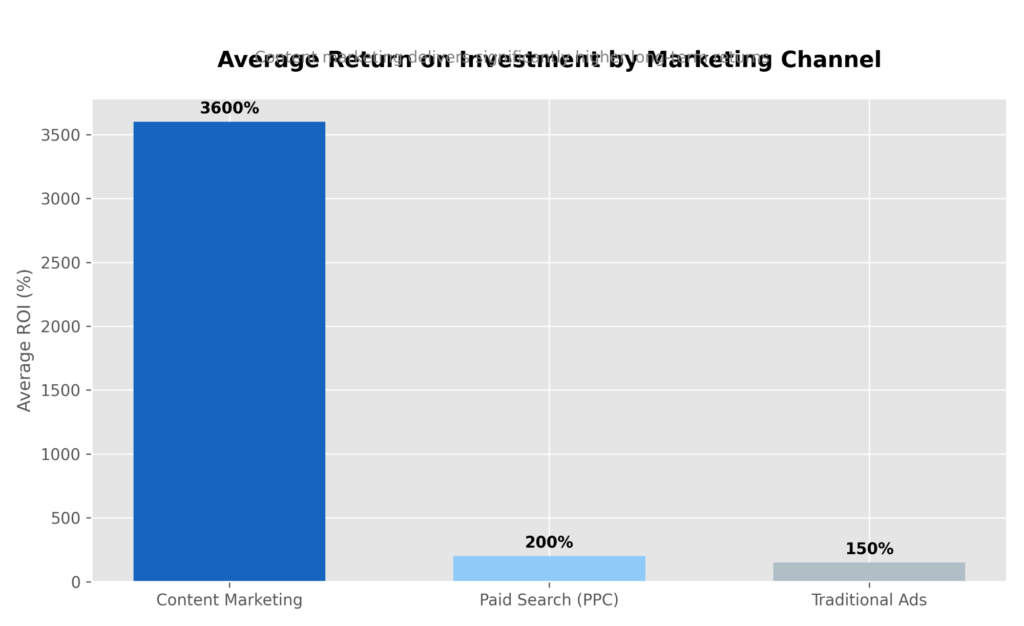
The financial impact is significant. Content marketing costs significantly less than traditional outbound marketing, yet it generates substantially more leads. For example, email content marketing can bring in an astounding $36 for every $1 spent, representing a 3600% return on investment. This long-term value makes content writing an indispensable tool for sustainable business growth.
How Does the Content Writing Process Work?
Creating content that actually drives results requires a structured, strategic approach. It is not about sitting down and typing whatever comes to mind. Professional content writers follow a rigorous process to ensure every piece aligns with business goals and resonates with the target audience.
The process begins with deep research and understanding. Writers must analyze the target audience, developing clear user personas that outline their pain points, desires, and reading habits. They must also understand the search intent behind specific queries—are users looking for information, comparing products, or ready to make a purchase? This foundational knowledge shapes the entire direction of the content.
Next comes keyword research and topic selection. Using advanced SEO tools, writers identify the terms and phrases potential customers are actively searching for. They look for opportunities where the business can provide unique value and stand out from competitors. This leads to the creation of a comprehensive content calendar, ensuring a consistent publishing schedule that covers all relevant topics.
Once the strategy is set, the actual writing begins. This involves crafting compelling headlines, structuring the article with logical subheadings, and writing clear, active-voice paragraphs. The focus is on readability and flow, breaking complex ideas into digestible pieces. After the initial draft, the content undergoes rigorous editing and proofreading to ensure grammatical accuracy, factual correctness, and adherence to the brand’s voice. Finally, the content is optimized with internal links, meta tags, and formatting before being published and promoted.
What Are the Different Types of Content Writing?
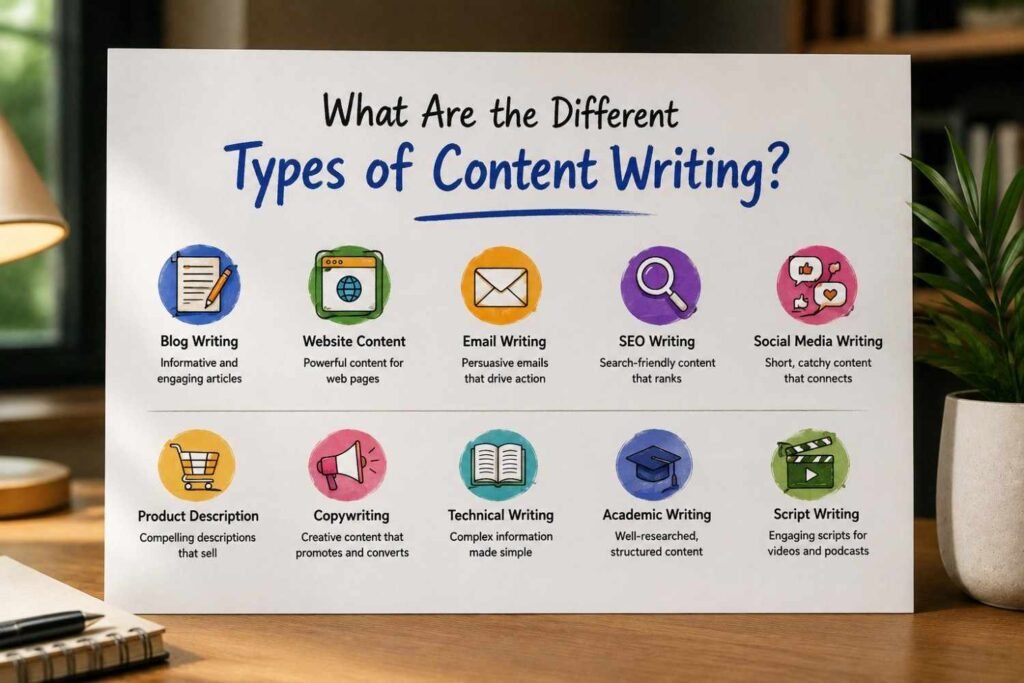
Content writing is a broad field encompassing many different formats, each designed to achieve specific goals and reach audiences at different stages of the customer journey. Understanding these types helps businesses create a balanced and effective content strategy.
Website Content: This is the core messaging of your business. It includes home pages, about us pages, and service pages. Website content must clearly communicate your value proposition, build trust, and guide visitors toward taking action. It is often the first impression a potential customer has of your brand.
Blog Writing: Blogs are essential for driving ongoing organic traffic and establishing industry authority. They include educational articles, how-to guides, and industry insights. By consistently answering common questions and providing valuable information, blogs keep your website fresh and give search engines a reason to rank you higher.
SEO Content Writing: While all digital content should consider SEO, specific SEO writing focuses heavily on ranking for target keywords. This involves strategic keyword placement, optimizing for search intent, and structuring the content to capture featured snippets or AI overviews.
Copywriting: Often confused with general content writing, copywriting is specifically focused on persuasion and direct sales. This includes sales pages, landing pages, and conversion-focused advertisements. While content writing informs and educates, copywriting drives immediate action.
Technical Writing: For complex products or services, technical writing is crucial. This includes user manuals, documentation, and detailed tutorials. Technical writers excel at taking complicated jargon and translating it into simple, actionable instructions for the end-user.
| Content Type | Primary Goal | Best Used For | Typical Length |
|---|---|---|---|
| Website Pages | Introduce brand and services | Home, About, Services | 300 – 800 words |
| Blog Posts | Educate and drive traffic | Answering questions, industry news | 800 – 2500+ words |
| Landing Pages | Drive immediate conversions | Ad campaigns, specific offers | 400 – 1000 words |
| White Papers | Establish deep authority | B2B lead generation, complex topics | 2000 – 5000+ words |
| Email Newsletters | Nurture existing leads | Updates, promotions, relationship building | 200 – 600 words |
What Skills Are Essential for Effective Content Writing?
Professional content writing requires a unique blend of creative and analytical skills. It is not enough to simply be a “good writer.” The best content creators possess a deep toolkit that allows them to produce material that ranks well, reads beautifully, and drives business results.
Exceptional Research Abilities: Before a single word is written, a content writer must become an expert on the topic. This requires the ability to quickly digest complex information, identify credible sources, and extract the most relevant data points. They must also be skilled at competitor analysis, understanding what is already ranking and finding ways to create something better.
SEO and Technical Knowledge: A strong grasp of SEO principles is non-negotiable. Writers must understand how to conduct keyword research, optimize meta tags, use header structures effectively, and implement internal linking strategies. They also need to understand concepts like E-E-A-T (Experience, Expertise, Authoritativeness, Trustworthiness) and how they impact Google’s ranking algorithms.
Adaptability and Tone Management: A professional writer must be a chameleon, able to adapt their voice to suit different brands and audiences. Writing a formal white paper for a financial institution requires a completely different tone than writing a playful social media caption for a lifestyle brand. Maintaining a consistent, authentic brand voice is crucial for building trust.
Editing and Proofreading: The first draft is rarely the final product. Excellent writers are also ruthless editors. They know how to trim the fat, improve sentence flow, and ensure flawless grammar and punctuation. They understand that clarity is more important than cleverness and strive to make the content as readable as possible.
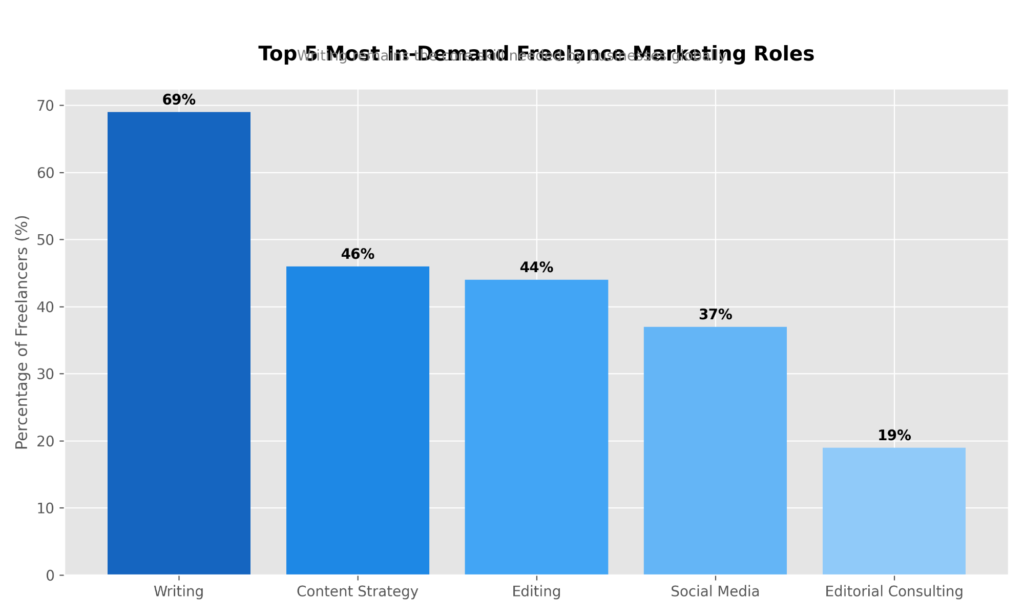
Industry data supports the critical nature of these skills. Writing remains the most in-demand freelance marketing role, with 69% of freelance marketers focused on content creation, followed closely by content strategy and editing. This highlights that businesses recognize the fundamental need for skilled communicators.
How Does Content Writing Impact SEO and Search Rankings?
The relationship between content writing and Search Engine Optimization is symbiotic. You cannot have effective SEO without high-quality content, and great content will not reach its full potential without proper SEO optimization. Search engines exist to provide users with the most relevant, helpful answers to their queries, and content is the vehicle that delivers those answers.
When a professional writer creates an SEO-optimized article, they are not just stuffing keywords into the text. They are strategically aligning the content with user search intent. If a user searches for “how to fix a leaky faucet,” they want a step-by-step guide, not a sales pitch for plumbing services. By accurately matching the intent, the content satisfies the user, which signals to search engines that the page is valuable.
Long-form, comprehensive content tends to perform exceptionally well in search rankings. In-depth articles that thoroughly cover a topic keep users on the page longer, reducing bounce rates and increasing engagement metrics. Furthermore, high-quality content naturally attracts backlinks from other reputable websites. When other sites link to your content, it acts as a vote of confidence, significantly boosting your domain authority and overall search visibility.
The integration of E-E-A-T principles is also vital. Google prioritizes content created by experts with real-world experience, especially for topics that impact health, finance, or safety (Your Money or Your Life – YMYL). Professional writers know how to weave author credentials, credible citations, and authoritative data into the content to satisfy these requirements.
How Is AI Changing the Landscape of Content Writing?
The rapid advancement of Artificial Intelligence has fundamentally shifted the content writing landscape. Tools like ChatGPT, Claude, and specialized AI writing assistants have made it easier than ever to generate text quickly. However, this technological shift has created both massive opportunities and significant challenges for businesses and marketers.
Many businesses are integrating AI into their workflows to improve efficiency. AI is incredibly useful for brainstorming topics, generating outlines, overcoming writer’s block, and conducting preliminary research. It can also help with tasks like drafting meta descriptions or summarizing long reports.
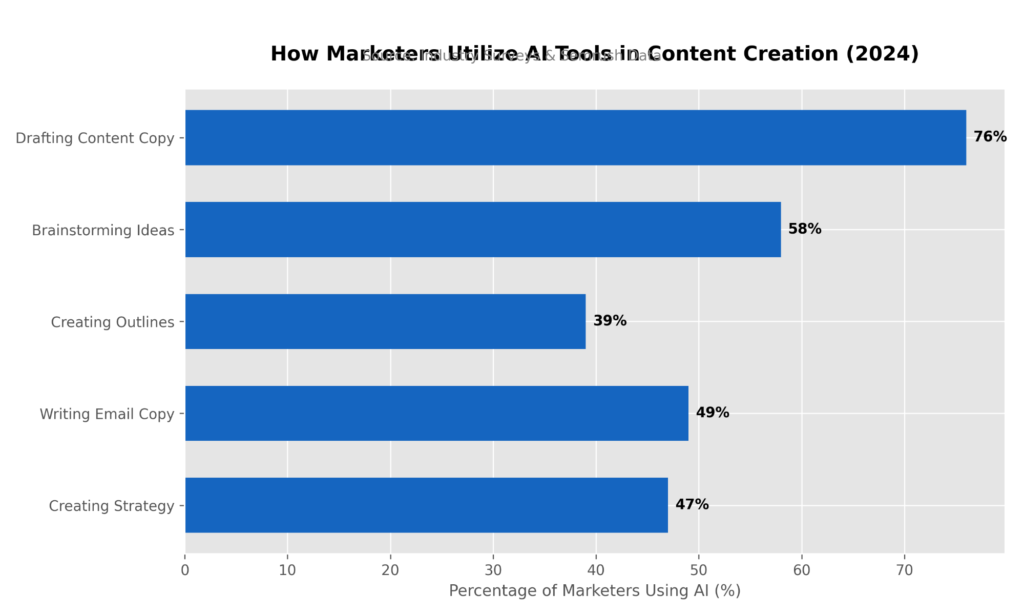
However, relying solely on AI to generate final content is a risky strategy. AI models predict the next most likely word based on their training data, which means they often produce generic, repetitive, and sometimes factually incorrect text (hallucinations). AI lacks genuine human experience, empathy, and the ability to form unique opinions—elements that are crucial for truly engaging content.
Furthermore, search engines are adapting. With the rise of AI Overviews and Generative Engine Optimization (GEO), simply having text is not enough. Content must offer unique insights, original data, and a distinct human perspective to stand out. The most successful approach is a hybrid one: using AI to assist and accelerate the process, while relying on human expertise to inject strategy, emotion, and rigorous fact-checking. Human editors ensure the content remains authentic and aligned with the brand’s specific goals.
Why Should Businesses Outsource to a Content Writing Agency?

While some businesses attempt to handle content creation in-house, partnering with a specialized content writing agency like Eyes On Solution offers distinct advantages that directly impact the bottom line. Creating consistent, high-quality content requires significant time, expertise, and resources that many internal teams simply do not have.
Access to Specialized Expertise: A professional agency provides access to a team of experienced writers, editors, and SEO strategists. These professionals stay updated on the latest algorithm changes, industry trends, and best practices. They know exactly how to structure content for maximum impact, ensuring that every piece published works hard for your business.
Consistency and Reliability: One of the biggest challenges businesses face is maintaining a consistent publishing schedule. Internal priorities often shift, causing the blog or newsletter to be neglected. An agency provides a dedicated resource focused solely on your content, guaranteeing that high-quality material is published regularly, which is essential for building momentum and SEO authority.
Scalability and Efficiency: As your business grows, your content needs will likely expand. An agency can easily scale production up or down based on your current requirements, without the overhead costs of hiring and training full-time employees. This flexibility allows you to execute ambitious content marketing campaigns efficiently.
Measurable Results and Strategy: Professional agencies don’t just write; they strategize and measure. They use data analytics to track how content is performing, monitor keyword rankings, and adjust the strategy based on what is actually driving traffic and conversions. This data-driven approach ensures that your investment in content writing delivers a tangible return.
| In-House Content Creation | Agency Content Services |
|---|---|
| Often constrained by limited time and competing priorities | Dedicated focus on consistent, high-quality production |
| Requires hiring, training, and managing specialized staff | Immediate access to experienced writers, editors, and SEO experts |
| May lack advanced SEO tools and strategic oversight | Utilizes premium tools and data-driven strategies |
| Difficult to scale production quickly | Highly scalable based on business needs and campaigns |
How Does Eyes On Solution Deliver Quality Content Writing Services?
At Eyes On Solution, we understand that content is the voice of your business. Our approach to content writing services in Dubai is rooted in clarity, strategy, and measurable results. We do not just write to fill space; we create content that solves problems, builds trust, and drives organic growth.
Our process begins with a deep dive into your business objectives and target audience. We take the time to understand your industry, your competitors, and the specific pain points your customers face. This allows us to craft a comprehensive content strategy that aligns perfectly with your goals.
We pride ourselves on creating content that sounds like you. Maintaining a consistent brand voice is crucial for building familiarity and trust. Whether your tone is highly professional, conversational, or technical, our writers adapt to ensure every piece feels authentic to your brand. We focus heavily on readability and engagement, using clear structures, natural flow, and useful information to keep visitors on your site longer.
Furthermore, SEO is baked into everything we write. We conduct thorough keyword research, optimize meta tags, and structure content to satisfy both human readers and search engine algorithms. From website copy and regular blog posts to specialized SEO articles and technical writing, Eyes On Solution delivers content that not only looks great but performs exceptionally well in search results, bringing relevant, high-quality traffic to your business.
Frequently Asked Questions (FAQ)
What exactly does a content writer do for a business? A content writer researches, plans, and creates written material for digital platforms like websites, blogs, and social media. Their goal is to clearly communicate a company’s message, engage the target audience, and improve search engine rankings through strategic SEO practices.
How does content writing improve my website’s SEO? Content writing improves SEO by incorporating targeted keywords that users search for, answering their specific questions, and keeping them engaged on the page. High-quality, relevant content signals to search engines like Google that your site is an authoritative resource, leading to higher rankings.
What is the difference between content writing and copywriting? Content writing is focused on educating, informing, and building long-term trust with an audience (e.g., blog posts, guides). Copywriting is specifically designed to persuade the reader to take an immediate action, such as making a purchase or signing up for a service (e.g., sales pages, ad copy).
Can AI tools like ChatGPT replace human content writers? No, AI tools cannot fully replace human writers. While AI is excellent for brainstorming and generating first drafts quickly, it lacks human empathy, genuine expertise, and the ability to craft a unique brand voice. Human oversight is essential for strategy, fact-checking, and ensuring the content truly connects with the audience.
How often should a business publish new content on their blog? While there is no strict rule, consistency is key. Publishing 2 to 4 high-quality blog posts per month is a strong starting point for most businesses. Regular updates signal to search engines that your site is active and provide a steady stream of new information for your audience.
Why should I hire a professional agency instead of writing my own content? Hiring a professional agency ensures your content is consistently high-quality, strategically aligned with SEO best practices, and published on a regular schedule. It saves you significant time and provides access to expert writers and advanced tools, allowing you to focus on running your business while experts handle your digital growth.