
Keyword targeting is the process of creating and optimizing content around the search terms your audience uses to find information, products, or services.
It involves identifying primary and secondary keywords, understanding search intent, ensuring topic relevance, and providing content depth. By aligning your content with the specific needs and queries of your target audience, you can create a more effective SEO strategy that delivers measurable results.
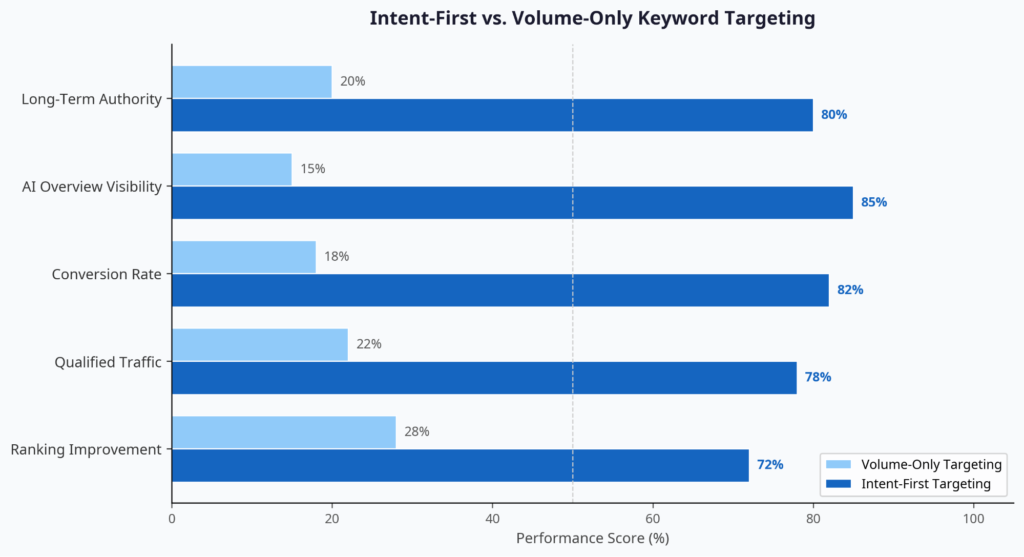
Understanding why users search is more important than choosing keywords with high search volume. Effective keyword targeting improves rankings, attracts qualified visitors, and increases conversions. When you strategically use relevant keywords, your content can reach the top of search engine results pages, making it more likely to be seen by potential visitors. This increased visibility can lead to increased traffic, more leads, and more conversions.
What Is Keyword Targeting and Why Does It Matter?
Effective keyword targeting improves rankings, attracts qualified visitors, and increases conversions. When you strategically use relevant keywords, your content can reach the top of search engine results pages, making it more likely to be seen by potential visitors. This increased visibility can lead to increased traffic, more leads, and more conversions. Additionally, providing value to users through high-quality content builds trust and credibility, which can turn visitors into loyal customers.
How Do You Start With Search Intent Instead of Keywords?
Understanding why users search is more important than choosing keywords with high search volume. Search intent tells you what users are looking for, whether it is an answer to a question, a specific page, a brand comparison, or a product to buy. By focusing on intent, you can create content that satisfies the user’s needs, which is a primary goal for search engines.
There are four main types of search intent: informational, navigational, commercial, and transactional. To match intent effectively, you should provide educational content for informational queries, comparison content for commercial queries, and service or product pages for transactional queries. Aligning your content with the intent behind the keywords ensures that you are providing the most relevant and useful information to your audience.
| Search Intent Type | User Goal | Recommended Content Type |
|---|---|---|
| Informational | Seeking an answer or learning about a topic | Blog posts, guides, FAQs |
| Navigational | Looking for a specific website or page | Branded landing pages |
| Commercial | Comparing options before making a purchase | Product comparisons, reviews |
| Transactional | Ready to buy a product or service | Product pages, service pages |
How Can You Find Keywords Your Audience Actually Uses?
Target keywords that reflect real customer questions, problems, and goals. Instead of relying solely on keyword research tools, look at sources that reveal how your audience naturally searches. This includes Google autocomplete, People Also Ask questions, Search Console data, customer FAQs, and industry forums or communities.
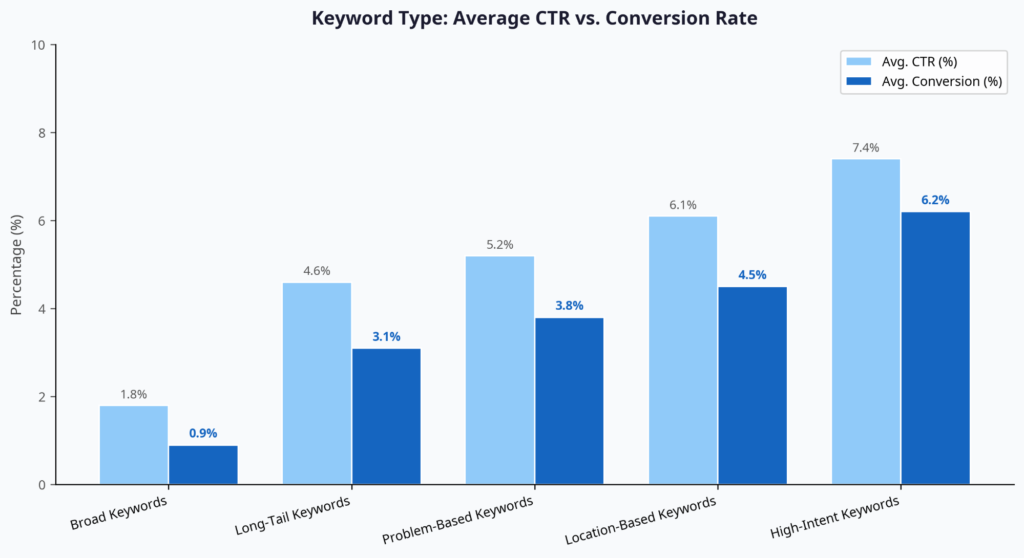
When selecting keywords, prioritize long-tail keywords, problem-based keywords, location-based keywords, and high-intent keywords. These types of keywords often have lower search volume but higher conversion rates because they target users who are further along in the buying process and have specific needs.
Why Should You Group Keywords Into Topics?
Build content around topics rather than creating separate pages for every keyword variation. Keyword clustering involves grouping similar terms together so you can target an entire group with a single page. This approach recognizes that people search for the same answers in different ways, and incorporating multiple relevant search terms can help you appear in more search results.
By grouping keywords into topics, you establish stronger topical relevance, improve internal linking, and enhance AI search visibility. For example, a main topic like “Keyword Targeting” could include supporting keywords such as keyword research, search intent, long-tail keywords, keyword mapping, and content optimization. This comprehensive approach provides more value to users and signals authority to search engines.
How Do You Map Keywords to the Right Pages?
Each important keyword should have a clear destination page that best answers the search query. Keyword mapping involves assigning specific keywords to different pages on your website, which helps optimize your site structure and content. This prevents multiple pages from targeting the same keyword, a common mistake known as keyword cannibalization, which can confuse search engines and dilute your ranking potential.
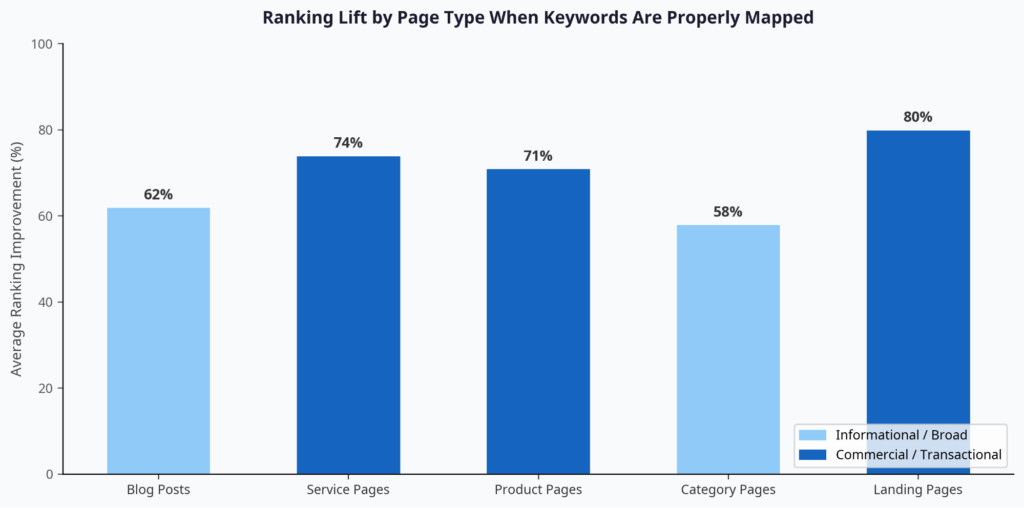
A structured keyword mapping framework ensures that each page serves a specific purpose and targets the appropriate intent. For example, blog posts are ideal for informational keywords, while service pages should target commercial keywords. Product pages are best suited for transactional keywords, and category pages can capture broad commercial terms.
How Should You Optimize Content Around Primary and Secondary Keywords?
Use keywords naturally throughout the content while fully answering the user’s question. Strategic placement of keywords helps search engines understand the topic of your page without compromising the readability for your audience. Include your primary keyword in essential areas such as the page title, H1 heading, introduction, URL slug, and meta description.
Incorporate secondary keywords into subheadings and throughout the body paragraphs where they fit naturally. Avoid keyword stuffing, repetitive wording, and unnatural placement, as these practices can violate search engine guidelines and create a poor user experience. Focus on creating high-quality, engaging content that addresses the user’s needs comprehensively.
How Does Answering User Questions Improve Keyword Targeting?

Answering related questions helps content rank for more searches and increases AI Overview visibility. By including sections that directly address common user queries, you provide comprehensive information that satisfies both users and search engines. This approach aligns with the growing importance of AI search systems, which prioritize comprehensive answers and topic coverage over exact keyword matching.
Consider adding sections that ask and answer specific questions, such as “What is keyword targeting?”, “How do you improve keyword targeting?”, and “What are long-tail keywords?”. Structuring your content to address these questions directly makes it more likely to be featured in rich snippets and AI-generated summaries, driving more organic traffic to your site.
How Can Search Performance Data Refine Your Targeting?
Analyze existing rankings and adjust content based on real search behavior. Continuous monitoring of your keyword performance is essential for maintaining and improving your search visibility. Review metrics such as impressions, clicks, click-through rate, average position, and conversions to identify areas for improvement.
Look for optimization opportunities, such as keywords ranking on page two, pages with high impressions but low click-through rates, and pages that are losing rankings. By using data from tools like Google Search Console and Google Analytics, you can make informed decisions about which content needs updating, expanding, or better alignment with user intent. For more advanced optimizations, consider technical SEO improvements to ensure your site is easily crawlable.
What Are Common Keyword Targeting Mistakes to Avoid?
Many ranking issues come from targeting the wrong keywords or mismatching intent. Avoiding common pitfalls can save you time and resources while improving your overall SEO performance. One major mistake is targeting keywords solely based on high search volume, ignoring the underlying search intent and the relevance to your business goals.
Other mistakes include keyword cannibalization, creating thin content that lacks depth, failing to update older pages, and overlooking the potential of long-tail keywords. Ensuring that your content is comprehensive, up-to-date, and precisely aligned with user needs will help you avoid these issues and build a stronger online presence. For businesses targeting specific geographic areas, integrating local SEO strategies is crucial to avoid missing out on nearby customers.
How Is AI Search Changing Keyword Targeting Strategies?
AI search systems prioritize comprehensive answers and topic coverage over exact keyword matching. As search engines evolve, they are becoming better at understanding context and the relationships between different concepts. This means that simply placing keywords on a page is no longer sufficient; your content must demonstrate expertise and provide thorough answers to user queries.
To optimize for AI Overviews and featured snippets, adopt a direct answering approach. Cover related subtopics, use clear headings, add FAQs, and support your claims with credible sources. By focusing on providing the best possible answer to the user’s query, you align your content with the goals of modern search algorithms, improving your chances of achieving high visibility.
Keyword Targeting Checklist

Use this checklist before publishing content to ensure your keyword targeting is fully optimized:
- Identify the primary keyword based on audience research.
- Confirm the search intent aligns with your content type.
- Select supporting secondary keywords to build topical relevance.
- Map the keyword to the correct, single destination page.
- Optimize titles, headings, and meta descriptions naturally.
- Answer related questions to improve AI Overview visibility.
- Add relevant internal links to guide users and search engines.
- Review performance data after publishing to refine your strategy.
Frequently Asked Questions
How do I improve keyword targeting for better SEO results?
Focus on search intent, keyword relevance, content quality, and performance data rather than search volume alone. Ensure your content directly answers the user’s query and provides comprehensive information on the topic.
What are the best keywords to target for a new website?
Target long-tail keywords and problem-based keywords that match your audience’s specific needs and business goals. These keywords typically have lower competition and higher conversion rates, making them ideal for building initial traction.
Should I target multiple keywords on one page to get more traffic?
Yes, as long as the keywords are closely related and support the same topic. Grouping similar keywords into clusters helps build topical authority and allows a single page to rank for multiple relevant search queries.
How often should keywords appear in an article for optimal ranking?
Use keywords naturally where relevant, prioritizing clarity and user experience over keyword frequency. Avoid keyword stuffing, and ensure that your primary and secondary keywords fit seamlessly into the context of your content.
How does search intent affect keyword targeting success?
Search intent determines whether your content satisfies the user’s goal. If your content does not match the intent behind the keyword, users will leave your site quickly, signaling to search engines that your page is not a good result, which negatively impacts rankings.
How can I find the questions my audience is asking online?
Look at Google autocomplete suggestions, the “People Also Ask” section in search results, customer support inquiries, and industry forums. These sources reveal the exact phrasing and specific problems your target audience is trying to solve.
What is keyword cannibalization and how do I fix it?
Keyword cannibalization occurs when multiple pages on your site target the same keyword, confusing search engines about which page to rank. Fix it by mapping each primary keyword to a single, comprehensive destination page and consolidating or redirecting competing pages.
How do AI search overviews change the way I should use keywords?
AI search prioritizes comprehensive, direct answers and topic coverage over exact keyword matching. To optimize for AI, structure your content with clear headings, provide direct answers upfront, and cover related subtopics thoroughly to demonstrate expertise.