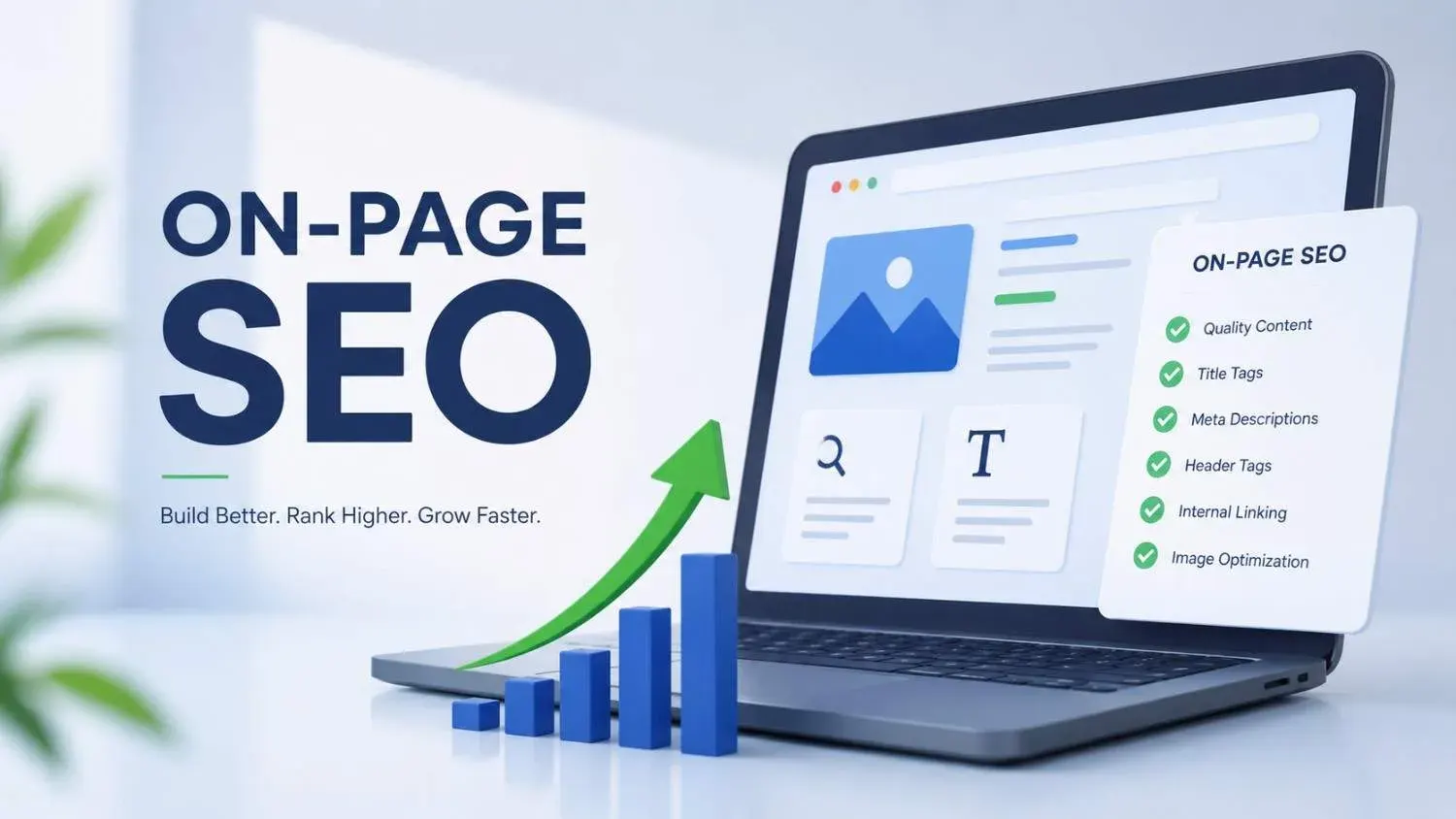
On-page SEO is important because it's what tells search engines and AI tools whether your page deserves to be shown for a given search. Without it, even genuinely useful content can go unseen, because Google and AI search engines have no clear signal that your page answers the question someone is asking.
In short: on-page SEO is the difference between a page that ranks and drives traffic, and a page that sits unread on your site.
Who Is This Guide For?
This guide is for business owners, marketers, and website managers who want a clear, honest answer to why on-page SEO matters before investing time or budget into it. You don't need a technical background to follow it. Each section leads with a direct answer, then explains what to do about it.
If you already understand the "why" and want the action steps, jump straight to the on-page SEO checklist below.
What Is On-Page SEO?
On-page SEO is the practice of optimizing the content and HTML elements on your own webpages, things like titles, headings, and body copy, so search engines and AI tools can understand what the page is about. It's called "on-page" because every change happens directly on the page itself, not on other websites.
How Does On-Page SEO Work?
On-page SEO works by sending clear relevance signals from your page to search engines and AI systems. When your title tag, headings, and content all point to the same topic and answer the same question a searcher is asking, search engines find it easier to match your page to that query.
Google and AI tools like ChatGPT and Perplexity both read your page content directly to decide what to show. Pages that are clear, well-structured, and genuinely useful get pulled into search results, featured snippets, and AI-generated answers far more often than pages that are vague or disorganized.
Why On-Page SEO Is Important
On-page SEO is important because it directly affects whether your pages get found, get clicked, and get read once someone lands on them. Here's what that looks like in practice.
It Determines Whether You Get Found at All
Search engines and AI tools can't guess what a page is about. They read your titles, headings, and content to decide. A page with no clear on-page structure can be well-written and still get skipped entirely, simply because nothing on it signals relevance for the search term.
It Brings the Right Kind of Traffic
Good on-page SEO matches your content to what people are actually searching for. That means the visitors who land on your page are already looking for what you offer, which leads to better engagement and more conversions than traffic pulled in by accident.
It Reduces Bounce Rate
Visitors leave quickly when a page doesn't deliver on what its title and headings promised. Clear structure, honest titles, and content that answers the question keep people reading instead of clicking back to search again.
It Supports Every Other Part of Your SEO
Backlinks and technical fixes matter less if the page itself doesn't communicate relevance. On-page SEO is the foundation that off-page and technical SEO efforts build on top of, not a separate task to handle later.
It Improves Your Visibility in AI Search
AI Overviews and chat-based tools like ChatGPT pull answers directly from well-structured pages. A page with clear headings and direct answers has a real shot at being cited. A page without that structure usually gets skipped, no matter how accurate the information is.
It's the Part of SEO You Fully Control
You can't control who links to your site or what competitors do. You do control your title tags, headings, and content. That makes on-page SEO the most reliable place to start improving your search performance, because every change is in your hands.
On-Page SEO vs. Off-Page SEO vs. Technical SEO
On-page SEO covers what you do directly on a page, like content, titles, and headings. Off-page SEO covers what happens outside your site, mainly backlinks and brand mentions. Technical SEO covers the backend infrastructure that lets search engines crawl and index your site at all, things like sitemaps, site speed, and mobile performance.
All three work together. A well-written page won't rank if search engines can't crawl it, and a fast, well-crawled site won't win competitive searches without some authority from other sites.
On-Page SEO Checklist: 8 Things to Fix First
Work through these in order.
1. Match Content to Search Intent
Confirm what someone actually wants when they search your target term, an answer, a comparison, or a place to buy, before you write anything. Content built for the wrong intent won't rank, however well it's written.
2. Write a Clear, Honest Title Tag
Keep it between 50 and 60 characters, put your main keyword near the front, and make sure it matches what the page actually delivers.
3. Write a Meta Description That Earns the Click
A meta description doesn't directly affect rankings, but it decides whether someone clicks your result over a competitor's. Keep it under roughly 155 characters and write it like a one-line pitch.
4. Structure Content With Proper Headings
Use one H1 for the page title, H2s for main sections, and H3s for subsections. Answer each heading directly in the first sentence beneath it. This is one of the biggest factors in whether AI tools can extract a clean answer from your page.
5. Write for the Reader First
Cover the topic thoroughly, answer the actual question, and skip the padding. Content that reads like it was written for a person, not to hit a word count, is what both Google and AI search engines reward now. Our content writing services are built around this exact standard.
6. Add Internal Links to Relevant Pages
Link to other pages on your site where it genuinely helps the reader, using descriptive anchor text instead of "click here."
7. Optimize Images and Page Speed
Give every image a descriptive file name and alt text, compress file sizes, and test your load times. Slow pages lose both visitors and rankings.
8. Add Schema Markup Where It Fits
Structured data helps search engines understand exactly what's on a page, like a review, an FAQ, or a how-to, and improves your odds of showing up as a rich result or in an AI-generated answer.
How to Know If Your On-Page SEO Is Working
Track keyword rankings, organic traffic, click-through rate, and how often your pages appear in AI Overviews or featured snippets. If none of these move within a few weeks of publishing or updating a page, revisit your keyword targeting and content depth before changing anything else.
If you'd rather have this tracked and handled for you, our SEO services in Dubai include ongoing on-page audits and reporting, so you always know what's working.
Common On-Page SEO Mistakes
Stuffing keywords unnaturally. This reads badly and can hurt rankings instead of helping them.
Writing titles that don't match the content. This spikes bounce rate fast.
Skipping meta descriptions. Search engines pick a random snippet instead, which rarely converts as well.
Publishing and forgetting. Outdated content loses rankings over time.
Ignoring AI search entirely. Pages built only for traditional Google rankings miss a growing share of traffic from AI Overviews and chat-based search. Our GEO services focus specifically on this gap.
FAQs
Why is on-page SEO important?
On-page SEO is important because it's how search engines and AI tools decide whether your page is relevant to a given search. Without it, even useful content can go unseen.
Is on-page SEO still important in 2026?
Yes, more than before. AI search tools read page content directly to generate answers, and clear, well-structured pages are what they pull from.
What happens if you skip on-page SEO?
Your pages become harder for search engines and AI tools to understand, which lowers your chances of ranking, getting clicked, and getting cited in AI-generated answers.
What's the difference between on-page and off-page SEO?
On-page SEO covers what you control directly on your website, like content and headings. Off-page SEO covers external signals like backlinks and brand mentions from other sites.
How long does on-page SEO take to show results?
Most sites see early movement in rankings and traffic within four to eight weeks of solid on-page changes, though competitive keywords can take longer.
Can I do on-page SEO myself, or do I need an agency?
You can handle the basics yourself with the checklist above. If you're short on time or targeting competitive keywords, working with an SEO company in Dubai speeds up results and avoids common mistakes.