

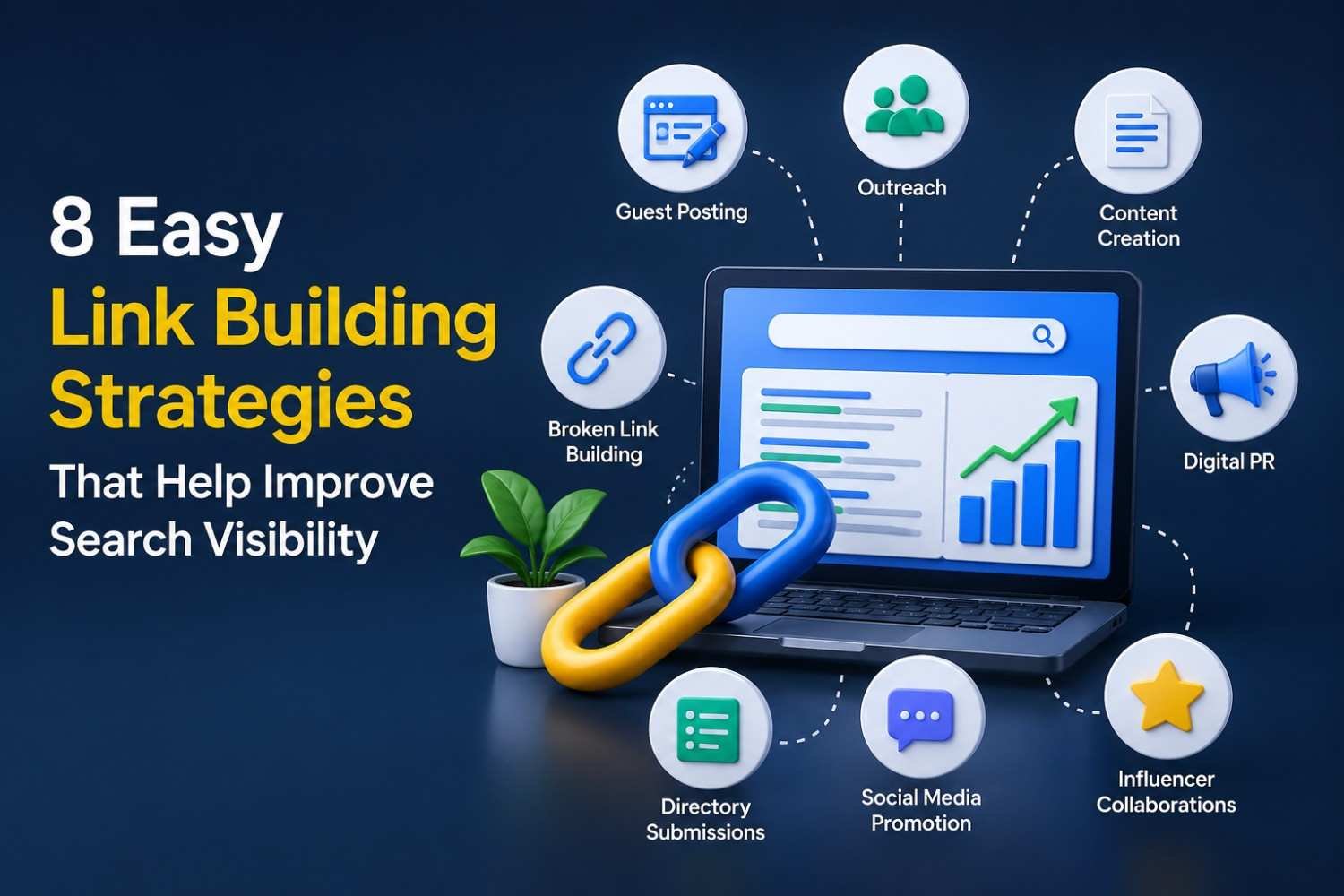
Building high-quality backlinks remains a critical factor in search engine optimization, directly impacting a website’s domain authority and organic rankings. This comprehensive guide details eight easy link building strategies that are proven to enhance search visibility without resorting to spammy tactics. Designed for business owners, marketers, and SEO beginners, this article explains how to create linkable assets, leverage digital PR, reclaim unlinked mentions, and build relationships to earn valuable links naturally.
The digital landscape is crowded, and simply publishing great content is no longer enough to guarantee top spots in search engine results pages. You need authoritative websites to vouch for your content, and that is exactly what a backlink does. A backlink acts as a digital vote of confidence, signaling to search engines like Google that your website is a credible and valuable resource. Despite the rise of AI Overviews and changing algorithms, backlinks remain one of the top three ranking factors.
However, many business owners and marketers find link building intimidating. The fear of penalties from toxic links or the sheer effort required for outreach can be overwhelming. The good news is that acquiring high-quality links doesn’t have to be complicated or risky. By focusing on relevance, relationship building, and creating genuine value, you can develop a robust backlink profile that drives sustainable growth.
Why Do Backlinks Still Matter for SEO?
Search engines rely on complex algorithms to determine which pages deserve the top spots for specific queries. While content relevance and user experience are crucial, backlinks provide the essential context of authority. When a reputable website links to your page, it passes on “link equity” or “link juice,” effectively endorsing your content.
Recent data underscores the undeniable impact of backlinks on search visibility. According to an analysis of 11.8 million search results, the number one result in Google has, on average, 3.8 times more backlinks than positions two through ten [1]. Furthermore, a study of 14.1 million keywords revealed that pages ranking in the first position have an average of 168 referring domains, compared to just 35 domains for pages ranking in positions six through ten [2].

It is crucial to understand that not all links are created equal. The value of a backlink is determined by several factors:
- Authority: Links from high-authority domains (like established news outlets or industry leaders) carry significantly more weight than links from obscure blogs.
- Relevance: A link from a website within your specific niche is much more valuable than a link from an unrelated site. If you sell digital marketing services, a link from a tech blog is highly relevant, whereas a link from a recipe site is not.
- Placement: Links placed prominently within the main body of the content are more impactful than those buried in footers or sidebars.
At Eyes On Solution, we emphasize quality over quantity. A few high-quality, relevant links will always outperform hundreds of low-quality, spammy links.
- How Can You Create Valuable Content Worth Linking To?
The foundation of any successful link building strategy is linkable assets. If your content doesn’t provide unique value, nobody will want to link to it. Creating link bait, content specifically designed to attract backlinks naturally, is one of the most effective and sustainable ways to build authority.
To earn links organically, you must produce content that answers pressing questions, provides new insights, or presents information in an easily digestible format.
Focus on Original Research and Data
Publishing original research, surveys, or data studies is highly effective for generating backlinks. Journalists, bloggers, and industry peers constantly look for fresh data to support their own articles. When they use your statistics, they will naturally cite your page as the source. Data-driven content attracts 3.2 times more backlinks than standard blog posts [1].

Develop Comprehensive Guides
In-depth, definitive guides that thoroughly cover a specific topic become go-to resources within an industry. When you create the ultimate guide on a subject, other websites will link to it as a reference point for their readers, saving them the effort of explaining the entire concept themselves.
Utilize Visual Assets
Visual content, such as infographics, charts, and diagrams, is highly shareable. Complex data or processes are often easier to understand visually. When you create compelling visual assets, other publishers will embed them in their content, providing a backlink to the original source. Infographics generate 178% more backlinks than standard blog posts [1].
- How Does Guest Posting Build Authority?
Guest posting involves writing an article for another website in your industry and including a link back to your own site. When executed correctly, it remains one of the most popular and effective link building tactics, utilized by 64.9% of link builders [3].
The key to successful guest posting is strict adherence to quality and relevance. You must target authoritative websites that share your target audience. Pitching generic, low-effort articles to irrelevant sites will yield poor results and could potentially harm your SEO.
To maximize the impact of your guest posting efforts:
- Identify Relevant Targets: Look for websites within your niche that have strong domain authority and active readership.
- Pitch Unique Ideas: Do not offer topics they have already covered. Provide fresh perspectives or actionable insights that their audience will value.
- Focus on the Content, Not Just the Link: Write high-quality, informative articles. The link should be a natural addition, either within the context of the article or in your author bio.
| Metric | High-Quality Guest Post | Low-Quality Guest Post |
|---|---|---|
| Target Site Authority | High (DR 50+) | Low (DR < 30) |
| Relevance | Directly related to your niche | Unrelated or general topics |
| Content Quality | Original, insightful, well-researched | Spun, thin, or generic content |
| Link Placement | Natural, contextual | Forced, exact-match anchor text |
| SEO Impact | Strong positive signal | Minimal or negative impact |
3. What Is the Process for Reclaiming Unlinked Brand Mentions?
Often, people will mention your brand, products, or key personnel in their content without providing a hyperlink to your website. Reclaiming these unlinked mentions is one of the easiest ways to secure high-quality backlinks because the publisher already knows and likes your brand.

You can set up automated monitoring tools, such as Google Alerts or specialized SEO software, to track mentions of your brand name across the web. When you discover an unlinked mention, the process is simple:
- Verify the Context: Ensure the mention is positive or neutral.
- Find the Right Contact: Identify the author or the site’s editor.
- Send a Polite Request: Reach out, thank them for the mention, and politely ask if they would consider adding a link to your site to help their readers find more information.
Because the relationship is already warm, the success rate for these requests is typically much higher than cold outreach.
4. How Can You Build Relationships With Industry Experts?
Link building is fundamentally about relationship building. Establishing genuine connections with influencers, bloggers, and other business owners in your industry naturally leads to link opportunities.
Networking through social media platforms like LinkedIn or Twitter allows you to engage with thought leaders. Sharing their content, leaving thoughtful comments, and participating in industry discussions puts you on their radar.
Collaborating on content projects, such as expert roundups or co-authored studies, is a mutually beneficial strategy. When you feature industry experts in your content, they are highly likely to share the piece with their audience and link to it from their own websites, amplifying your reach and authority.
5. How Does Broken Link Building Work?
Broken link building is a highly effective tactic that provides immediate value to the website owner you are contacting. The premise is simple: you find a dead link (a link pointing to a 404 error page) on a relevant website and suggest your own functioning content as a replacement.
This strategy works well because you are helping the webmaster improve their site’s user experience and SEO by fixing broken links.
To execute this strategy:
- Identify Broken Links: Use SEO tools or browser extensions to scan resource pages or popular articles in your niche for dead links.
- Create or Identify Replacement Content: Ensure you have a high-quality page on your site that serves as a perfect substitute for the missing content.
- Conduct Outreach: Email the webmaster, notify them of the broken link, and suggest your page as a helpful alternative.

Personalized manual outreach yields the highest response rates, averaging 18.2%, significantly outperforming generic bulk templates [4].
6. Why Should You Get Listed on Trusted Directories?
While mass directory submissions are a relic of outdated SEO practices, getting listed on high-quality, trusted directories remains a valuable foundational strategy, especially for local SEO.
Focus on industry-specific directories and reputable local business listings (like Google Business Profile, Yelp, or local Chamber of Commerce websites). These citations provide legitimate backlinks and help establish your business’s credibility and geographical relevance.
Avoid low-quality, spammy directory sites that exist solely for link building purposes. A good rule of thumb is to ask yourself: “Would a potential customer actually use this directory to find my business?” If the answer is no, it is likely not worth the effort.
7. How Do You Turn Existing Content Into Linkable Assets?
You do not always need to create new content from scratch to attract backlinks. Repurposing your existing, high-performing content into new formats can breathe new life into it and make it highly linkable.
- Transform Data into Infographics: If you have a blog post dense with statistics, summarize the key points into a visually appealing infographic.
- Compile Statistics Pages: Gather industry statistics from various posts into a single, comprehensive “State of the Industry” page.
- Create Case Studies: Turn customer success stories into detailed case studies that demonstrate your expertise and provide valuable insights for others in your field.
By presenting valuable information in easily digestible formats, you increase the likelihood that other creators will reference and link to your work.
8. How Can Digital PR and HARO Opportunities Boost Authority?

Digital Public Relations (PR) is rapidly becoming the most effective link building tactic, with 48.6% of SEO professionals rating it as their top strategy for 2025 [5]. Digital PR involves pitching unique stories, data, or expert commentary to journalists and high-tier publications.
Platforms like Connectively (formerly HARO – Help A Reporter Out) connect journalists seeking expert quotes with industry professionals. By responding promptly and providing insightful, detailed commentary, you can earn high-authority mentions and backlinks from major news outlets.
The key to success with Digital PR is providing genuine value to the journalist. They need compelling narratives and reliable data, not promotional pitches. When you become a trusted source, you establish your brand’s authority and secure some of the most powerful backlinks available.
| Strategy | Effort Level | Potential Impact | Best For |
|---|---|---|---|
| Linkable Assets | High | Very High | Long-term authority, natural links |
| Digital PR / HARO | High | Very High | Brand awareness, high DR links |
| Guest Posting | Medium | High | Targeted relevance, relationship building |
| Unlinked Mentions | Low | Medium | Quick wins, brand protection |
| Broken Link Building | Medium | Medium | Resource pages, helpful outreach |
| Trusted Directories | Low | Low-Medium | Foundational SEO, local visibility |
Frequently Asked Questions (FAQ)
How long does it take to see results from link building?
Link building is a long-term strategy. It typically takes between 3 to 6 months to see significant improvements in search rankings and organic traffic after acquiring high-quality backlinks, as search engines need time to crawl, index, and evaluate the new links.
Are backlinks still an important ranking factor in 2026?
Yes, backlinks remain one of the top three ranking factors for Google. While AI and user experience are increasingly important, backlinks continue to serve as the primary signal of a website’s authority, trustworthiness, and credibility.
What is the easiest way to get backlinks naturally?
The easiest way to earn backlinks naturally is to create highly linkable assets, such as original data studies, comprehensive industry guides, or compelling infographics. When you provide unique value, other creators will naturally reference and link to your work.
How many backlinks does a website need to rank on the first page?
There is no magic number, as it depends entirely on the competitiveness of the keyword and the authority of the linking domains. However, data shows that pages ranking in the number one position have an average of 168 referring domains.
Is guest posting still an effective SEO strategy?
Guest posting is highly effective when done correctly. It must focus on providing high-quality, unique content to relevant, authoritative websites within your niche. Spammy guest posting on low-quality sites can harm your SEO.
Can AI-generated content attract high-quality backlinks?
AI-generated content can attract backlinks if it is heavily edited, fact-checked, and augmented with original insights, data, and human expertise. Purely AI-generated content that lacks unique value is unlikely to earn natural, high-quality links.

