Building niche relevant backlinks is one of the most effective ways to improve search visibility and increase website authority. Search engines value backlinks that come from websites closely connected to your industry because they signal trust, expertise, and relevance. A strong niche backlink strategy can help businesses attract targeted traffic, improve keyword rankings, and build long term online credibility.
This guide explains how to build niche relevant backlinks using practical SEO techniques, outreach strategies, and content driven methods. You will also learn how to avoid low quality links and focus on backlink opportunities that support sustainable organic growth.
What Are Niche Relevant Backlinks?
Niche relevant backlinks are links from websites related to your industry, service, or topic. These links help search engines understand that your website belongs within a specific subject area.
For example, if an SEO agency gets a backlink from a digital marketing blog, SEO news website, or content strategy platform, that link carries more value than a backlink from an unrelated website. The connection feels natural and relevant.
Definition of Niche Relevant Backlinks
A niche relevant backlink comes from content closely connected to your business niche. Search engines use these links to evaluate topical authority and trust. Relevance matters more than backlink quantity because search engines now focus on context, not just numbers. A few strong links from industry related website can outperform hundreds of low quality backlinks from unrelated sources.
Relevant backlinks also bring better traffic. Visitors arriving from connected website are more likely to engage with your content or service.
Why Search Engines Value Relevant Links
Search engines treat relevant backlinks as signals of expertise. When trusted website within the same industry link to your content, it strengthens your authority around that topic. These backlinks also improve contextual understanding. They help search engines identify what your website focuses on and which keywords or topics it should rank for.
Relevant links usually generate stronger engagement metrics too. Users stay longer, explore more pages, and interact naturally because the content matches their intent.
Difference Between Relevant and Irrelevant Backlinks
A relevant backlink supports your niche and audience. An irrelevant backlink comes from unrelated content with no clear connection to your website.
For example:
- A SaaS website receiving a backlink from a technology blog is relevant.
- The same SaaS website getting a backlink from an unrelated travel website adds little SEO value.
Random backlink building can weaken trust signals and create an unnatural link profile. Search engines may ignore those links or treat them as manipulative.
Niche relevant backlinks work better because they fit naturally within the content and provide real value to readers.
Why Niche Relevant Backlinks Matter for SEO
Niche relevant backlinks help search engines understand your website’s expertise and industry focus. They improve rankings, bring qualified traffic, and build stronger trust signals over time.
Improve Search Engine Rankings
Relevant backlinks strengthen keyword relevance because they come from content connected to your niche. Search engines treat these links as stronger ranking signals compared to unrelated mentions.
They are especially important for competitive keywords where topical authority matters. A contextual backlink from an industry related website can improve visibility faster than multiple low quality links.
Drive Targeted Organic Traffic
Backlinks from niche related website attract visitors already interested in your service or topic. This usually leads to better engagement, longer session time, and higher conversion potential. For example, a backlink from a digital marketing blog to an SEO service page brings more qualified visitors than traffic from unrelated content.
Build Website Authority
Consistent backlinks from trusted industry website help establish authority within your market. Over time, search engines begin associating your website with expertise in that subject area. This also improves brand credibility. When users repeatedly see your website mentioned on respected platforms, trust builds naturally.
Support Long Term SEO Growth
Niche relevant backlinks create a more natural and sustainable backlink profile. Because the links fit contextually, they are less likely to trigger spam signals or algorithm issues. Unlike manipulative backlink tactics, relevant links continue providing SEO value long term and support steady organic growth.
Like to Know More: The Ultimate Guide to Local SEO for Middle East Businesses
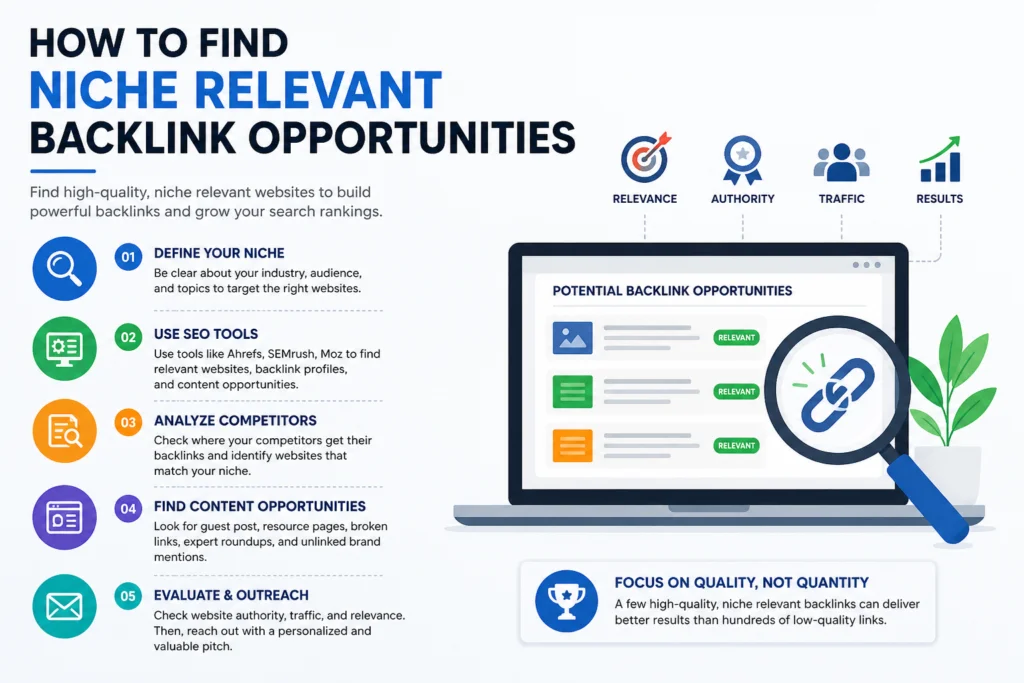
How To Find Niche Relevant Backlink Opportunities
Finding quality backlink opportunities starts with relevance. Focus on websites already connected to your industry, audience, or service category instead of chasing random links.
Analyze Competitor Backlinks
Review competitor backlink profiles using tools like Ahrefs, SEMrush, or Moz. This helps identify websites already linking to similar businesses in your niche.
Look for:
- Industry publication
- Guest contribution opportunity
- Resource page
- Relevant blog mention
Prioritize backlinks that appear natural and contextually relevant.
Look for Industry Blog
Search for blog that regularly publish content related to your niche. Focus on website with consistent topics, active updates, and quality editorial standards.
These websites are ideal for:
- Guest posting
- Expert contribution
- Link insertion
- Content collaboration
Relevant industry blog usually provide stronger SEO value than general content website.
Search for Resource Page
Many websites maintain resource sections linking to useful guides, tools, or educational content.
Find resource page related to your industry and offer:
- In depth guide
- Research based content
- Case study
- Useful SEO resource
Content with practical value has a higher chance of getting included.
Explore Local Industry Website
Local business platforms and industry specific website can provide strong niche backlinks, especially for local SEO campaigns.
Useful sources include:
- Business association website
- Industry directory
- Regional publication
- Chamber of commerce platform
These backlinks improve both topical and geographic relevance for search engines.
Create Content That Attracts Relevant Backlinks
Content plays a bigger role in link building than most people realize. Outreach helps, sure, but websites rarely link to weak content anymore. If a page feels generic or adds nothing new, it usually gets ignored.
The goal is to create something useful enough that people naturally want to reference it in their own article or resource section.
Publish Data Driven Content
Original research tends to attract backlinks faster because writers and marketers constantly look for reliable data to support their content. This can include industry reports, SEO experiments, ranking studies, or trend analysis based on real observations. Even smaller data sets can perform well when the insights are practical.
For example, a short report showing how page speed affected ranking changes often earns more attention than another basic “SEO checklist” article. Specific findings feel more credible and easier to cite.
Write High Quality Educational Guide
Educational content works best when it solves a clear problem. Instead of writing broad information with surface level advice, focus on detailed walkthroughs that explain processes step by step. Readers usually stay longer when the content feels actionable and direct.
A good guide should help both beginners learning the basics and experienced users looking for deeper insight. That mix increases the chance of earning backlinks from different audience types.
Develop Linkable Asset
Some content formats naturally attract more references because they are easy to share and quick to understand. Case study, infographic, checklist, and free SEO resource are common examples. These formats work well because they simplify information and provide immediate value.
Case study are especially effective. Real examples with measurable outcomes feel more trustworthy than broad claims without proof. Even small growth numbers can make content more link worthy.
Focus on Topical Relevance
Content should stay closely aligned with your niche. Publishing unrelated topics may bring temporary traffic, but it rarely builds strong topical authority. Search engines look for consistency. When your content repeatedly covers connected subjects, it becomes easier to understand your expertise and rank relevant pages.
Use keywords naturally throughout the structure without forcing repetition. Clean formatting, clear headings, and focused topics usually perform better than content overloaded with SEO phrases.
Use Guest Posting for Niche Relevant Backlinks
Guest posting remains one of the most effective ways to build niche relevant backlinks when done correctly. The focus should be on relevance, quality, and contextual placement rather than publishing content everywhere.
Find Relevant Guest Posting Website
Target blog and online publication related to your industry. A backlink from a relevant website carries more SEO value because the content context matches your niche. Avoid low quality guest post network filled with unrelated topics and excessive outbound links. These placements often provide little long term SEO benefit.
Personalize Outreach Email
Generic outreach emails rarely get responses. Personalize your pitch by referencing the website’s content and explaining why your topic fits their audience. Keep the message short and offer clear article ideas that provide value instead of promotional content.
Write Valuable Guest Content
Guest posts should educate, solve problems, or share practical insights. Focus on creating content useful for readers rather than writing only to secure a backlink. Avoid keyword stuffing or overly promotional language. Natural, well structured content performs better for both users and search engines.
Add Natural Contextual Link
Place backlinks naturally within relevant sections of the content. The link should support the topic and provide additional value to readers. Use balanced anchor text instead of repeating exact keywords excessively. Contextual and readable links create a stronger, more sustainable backlink profile.
Build Backlinks Through Blogger Outreach
Blogger outreach helps build niche relevant backlinks through real industry connections. Instead of sending mass outreach emails, focus on website already publishing content related to your niche.
Connect With Industry Blogger
Start by identifying bloggers and publishers connected to your industry. Read their recent content, understand their audience, and look for topics where your expertise fits naturally. Personalized outreach works better because it shows genuine relevance instead of automated link building.
Offer Collaborative Content Opportunity
Collaboration creates stronger backlink opportunities than direct link requests.
You can contribute:
- Expert insights
- Interview responses
- Industry observations
This approach adds value to the content while helping you earn contextual backlinks naturally.
Promote Valuable Resources
Share resources that genuinely help the blogger’s audience. Practical content performs better than promotional pages. Useful resources include step by step guide, SEO case study, or research based content. When reaching out, explain clearly why the resource fits their article and how it benefits readers.
Leverage Broken Link Building
Broken link building still works because it solves a real problem. Website owners do not want dead pages sitting inside their content. It looks messy, hurts user experience, and sometimes sends visitors to blank error screens. You have probably clicked one before. Frustrating instantly.
This strategy is simple in theory. Find broken links on relevant website, create something better, then suggest your content as a replacement.
Find Broken Link on Relevant Website
Start with industry related website, blog, or resource page connected to your niche. SEO tools like Ahrefs or Screaming Frog can help identify pages returning 404 errors or outdated resources. But relevance matters here.
A broken link opportunity only has value when the surrounding content matches your topic naturally. Random replacement outreach rarely works because website owners can spot forced pitches fast.
Look for pages where your content genuinely improves the missing resource.
Replace Broken Content With Better Resource
Do not just recreate the old content word for word. Build something more useful. Update outdated information, improve formatting, add clearer examples, or include fresh data where possible. Even small improvements can make your replacement more appealing.
Sometimes older content looks abandoned the second you open it. Tiny text blocks, outdated screenshots, awkward formatting from 2016. A cleaner and more detailed version already gives you an advantage.
Once your content is ready, offer it as a replacement resource in a short personalized email.
Benefits of Broken Link Outreach
Broken link outreach tends to work better than cold backlink requests because you are helping fix an issue instead of simply asking for a link.
Website owners benefit from:
- Better user experience
- Updated resource quality
- Fewer broken pages
That makes the outreach feel more practical and less promotional. In many cases, response rates are higher because the value is immediately clear.
Build Authority Through Digital PR
Digital PR is not just about getting your brand mentioned on big websites. The real value comes from building trust in your industry through visibility, expertise, and consistent exposure. When respected publication or niche media platform reference your content, search engines pay attention. Readers do too. A mention from the right source can quietly strengthen authority far beyond a single backlink.
Share Industry Expertise
One of the easiest ways to earn attention naturally is by sharing useful insight people actually care about. This could mean publishing SEO observations, commenting on industry trends, or contributing expert opinions during ongoing discussions. Short practical insights often perform better than overly polished corporate statements.
And honestly, readers can tell when content comes from real experience versus recycled theory. Specific examples, clear opinions, and firsthand observations usually stand out more.
Gain Mention From Relevant Publication
Industry publication and niche media website are strong backlink sources because they already carry topical trust. A feature, quote, or contribution on a relevant news platform helps strengthen your association with that subject area. Even smaller niche publication can drive solid SEO value when the audience alignment is strong.
One relevant media mention often carries more authority than dozens of weak directory backlinks. Quality matters here. A lot.
Use Case Study and Research
Original research attracts editorial links because writers and journalists constantly need credible sources to reference. Case study work especially well because they combine real data with practical outcomes. Traffic growth examples, ranking improvements, or outreach results give publication something concrete to cite.
You do not need massive reports either. Even focused findings with useful insight can build credibility and earn natural backlinks over time.
Avoid Common Niche Backlink Mistake
A lot of backlink strategies fail not because people stop building links, but because they chase shortcuts that create weak signals over time. Search engines have become far better at spotting unnatural patterns now. Some tactics still look tempting on paper, though. Especially when quick rankings are involved.
Buying Low Quality Backlink
Cheap backlink packages usually create more problems than value. You have probably seen them before. Hundreds of links promised within days, random domains, spun content, strange foreign website with no real audience. On reports, the numbers may look impressive at first. Rankings often tell a different story later.
Low quality backlinks can weaken trust signals and make your link profile look manipulated. In some cases, search engines simply ignore those links. Worse case, rankings start slipping after algorithm updates.
Ignoring Website Relevance
Not every backlink helps your authority.
A link should make sense within the surrounding content and industry context. If an SEO website suddenly gets backlinks from unrelated fashion or gaming blog with no connection, the signal feels forced. Topical relevance matters because search engines analyze relationships between content, website themes, and link placement. Relevant mentions strengthen authority naturally. Random links usually add noise instead.
And honestly, readers notice awkward placements too. A forced backlink stands out immediately when it interrupts the flow of an article.
Over Optimized Anchor Text
Exact match anchor text used to be abused heavily in SEO campaigns. It still happens.
Repeating the same keyword rich anchor across dozens of backlinks can look unnatural very quickly. Search engines now expect more variation because natural linking behavior is rarely identical every time.
Balanced anchor text feels more realistic:
- Branded phrases
- Partial keyword variation
- Natural contextual wording
Clean, readable anchors usually perform better long term than aggressive keyword stuffing.
Focusing Only on Quantity
More backlinks do not automatically mean better rankings. That mindset causes a lot of weak SEO campaigns. A smaller number of trusted, niche relevant backlinks often delivers stronger results than hundreds of low quality placements. Quality links build authority gradually and support sustainable growth over time.
Good backlink profiles tend to look natural, consistent, and connected to the industry. Not inflated just to increase numbers on a spreadsheet.
Best SEO Tool for Backlink Research
Backlink building gets much easier when you stop guessing and start looking at actual data. Good SEO tools help uncover where competitors get links, which pages attract authority, and honestly… where your own backlink profile may look weak.
You do not need every premium platform on the market either. A few reliable tools are usually enough to spot strong opportunities and avoid bad link decisions.
Ahrefs
Ahrefs is widely used for backlink analysis because its link database is massive and updates frequently.
It works especially well for competitor research. You can quickly see:
- Which website link to competitors
- Top performing content
- New backlink growth patterns
One useful thing about Ahrefs is how easy it becomes to spot repeated backlink sources inside a niche. After a while, patterns almost jump off the screen.
SEMrush
SEMrush is useful for both backlink audits and outreach research. The platform helps identify toxic backlinks, monitor referring domains, and discover potential outreach targets connected to your industry. Its link audit feature is especially helpful for cleaning up messy backlink profiles.
The interface can feel a bit overwhelming at first though. Lots of tabs everywhere. But once familiar, it becomes a solid research tool.
Google Search Console
Google Search Console gives direct insight into how Google sees your backlinks. It will not provide advanced competitor analysis like premium SEO platforms, but it helps monitor:
- Top linked pages
- Referring domains
- Internal linking structure
For a free tool, the data is surprisingly useful. Especially for tracking backlink growth over time.
Moz Link Explorer
Moz Link Explorer is commonly used to evaluate domain authority and identify spam related signals. It helps assess backlink quality before outreach or link placement decisions. Spam score metrics can also help flag suspicious domains that may not be worth targeting.
No SEO tool is perfectly accurate, honestly. But Moz still provides a helpful overview when reviewing potential backlink opportunities.
How To Measure Backlink Success
A backlink is only valuable if it creates actual improvement. Too many people stop at “link acquired” and never check what happened after. Rankings, traffic, engagement, authority… that is where the real measurement starts.
Good backlinks usually leave signals behind. Sometimes slowly, sometimes surprisingly fast.
Track Organic Traffic Growth
One of the clearest signs of backlink impact is growth in organic traffic. Watch whether pages receiving niche relevant backlinks start attracting more search visitors over time. This does not always happen overnight. Some links take weeks before movement appears, especially in competitive niches.
Also pay attention to traffic quality, not just numbers. A smaller stream of highly relevant visitors often performs better than large untargeted traffic spikes.
Monitor Keyword Ranking
Backlinks often help pages move upward for related keyword groups. Track ranking changes for the pages receiving links and monitor whether visibility improves gradually across connected search terms. Sometimes a page climbs for keywords you were not even directly targeting. That usually signals growing topical authority.
Tiny ranking jumps matter too. Moving from page three to page one rarely happens instantly.
Review Referral Traffic
Referral traffic helps show which backlink placements actually send visitors. Some links pass SEO value quietly without many clicks. Others bring highly engaged traffic because the audience alignment is strong. You can usually spot these sources in analytics pretty quickly.
Look for backlink sources generating:
- Longer session duration
- Better engagement
- Higher conversion activity
Those are often your strongest partnership opportunities moving forward.
Evaluate Domain Authority Improvement
Authority metrics are not perfect, but they still help track overall backlink growth trends. As your website earns more relevant backlinks from trusted sources, authority scores often improve gradually alongside search visibility. Consistent growth usually matters more than sudden spikes.
And honestly, sustainable authority tends to build slowly. The healthiest backlink profiles rarely look aggressive or manipulated. They grow naturally through relevance, consistency, and useful content.
Build Strong Rankings With Relevant Backlinks
Niche relevant backlinks are no longer optional if you want sustainable SEO growth. The right links improve rankings, authority, and targeted traffic without risking long term penalties. If your backlink strategy still relies on random placements, now is the time to fix it. Contact Eyes On Solution today and start building high quality backlinks that actually move rankings forward.
You May Also Like: What is SEO? And How it Works
FAQs
What are niche relevant backlinks in SEO?
Niche relevant backlinks are links from website related to your industry or topic. Search engines trust these links more because the content connection feels natural. For example, an SEO blog linking to a digital marketing website is more valuable than a backlink from an unrelated niche with no topical relevance.
Why are niche relevant backlinks important for rankings?
Relevant backlinks help search engines understand your expertise and industry authority. They strengthen keyword relevance, improve trust signals, and support higher rankings for competitive search terms. These links also bring targeted visitors who are more likely to engage with your content or services.
How can I find niche relevant backlink opportunities?
Start by analyzing competitor backlinks using SEO tools like Ahrefs or SEMrush. You can also look for industry blog, resource page, and niche publication related to your services. Focus on website already publishing content connected to your target audience and search intent.
Is guest posting still effective for niche backlink building?
Yes, guest posting still works when done on relevant and trustworthy website. High quality guest content helps earn contextual backlinks, increase visibility, and build authority within your niche. The key is contributing useful content instead of publishing low quality articles only for link placement.
How long does it take for backlinks to improve SEO?
Backlink impact usually takes a few weeks to several months depending on competition, website authority, and content quality. Strong niche relevant backlinks often improve keyword rankings gradually over time. Consistent outreach and quality content creation typically produce better long term SEO results than quick link