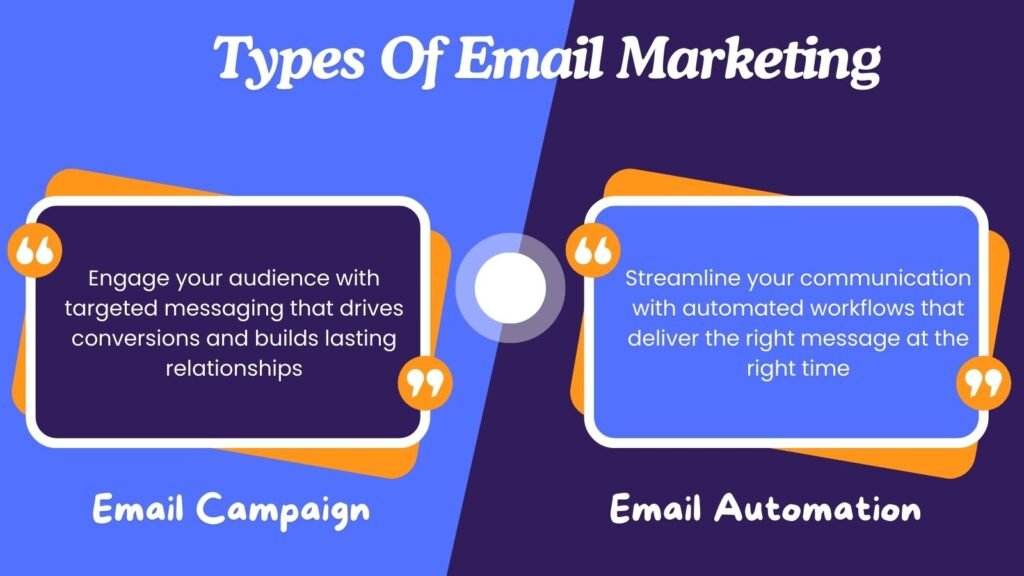
This comprehensive guide provides an actionable, data-driven framework for planning, executing, and optimizing high-converting email marketing campaigns. Tailored specifically for high-growth brands and enterprise leaders, this article explores the foundational elements of modern email strategy, including audience segmentation, behavioral automation, mobile-first design, and advanced personalization. By examining the latest 2026 industry benchmarks and return-on-investment (ROI) data, we demonstrate how businesses can transform their email lists into owned growth engines that consistently outperform algorithm-driven channels.
Email Marketing Campaign Optimization: The Ultimate Guide for High-Growth Brands
Fluctuating social media algorithms, rising customer acquisition costs, and the depreciation of third-party cookies, email marketing remains the most reliable and profitable digital channel for high-growth businesses. Unlike rented platforms where visibility is subject to pay-to-play rules, your email list represents a highly valuable, fully owned digital asset. It offers direct, unmediated access to an audience that has actively chosen to engage with your brand.
The performance gap between email and other digital channels is stark. While social commerce continues to grow, social media platforms deliver an average conversion rate of just 0.59%. In contrast, email marketing campaigns achieve an average conversion rate of 4.24%, representing a massive 7x performance advantage. This discrepancy exists because email targets high-intent users who already recognize your brand, trust your expertise, and have expressed explicit interest in your offerings.
| Marketing Channel | Average Conversion Rate (%) | Performance Multiplier |
|---|---|---|
| Email Marketing | 4.24% | Base (1.0x) |
| Search Engine Optimization | 2.20% | 0.52x |
| Paid Search (PPC) | 1.50% | 0.35x |
| Social Media | 0.59% | 0.14x |
Furthermore, email marketing delivers an unparalleled return on investment. Across all industries, the average ROI of email marketing sits between $36 and $45 for every $1 spent, a return of 3,600% to 4,500%. For retail and e-commerce brands, this figure often exceeds $45, while top-performing brands utilizing advanced segmentation and behavioral automation regularly report returns of $70 or more per dollar invested.
At Eyes On Solution, we view email marketing not as a series of isolated promotional blasts, but as a core component of a unified digital marketing strategy. When integrated with high-performance Search Engine Optimization (SEO) services and intuitive Web Design & Development, email marketing functions as a powerful conversion engine that nurtures cold traffic into loyal, repeat customers.
How Do You Set SMART Goals for an Email Marketing Campaign?
Before writing a single line of copy or designing a template, you must establish clear, measurable objectives. Launching a campaign without a defined goal is like sailing without a compass; you will have no way of knowing whether your efforts are successful or where adjustments are required.
To ensure your campaigns deliver tangible business value, we recommend utilizing the SMART goal framework:
- Specific: Define exactly what you want to accomplish. Rather than aiming to “increase sales,” set a goal to “increase revenue from abandoned cart recovery.”
- Measurable: Identify the precise key performance indicators you will use to track success. This could be open rates, click-through rates, or conversion rates.
- Achievable: Ensure your target is realistic based on your current list size, historical performance, and industry benchmarks.
- Relevant: Align your email campaign goals with your broader business objectives, such as customer retention, lead generation, or brand awareness.
- Time-bound: Establish a clear deadline for achieving your goal, such as “by the end of Q3.”
Core Business Objectives and Corresponding Email Metrics
Depending on your brand’s current lifecycle stage and marketing focus, your email campaigns will typically target one of several primary business goals:
- Lead Generation: Nurturing new subscribers who have opted in through website forms or lead magnets. The primary metrics to track here are subscriber growth rate and welcome sequence conversion rate.
- Sales and Conversions: Driving direct revenue through promotional offers, seasonal campaigns, or product launches. Key metrics include click-through rate, conversion rate, and revenue per email.
- Customer Retention and Loyalty: Encouraging repeat purchases and reducing churn through educational content, exclusive rewards, and personalized follow-ups. Key metrics include repeat purchase rate and customer lifetime value.
- Website Traffic: Directing subscribers to high-value blog posts, landing pages, or resources. The primary metric to track is click-through rate.
By defining these goals upfront, you can tailor your content, design, and call-to-action, to drive the specific action you desire, ensuring every campaign moves the needle for your business.
Why Is Audience Segmentation Critical for Email Campaign Success?
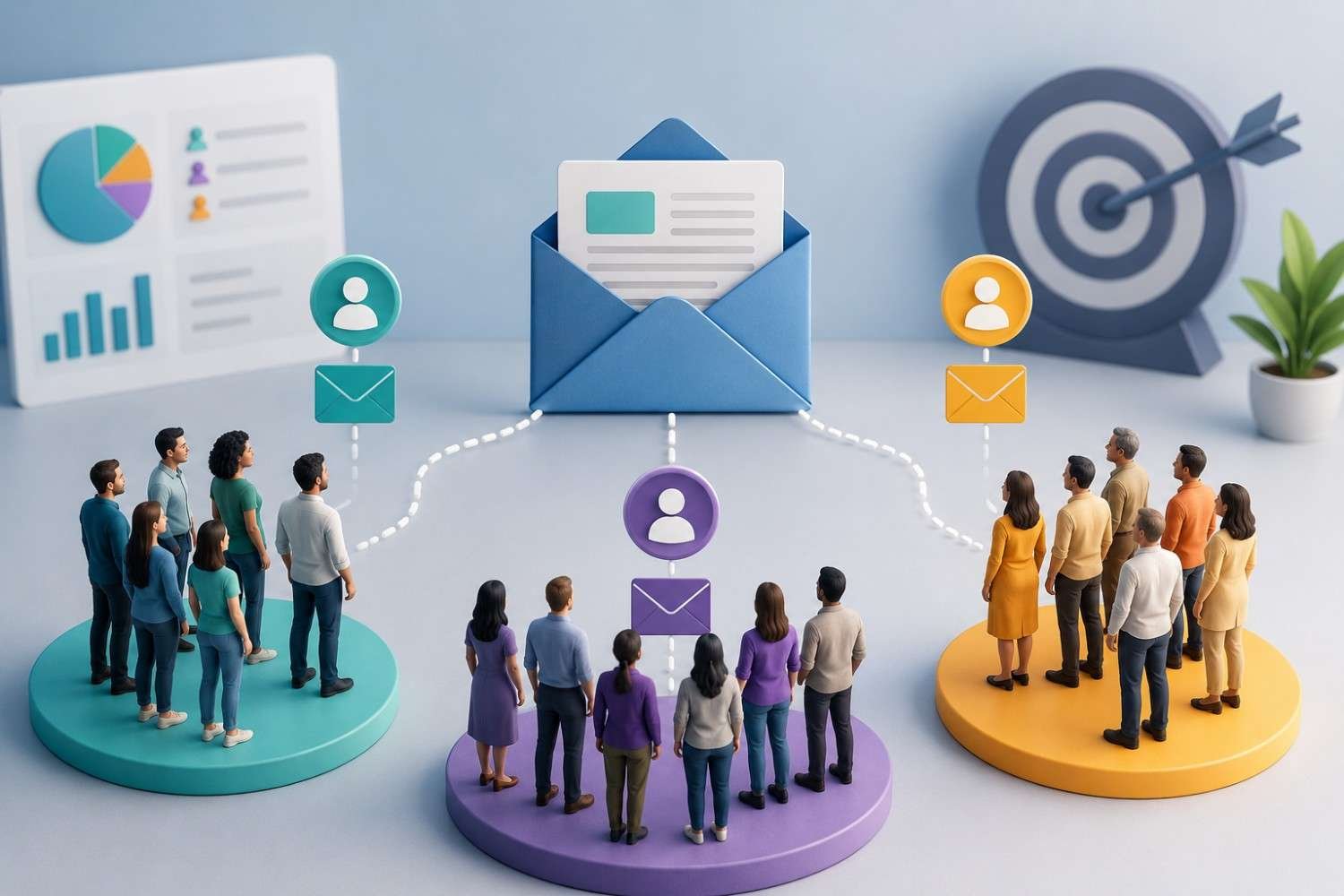
The days of “batch-and-blast” email marketing, sending the same generic message to your entire subscriber list are long gone. In today’s highly competitive inbox environment, relevance is the ultimate currency. If your emails do not directly address the unique needs, behaviors, and pain points of the recipient, they will quickly be ignored, deleted, or marked as spam.
Audience segmentation is the process of dividing your email list into smaller, distinct groups based on shared characteristics. By tailoring your messaging to specific segments, you can deliver highly relevant, context-aware content that resonates with each individual subscriber.
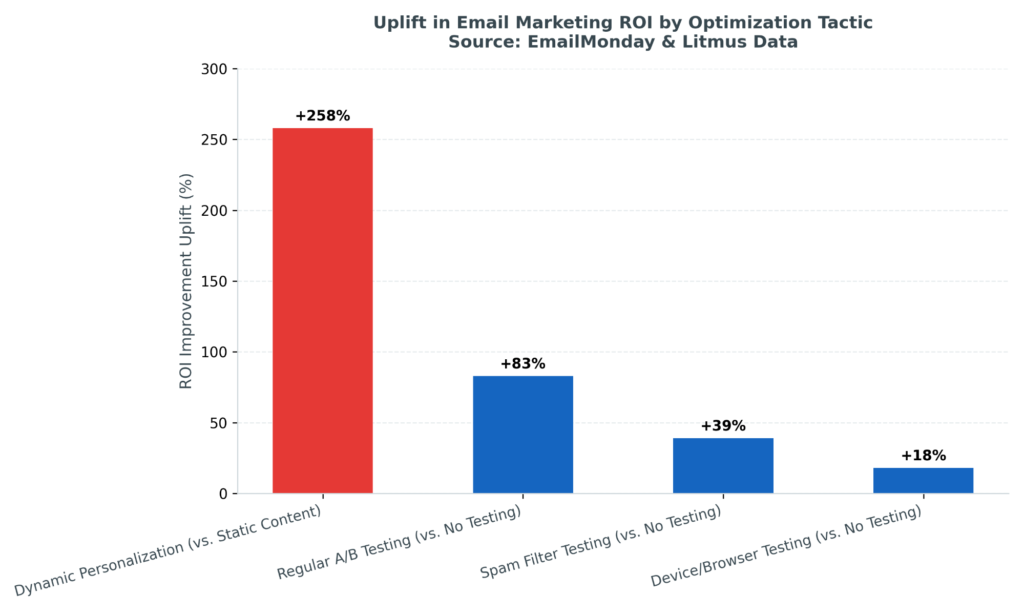
The financial impact of segmentation is extraordinary. According to industry data, brands that utilize dynamic personalization and behavioral segmentation see an average ROI increase of up to 258% compared to those that rely on static, unsegmented lists. Furthermore, segmented and personalized campaigns generate 4,300% ROI on average, compared to just 1,200% for non-personalized blasts.
Key Ways to Segment Your Email List
An effective segmentation strategy utilizes a combination of demographic, behavioral, and psychographic data to group subscribers:
- Demographics: Segmenting by age, gender, job title, or industry. This is particularly valuable for B2B brands looking to target specific decision-makers.
- Geographic Location: Tailoring campaigns based on the subscriber’s country, city, or timezone. This is essential for local businesses, regional promotions, or event-driven marketing.
- Purchase Behavior: Grouping subscribers by their buying history, such as “one-time buyers,” “repeat customers,” “high-value VIPs,” or “lapsed buyers.”
- Engagement Levels: Identifying active subscribers who open and click regularly versus inactive subscribers who have not engaged in 60 to 90 days.
- Customer Journey Stage: Customizing content based on where the user sits in the marketing funnel, from brand-new subscribers in the awareness stage to long-term advocates in the loyalty stage.
At Eyes On Solution, we help brands implement sophisticated segmentation models that leverage first-party and zero-party data. By integrating your email platform with your customer relationship management system or e-commerce store, we enable real-time, behavior-based segmentation that ensures your messages are always timely and highly targeted.
How Do You Build and Maintain a High-Quality, Compliant Email List?
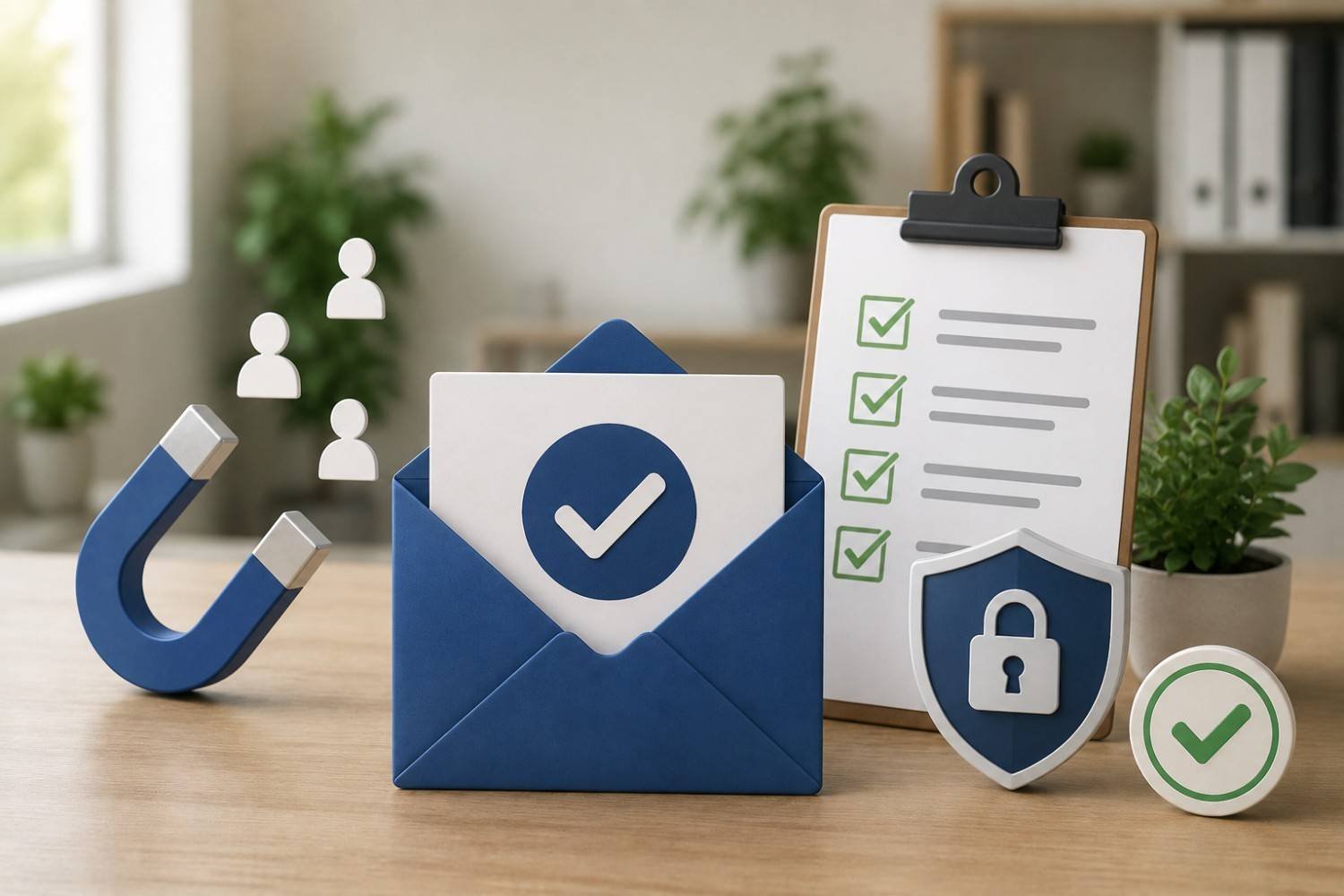
A successful email marketing strategy is built on a foundation of high-quality, engaged subscribers. While it can be tempting to focus solely on list size, a massive list of inactive or unverified contacts will actively damage your campaign performance, harm your sender reputation, and waste your marketing budget.
To build a high-converting email list, you must prioritize quality and engagement over raw numbers. This requires implementing permission-based list-building strategies and maintaining strict compliance with global privacy regulations.
Best Practices for Organic List Building
To attract high-intent subscribers who genuinely want to hear from your brand, focus on these organic growth tactics:
- High-Value Lead Magnets: Offer exclusive, actionable resources, such as e-books, whitepapers, templates, or discount codes, in exchange for an email address. Ensure your lead magnet directly addresses a primary pain point of your target audience.
- Strategic Website Sign-Up Forms: Place clean, visually appealing sign-up forms in high-traffic areas of your website, such as the header, footer, or as a slide-in scroll box. Ensure your forms are fully optimized for mobile devices.
- Dedicated Landing Pages: Create distraction-free landing pages designed solely to convert visitors into email subscribers. Use compelling headlines, clear benefits, and a single, strong call-to-action.
- Exit-Intent Pop-Ups: Implement strategically timed pop-ups that appear when a user is about to leave your site, offering a compelling incentive (such as free shipping or an exclusive guide) to stay connected.
The Dangers of Buying Email Lists
Under no circumstances should a business ever buy, rent, or scrape email lists. While it may seem like a quick way to scale your reach, buying lists is a guaranteed path to campaign failure:
- Severe Deliverability Issues: Purchased lists are flooded with inactive, dead, or spam trap email addresses. Sending to these lists will cause your bounce rates to skyrocket, leading major inbox providers (like Gmail and Outlook) to block your domain entirely.
- Spam Complaints: Because these recipients have not consented to receive emails from your brand, they will quickly flag your messages as spam, permanently damaging your sender reputation.
- Legal and Financial Penalties: Sending unsolicited marketing emails violates major privacy laws, including the General Data Protection Regulation in Europe and the CAN-SPAM Act in the United States, exposing your business to severe financial penalties.
Maintaining List Hygiene
To keep your list healthy and protect your deliverability, you must perform regular list cleaning every 60 to 90 days. This involves identifying and removing unengaged subscribers who have not opened or clicked an email in several months. Before removing them entirely, we recommend running a targeted re-engagement campaign (e.g., “We miss you, here is an exclusive offer”) to win back lapsed subscribers. If they remain inactive, permanently unsubscribe them to ensure your active list remains highly engaged and profitable.
How Do You Select the Right Email Marketing Platform for Your Business?
Choosing the right email marketing platform is a critical decision that will shape your capability to scale, automate, and analyze your campaigns. The ideal platform should not only fit your current budget but also offer the advanced features required to support your long-term growth.
When evaluating email marketing software, you should prioritize platforms that offer robust capabilities in five key areas:
- Behavioral Automation: The ability to trigger complex, multi-step email sequences based on real-time user actions (such as viewing a product, abandoning a cart, or completing a purchase).
- Advanced Segmentation: Flexible tools that allow you to group subscribers using dynamic, multi-layered criteria without requiring complex coding or manual data exports.
- A/B Testing: Built-in features to easily split-test subject lines, content layouts, images, call-to-action buttons, and send times to optimize performance.
- Deep Analytics and Reporting: Comprehensive dashboards that track critical revenue-focused metrics, including click-to-open rate, revenue per email, and overall campaign ROI, rather than just basic open rates.
- Seamless Integrations: Native connections with your e-commerce platform, CRM, and other marketing tools to ensure seamless data flow across your entire tech stack.
Industry-Leading Email Marketing Platforms
While there are dozens of platforms available, we recommend focusing on established, industry-standard tools that align with your specific business model:
- ActiveCampaign: Ideal for B2B and service-based businesses requiring advanced CRM integration, sophisticated lead scoring, and highly complex sales automation workflows.
- HubSpot: A powerful, all-in-one marketing hub perfect for mid-market and enterprise companies looking to unify their email marketing, content management, sales pipeline, and customer service.
- Klaviyo: The gold standard for e-commerce brands, offering unparalleled integration with platforms like Shopify and Magento, advanced predictive analytics, and highly profitable pre-built automation flows.
By partnering with Eyes On Solution, you gain access to certified platform experts who can handle the complete setup, migration, and optimization of your email software, ensuring your technology is fully aligned with your business objectives.
How Do You Write Attention-Grabbing Email Copy That Converts?
Even the most sophisticated automation and segmentation strategies will fail if your email copy is dull, confusing, or overly sales-heavy. To cut through the noise of a crowded inbox, your copy must be written with absolute clarity, not cleverness. It must immediately communicate value, build trust, and guide the reader toward a single, clear action.
Effective email copywriting focuses on two primary areas: the inbox envelope (subject line and preview text) and the email body.
Crafting High-Converting Subject Lines and Preview Text
Your subject line is the single most critical factor determining your open rate. It is the gatekeeper of your email content. If it fails to capture attention, your entire campaign remains unseen.
To maximize your open rates, apply these proven copywriting principles:
- Keep It Short and Punchy: Most mobile email clients truncate subject lines after 60 characters or roughly 9 words. Keep your main message at the front to ensure it is fully visible.
- Pique Curiosity or Convey Value: Give the reader a compelling reason to open the email. Address a primary pain point or highlight a specific, valuable benefit (e.g., “How to double your organic traffic in 30 days”).
- Incorporate Natural Personalization: Go beyond just inserting the recipient’s first name. Use dynamic tags to reference their location, industry, or a recent action they took to establish immediate relevance.
- Use Urgency Sparingly: Creating a sense of scarcity or time-sensitivity (e.g., “Only 24 hours left”) can boost open rates, but overusing this tactic will lead to audience fatigue and lower trust.
- Optimize Your Preview Text: Treat your preview text as an extension of your subject line. Use this space to build on the subject line’s hook, providing additional context or a secondary benefit to drive the open.
Writing Engaging, Value-Driven Email Body Copy
Once a subscriber opens your email, your body copy must quickly deliver on the promise of the subject line. Keep your writing highly focused, conversational, and easy to read:
- Focus on Benefits, Not Features: Do not just list what your product or service does. Explain exactly how it will solve the reader’s problem, save them time, or improve their business.
- Maintain a Conversational Tone: Write as if you are speaking directly to a single person. Use clear, simple language and avoid overly formal jargon or corporate buzzwords.
- Ensure High Scannability: Most users scan emails rather than reading them word-for-word. Use short paragraphs (2-3 sentences), clear subheadings, and bold text to highlight key points.
- Implement a Single, Dominant Call-to-Action: Every email should guide the reader toward one primary action. Make your CTA button visually stand out, place it high enough in the email to avoid scrolling, and use a benefit-driven, action-oriented copy (e.g., “Claim Your Free Audit” instead of “Click Here”).
Why Is Mobile-First Design Essential for Modern Email Campaigns?
Designing emails solely for the desktop is a critical mistake. According to recent industry benchmarks, over 55% of all emails are opened on mobile devices, with some consumer-focused niches reporting mobile open rates as high as 75%. If your emails are difficult to read, slow to load, or hard to navigate on a smartphone, your conversion rates will suffer.
Mobile-first design is not just about making your desktop templates look acceptable on a smaller screen; it is about building your emails from the ground up to deliver an exceptional user experience on mobile devices.
Mobile-First Email Design Best Practices
To ensure your campaigns are fully optimized for the mobile shopper, implement these design standards:
- Responsive, Single-Column Layouts: Use a single-column layout that naturally scales to fit any screen size. Multi-column designs often break on mobile or force users to pinch-and-zoom to read the content.
- Readable Font Sizes: Ensure your text is large enough to read without straining. We recommend a minimum body font size of 16px and heading font sizes of 22px to 24px.
- Large, Easy-to-Click Buttons: Mobile users navigate with their thumbs, not a precise mouse cursor. Ensure your CTA buttons are at least 44px by 44px and have plenty of white space around them to prevent accidental clicks.
- Optimized, Fast-Loading Images: Large, uncompressed images will slow down your load times, causing users to abandon your email. Compress all images and use alt text so the email still makes sense if the recipient has image-loading disabled.
- Short, Focused Copy blocks: Keep your paragraphs short and utilize ample white space to create a clean, uncluttered layout that is easy to scroll and digest on the go.
By partnering with Eyes On Solution for Web Design, you ensure that your landing pages and email templates are perfectly synced for a seamless, mobile-first user journey that maximizes conversion rates.
How Do You Build and Scale Revenue-Generating Email Automation?
Email automation is the ultimate growth lever for modern businesses. While manual campaigns are valuable for timely promotions and announcements, automated flows run continuously in the background, delivering highly personalized, contextually relevant messages to individual subscribers based on their real-time behavior.
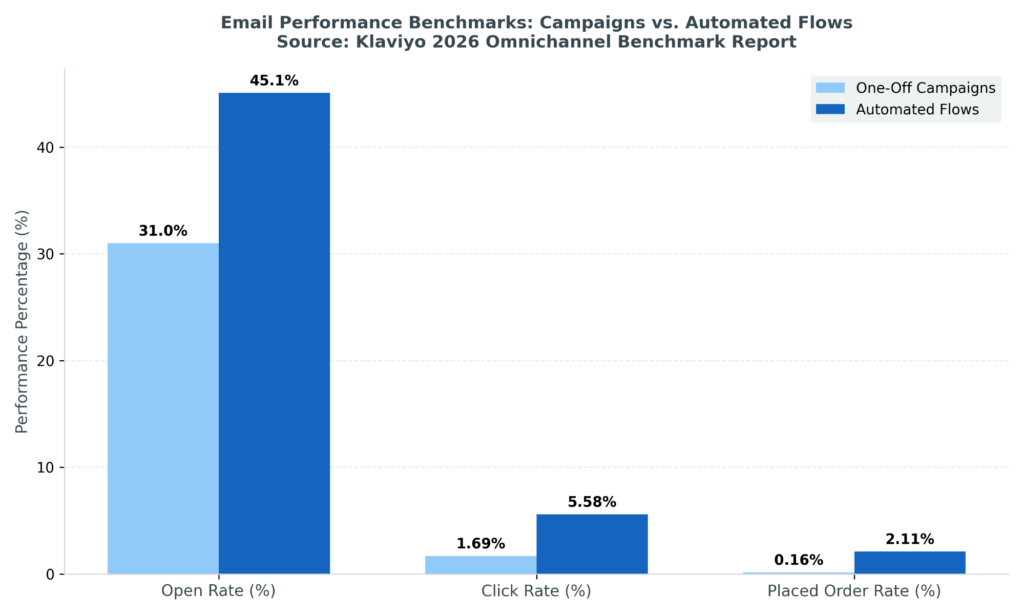
The efficiency of automation is unparalleled. While automated flows account for only 2% of total email send volume, they drive an extraordinary 37% of all email-generated sales. According to Klaviyo’s 2026 data, automated flows deliver a 13x higher conversion rate and a 3x higher click-through rate compared to standard, one-off campaigns.
Core Automation Flows Every Business Needs
To maximize your revenue on autopilot, you should implement these four high-impact automated sequences:
1. The Welcome Series
- Who is it for? New subscribers who have just opted into your list through a website form or lead magnet.
- How does it work? This sequence of 3 to 4 emails introduces your brand, delivers the promised incentive, sets expectations for future communication, and highlights your most popular products or services. Welcome emails enjoy open rates above 80%, making them critical for building trust and driving early conversions.
2. The Abandoned Cart Flow
- Who is it for? High-intent shoppers who have added items to their shopping cart but left the site without completing the purchase.
- How does it work? Triggered within 30 to 60 minutes of abandonment, this flow reminds the user of what they left behind, answers common FAQs, and provides social proof (such as customer reviews). For e-commerce brands, abandoned cart flows are highly profitable, earning an average of $3.07 to $9.86 per recipient.
3. The Browse Abandonment Flow
- Who is it for? Subscribers who have viewed specific product or service pages on your website but did not add anything to their cart or initiate a checkout.
- How does it work? This flow sends a gentle, personalized follow-up showcasing the viewed items, offering helpful educational content, or recommending similar alternatives based on their browsing history.
4. The Post-Purchase Nurture Sequence
- Who is it for? Customers who have successfully completed a purchase.
- How does it work? Instead of just sending a receipt, this sequence thanks the customer, provides helpful product usage tips, requests a review or testimonial, and strategically recommends complementary products to drive repeat purchases and increase customer lifetime value.
At Eyes On Solution, we design, build, and optimize these automated workflows from end to end. We map out the customer journey, write compelling copy, design responsive templates, and configure the technical triggers to ensure your business is generating revenue 24/7 on autopilot.
How Do You Test, Analyze, and Optimize Your Email Campaigns?
A truly effective email marketing strategy is never static. It requires continuous testing, analysis, and refinement to identify what resonates with your audience and where performance can be improved. By adopting a data-driven approach to optimization, you can systematically increase your open rates, click-through rates, and overall revenue.
The impact of testing on your bottom line is significant. Industry data shows that brands that regularly A/B test their email campaigns achieve an average ROI of 4,200%, compared to just 2,300% for those that never test, an extraordinary 83% performance uplift.
Key Elements to A/B Test
To get the most accurate results, only test one variable at a time (e.g., test two different subject lines while keeping the email content identical). Focus your testing efforts on these high-impact elements:
- Subject Lines: Test different copywriting styles (e.g., question vs. statement, short vs. long, personalized vs. generic) to optimize your open rates.
- Call-to-Action Buttons: Experiment with button colors, sizes, placements, and copy (e.g., “Get Your Free Guide” vs. “Download Now”) to drive higher click-through rates.
- Email Layouts and Design: Test a clean, text-only layout against a highly visual, image-heavy template to see which format drives better engagement.
- Send Times and Days: Analyze when your specific audience is most active and likely to convert by testing different days of the week and times of day.
Critical KPIs to Track and Analyze
To measure the true health and financial impact of your campaigns, move beyond basic open rates and focus on these critical performance metrics:
| Metric | Definition | How to Calculate | Benchmark Average |
|---|---|---|---|
| Open Rate | The percentage of delivered emails opened by recipients. | (Unique Opens ÷ Delivered Emails) × 100 | 15% – 25% |
| Click-Through Rate (CTR) | The percentage of recipients who clicked a link in your email. | (Unique Clicks ÷ Delivered Emails) × 100 | 1.5% – 2.5% |
| Click-to-Open Rate (CTOR) | The percentage of openers who went on to click a link. | (Unique Clicks ÷ Unique Opens) × 100 | 10% – 15% |
| Conversion Rate | The percentage of recipients who completed the desired action. | (Conversions ÷ Delivered Emails) × 100 | 2% – 5% |
| Bounce Rate | The percentage of sent emails that could not be delivered. | (Bounced Emails ÷ Total Sent Emails) × 100 | Under 2% |
| Unsubscribe Rate | The percentage of recipients who opted out of your list. | (Unsubscribes ÷ Delivered Emails) × 100 | Under 0.2% |
By analyzing these metrics after every campaign, you can identify trends, diagnose deliverability issues, and make informed, data-driven decisions that consistently improve your marketing performance.
How Do You Maintain Excellent Email Deliverability and Compliance?
Excellent email deliverability, ensuring your messages actually land in the subscriber’s primary inbox rather than the spam folder, is the foundation of email marketing success. If your emails are not being delivered, your strategy, copy, and design are entirely irrelevant.
Maintaining high deliverability requires a combination of technical configuration, list hygiene, and strict adherence to global privacy regulations.
Technical Best Practices for Deliverability
To prove to major inbox providers that you are a legitimate, trustworthy sender, you must configure three core email authentication protocols:
- SPF: A DNS record that specifies which mail servers are authorized to send emails on behalf of your domain.
- DKIM: A cryptographic signature added to your email headers that verifies the email was genuinely sent by your domain and was not altered in transit.
- DMARC: A policy that uses SPF and DKIM to determine how receiving mail servers should handle emails that fail authentication, protecting your domain from spoofing and phishing attacks.
Compliance and Privacy Standards
To protect your brand and maintain subscriber trust, your campaigns must comply with major global privacy laws, including the GDPR and CAN-SPAM Act:
- Explicit, Permission-Based Consent: Only send marketing emails to individuals who have actively and explicitly opted in to receive them.
- Clear, Simple Unsubscribe Mechanism: Every marketing email must include a visible, easy-to-click unsubscribe link in the footer. Process all opt-out requests immediately.
- Accurate Sender Information: Clearly state your brand’s physical mailing address and use a recognizable, verified sending domain (e.g., info@yourbrand.com instead of a generic Gmail address).
- Avoid Spam Trigger Words: Keep your subject lines and copy free of overly aggressive, spammy language (such as “FREE,” “BUY NOW,” or excessive exclamation marks) that can trigger automated spam filters.
By partnering with Eyes On Solution, you ensure your email marketing is fully compliant and technically optimized for maximum deliverability, keeping your brand out of the spam folder and in front of your audience.
What Are the Most Common Email Marketing Mistakes to Avoid?
Even experienced marketing teams can fall into common traps that limit campaign performance and waste marketing spend. To protect your sender reputation and maximize your ROI, ensure your team actively avoids these six frequent errors:
- Sending Without a Clear Strategy: Launching sporadic, unsegmented campaigns without defined goals or performance tracking leads to low engagement and high unsubscribe rates.
- Neglecting Mobile Optimization: Failing to design for mobile devices results in broken layouts, unreadable text, and hard-to-click buttons that alienate over half of your audience.
- Ignoring List Hygiene: Keeping inactive, unengaged, or unverified contacts on your list drives down your open rates and severely damages your sender reputation over time.
- Overcomplicating the Design: Visual clutter, heavy images, and multiple competing call-to-action buttons distract the reader and significantly lower your conversion rates.
- Failing to Personalize: Sending generic, one-size-fits-all messages that ignore the recipient’s unique behaviors, purchase history, or preferences leads to list fatigue.
- Weak or Missing Calls-to-Action: Forgetting to include a clear, prominent, benefit-driven CTA button leaves the reader unsure of what step to take next.
By working with the professional team at Eyes On Solution, you can bypass these costly mistakes entirely. We implement proven, industry-best practices across every stage of your email strategy, ensuring your campaigns are optimized for maximum engagement and revenue from day one.
What Are the Future Trends Shaping Email Marketing?
As technology and consumer behaviors continue to evolve, the email marketing landscape is undergoing a significant transformation. To maintain a competitive edge, high-growth brands must adapt to several emerging trends that are redefining how businesses connect with their audiences:
- AI-Powered Personalization: Artificial intelligence is moving beyond basic subject line generation. Modern platforms utilize machine learning to analyze real-time customer behavior, predicting the exact product recommendations, content blocks, and send times that will drive maximum conversion for each individual subscriber.
- Interactive and Dynamic Emails: The rise of AMP for email allows subscribers to take action directly inside their inbox, such as completing a survey, browsing a product carousel, or managing a subscription, without ever needing to click through to an external website.
- Hyper-Segmentation and Zero-Party Data: As third-party tracking cookies disappear, successful brands are shifting their focus to collecting zero-party data, information that customers willingly and actively share through interactive quizzes, preference centers, and surveys. This data enables highly precise, hyper-segmented campaigns that deliver unparalleled relevance.
- Privacy-First Marketing: With the introduction of features like Apple’s Mail Privacy Protection, traditional metrics like open rates are becoming less reliable. Forward-thinking brands are shifting their focus to deeper, revenue-aligned KPIs, such as click-to-open rate, conversion rate, and customer lifetime value.
At Eyes On Solution, we are constantly innovating and integrating these cutting-edge trends into our clients’ digital marketing strategies. We ensure your brand is always positioned at the forefront of the digital landscape, leveraging modern technology to drive sustainable, long-term growth.
Frequently Asked Questions (FAQ)
How often should my business send marketing emails?
The optimal sending frequency depends on your industry, audience preferences, and business model. For most high-growth brands, the “sweet spot” lies between 9 and 16 emails per month, which delivers an average ROI of 4,600%. Sending too frequently can lead to list fatigue, rising unsubscribe rates, and spam complaints, while sending too rarely can cause subscribers to forget your brand, leading to lower engagement. We recommend starting with one high-value campaign per week and utilizing automated, behavior-triggered flows to deliver timely, personalized touchpoints without overwhelming your list.
What is a good email open rate for my industry?
Across most major industries, a healthy, average email campaign open rate sits between 15% and 25%. However, this figure can vary significantly based on your specific sector, list quality, and segmentation. For instance, non-profit organizations often see average open rates above 40%, while e-commerce and retail brands typically average around 29% to 33%. Rather than focusing solely on raw industry averages, aim to continuously improve your own baseline by optimizing your subject lines, cleaning your list regularly, and segmenting your audience by engagement level.
How can I improve my email click-through rates?
To boost your click-through rates, you must focus on increasing the relevance of your content and the clarity of your design. First, segment your list so you are only sending offers to subscribers who have expressed interest in that specific product or topic. Second, write highly engaging, benefit-driven copy that clearly explains why the reader should click. Third, implement a single, prominent call-to-action button that is visually distinct, easy to click on mobile, and uses action-oriented language (e.g., “Claim My 10% Discount” instead of “Submit”).
What is the best time to send marketing emails?
There is no single “perfect” time to send an email, as the optimal send time depends entirely on when your specific audience is active and ready to buy. While historical data often suggests mid-morning on Tuesdays and Thursdays yields high engagement, the most effective approach is to utilize your email platform’s built-in send-time optimization features. These tools leverage machine learning to analyze when each individual subscriber historically opens emails and automatically delivers your message at their precise peak activity time.
Why is email segmentation important for ROI?
Email segmentation is critical because it directly impacts the relevance of your campaigns. When you send highly targeted, personalized messages to specific segments of your list, you deliver immediate value to the recipient. This relevance translates directly into higher open rates, stronger click-through rates, and significantly higher conversion rates. According to industry data, segmented and personalized email campaigns generate up to 258% higher ROI compared to static, unsegmented blasts, making segmentation the most powerful growth lever in your email strategy.