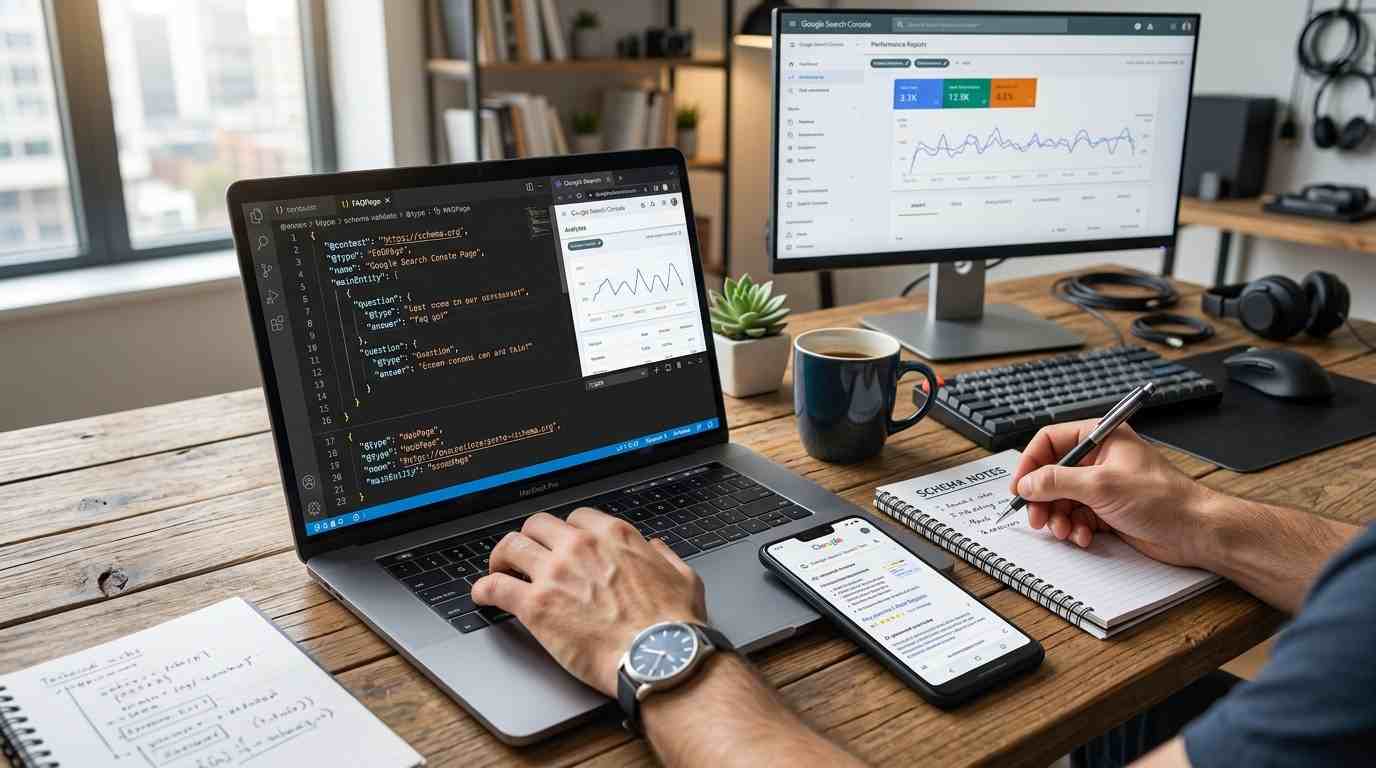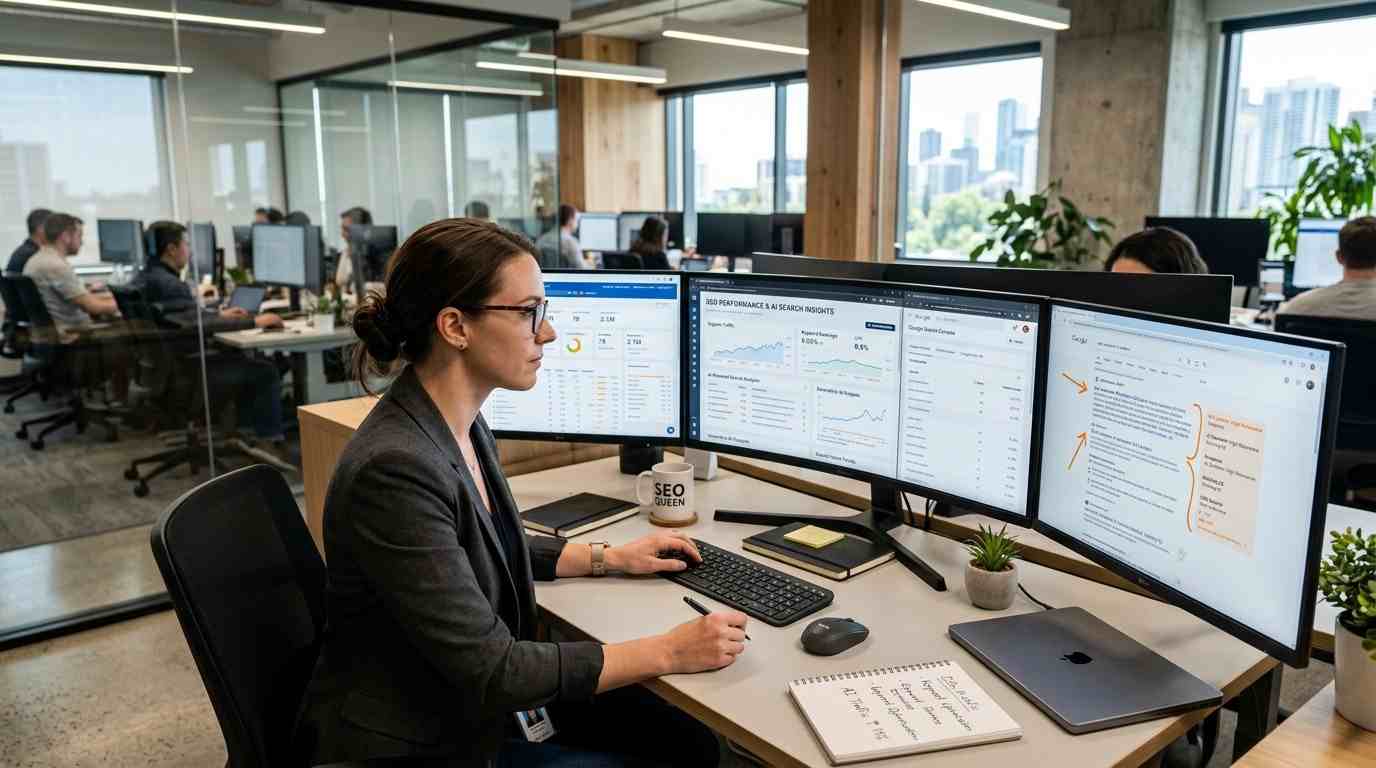
The first sign is often quiet. Fewer enquiries. A product page that used to sit near the top is suddenly harder to find. Then someone opens Analytics, sees the line dipping, and says the words nobody wants to hear: “Was there a Google update?”
Possibly. But do not start by rewriting the website.
Google describes core updates as broad changes to its ranking systems. They are not penalties aimed at named websites or individual pages. A page can move down because another result now does a better job for that search.
That answer can feel a bit unsatisfying. Search Console is still the best place to start because it shows the pattern of the loss. Is it one page? One country? Mobile traffic? A whole content type? Those details matter more than the label “core update.”
Give The Update Time To Finish
Check Google’s Search Status Dashboard first. Write down when the update started and when Google says it finished.
This sounds obvious, yet it is easy to miss during a stressful week. People compare Tuesday’s numbers with the first day of a rollout, make three changes, and then have no idea which version of the site Google actually evaluated.
Google recommends waiting at least a full week after a core update finishes before doing a serious comparison in Search Console. After that, compare the post-update period with a period before the rollout began.
Open Performance And Widen The View
In Search Console, open the Performance report. Set the date range wide enough to show what was happening before the drop. Google recommends looking at up to 16 months where possible because a short window can hide seasonality or a slow decline that started long before the update.
The report gives you four basic numbers:
Clicks
Impressions
Click-through rate
Average position
Clicks tell you what arrived. Impressions tell you how often Google showed your pages. CTR tells you how often people chose them. Average position can help with context, but it is not a permanent rank stamped on your website. Search Console aggregates it differently depending on whether you are viewing queries, pages, countries, devices, or dates.
Compare Like With Like
Use the comparison option in the date filter. Do not rely on two charts sitting next to each other and a quick guess. Start with the period after the update and a comparable period before it began. If your business has seasonal demand, try a year-over-year comparison as well. A travel company in July and the same company in January are not having the same conversation with Google or with customers.
Compare complete weeks or months. A retailer may look damaged simply because one period included a promotion and the other did not. A school may see a normal summer dip. A restaurant may have a slow week because of a public holiday.
The Click And Impression Clue
Now read clicks and impressions together. When both fall, your pages may be appearing less often. Rankings may have changed, search demand may have softened, an important URL may have left the index, or a competitor may now occupy the space you used to hold.
When impressions stay similar but clicks fall, the problem may be closer to the result itself. Look at CTR, the page title, the snippet, rich results, and the pages now sitting above yours. The page has not vanished. It may simply look less useful from the results screen.
A small position change can be enough to hurt. Google uses a move from position 2 to position 4 as an example of a small drop. That may cost clicks, but Google advises against drastic changes when a page is still performing well.
A fall from position 4 to position 29 is a different story. Google describes that kind of large, sustained movement as a reason for deeper assessment.
Find The Pages Behind The Loss
Go to the Pages tab. Compare the two periods and sort by click difference. The URLs that lost the most deserve attention first. Start with pages that mattered to the business before the update. A service page that brought qualified enquiries is more important than a low-traffic article that lost seven clicks.
Read the pages side by side. Look for a pattern. Perhaps all the local landing pages dropped. Perhaps only old blog posts fell. Maybe every URL using one template slipped, while product pages stayed steady. Sometimes one large page accounts for most of the loss and the rest of the site is fine.
For a UAE business, separate the country data before drawing a conclusion. A global decline may look severe while the UAE remains stable. The opposite can happen too.
Google recommends the Page indexing report when a problem appears site-wide and URL Inspection when the concern is limited to individual pages or a small group.
If location pages are involved, check whether they contain genuine local detail or simply repeat the same copy with a new neighbourhood name. That is a common weak spot in local SEO in Dubai, especially when a site has been expanded quickly.
Follow The Queries, Not Just The URLs
Switch to Queries and identify the searches that lost clicks and impressions. Export the data if the table becomes unwieldy. Then look at the actual result page for the important terms. Search from the relevant location and device, but remember that your own result is not universal. Location, language, search history, and time can change what you see.
A few questions help here:
Is another page from your own site ranking instead?
Has a competitor answered the question more directly?
Does Google now show a local pack, video, image result, product result, or comparison page?
Has the query changed from research intent to buying intent?
Has interest in the query fallen across the market?
A page can remain accurate and still become a poorer match for the search. Someone who once wanted a broad explanation may now want a price comparison, a nearby provider, or a short answer. The content did not necessarily become bad. The searcher’s need may have moved.
This is where a clear content structure helps. The practical thinking behind content optimized for AI answers applies to ordinary search too. Put the answer early. Keep a section focused on one question. Do not make readers dig through five paragraphs of throat-clearing to find the useful sentence.
Split The Data By Search Type And Device
Search Console lets you separate web, image, video, and news traffic. Google specifically recommends this when investigating a core-update drop. A publisher may have lost News traffic while web clicks remain steady. An ecommerce business may lose image visibility while product pages continue to receive visits. Put all search types together and a small problem can look like a full-site collapse.
Now try Countries and Devices. A mobile-only decline might point toward the way the page loads, displays, or appears in a small result card. A country-specific drop may have more to do with competitors, language, local demand, or regulations than with the page itself.
For a local company, the basic business details deserve a quick look. Make sure the website and Google Business Profile agree about the business name, address, opening hours, services, and location. A mismatch is not proof of a core-update problem, but it is a needless source of confusion.
Rule Out Technical Damage
Before blaming an algorithm, make sure the site was available and indexable. Open the Page indexing report and look for a sudden rise in excluded or failed URLs. Use URL Inspection on pages that lost important traffic. Check the live URL, index status, canonical selection, and crawl information available in Search Console.
Google lists several technical causes of traffic loss, including server availability issues, robots.txt errors, page-not-found responses, and misplaced noindex tags. These can affect a whole site or only a group of pages.
Look back at recent work. A redesign may have changed URLs. A developer may have added a redirect rule. A plugin may have put noindex on a set of category pages. A consent system may have affected analytics, making the fall look larger than it is.
Also check for security warnings, hosting outages, slow responses, and important content that fails to appear on mobile. If the site moved recently, allow time for Google to recrawl and reindex it. Google notes that medium-sized sites can take weeks to settle after URL changes, and larger sites can take longer.
Check Search Demand Outside Your Website
Take the queries that lost impressions and put them into Google Trends. Google recommends this when you need to know whether a decline is limited to your site or reflects a wider change in interest. A fall in searches for a product, destination, service, or news topic may come from a holiday, a new product replacing an old one, a change in public interest, or ordinary seasonal behaviour. It is not automatically a content failure.
This check is especially useful when the site looks healthy. If several competitors also lost interest and impressions, more on-page editing may not solve the real problem.
Decide Whether The Page Needs a Change
A small decline doesn't call for a full rewrite. If a page slips from position 2 to position 4 but still brings in useful traffic, give it a little time. Google advises against making drastic changes in response to a minor shift. When rankings drop sharply and stay down, take another look at the affected pages. Is the information still accurate? Does it show real knowledge? Can someone find an answer and decide what to do next? Sometimes a competing page simply explains things better or gives readers more useful proof.
Ask someone outside the content team to read a page. People who work on a website daily can miss gaps that jump out at a fresh reader. A service page might look polished on screen, yet leave a customer unsure about pricing, service areas, timings, or what happens after they submit a form.
Avoid Cosmetic SEO Fixes
Don't rush to change things because a social media post calls a particular word a “ranking signal.” Removing a heading, trimming a paragraph, or swapping a keyword isn't a recovery plan. Google recommends meaningful improvements that last, not edits made just to make a page look different.
If the site has published a large batch of lightly edited content, an AI SEO optimization review may be worth considering. Still, don't remove a page simply because AI helped write it. Check its accuracy, usefulness, originality, and purpose on the site first.
Know When to Remove Content
Not every weak page needs to go. Some can be improved with accurate details, clearer answers, or examples from the business itself. If a page repeats information found elsewhere and offers nothing useful of its own, combining it with a stronger page may be the better option. Check traffic, backlinks and the page's role on the site before making that call.
Google treats deletion as a last resort. Removing a page may make sense when its content genuinely helps nobody and there's no practical way to improve it. Be careful about deleting whole sections, though. If they offer nothing beyond search focused copy, that may point to a deeper problem with how the content was planned.
Keep Notes And Give The Work Time
Record which URLs changed and when. Save Search Console exports or screenshots before editing. Otherwise, a few months later, the team may remember that traffic improved and forget what actually happened in between. Some improvements can affect Search within days. Others may take months while Google’s systems assess whether the site is consistently producing helpful, reliable, people-first content. Not a satisfying timetable. The honest one, though.
FAQS
1. How do I check a Google core update traffic drop in Search Console?
Open Google Search Console, go to the Performance report, and compare clicks, impressions, CTR, and average position before and after the update. Filter by pages and queries to identify which URLs and search terms lost traffic.
2. Why did my website traffic drop after a Google core update?
Traffic may fall because Google's ranking systems reassessed your pages against other results. Content relevance, usefulness, competing pages, search demand, and technical problems can all contribute. A drop alone does not prove your site was penalised.
3. How long does it take to recover from a Google core update?
There is no fixed recovery period. Improvements may take weeks or months to show results, and some changes may not restore previous rankings. Review the affected pages, make meaningful improvements, and monitor performance instead of changing everything at once.
4. Should I update all my website content after a Google core update?
No. Start with pages that have suffered sustained declines and assess their accuracy, usefulness, originality, and search intent. Update pages that need improvement, combine overlapping content where appropriate, and leave useful pages alone if the evidence doesn't justify a change.
5. How can I tell if a traffic drop is caused by a Google core update or a technical issue?
Compare the timing of the decline with Google's update dates, then check Search Console's Page Indexing report, Manual Actions report, Security Issues report, and URL Inspection tool. Also review server availability, robots.txt rules, noindex tags, and seasonal demand before blaming the update.