In the highly competitive world of eCommerce, appearing on the first page of search results is no longer enough. To capture attention and drive sales, your product listings need to stand out. This comprehensive guide explores how rich results and structured data (schema markup) transform standard search listings into visually appealing, information-rich results. From product schema that displays pricing and availability to review schema that builds instant trust, we break down the strategies that drive a 40% higher click-through rate. Written by the digital marketing experts at Eyes On Solution, this article provides actionable insights, data-backed strategies, and practical implementation steps to turn your website into a powerful growth engine.
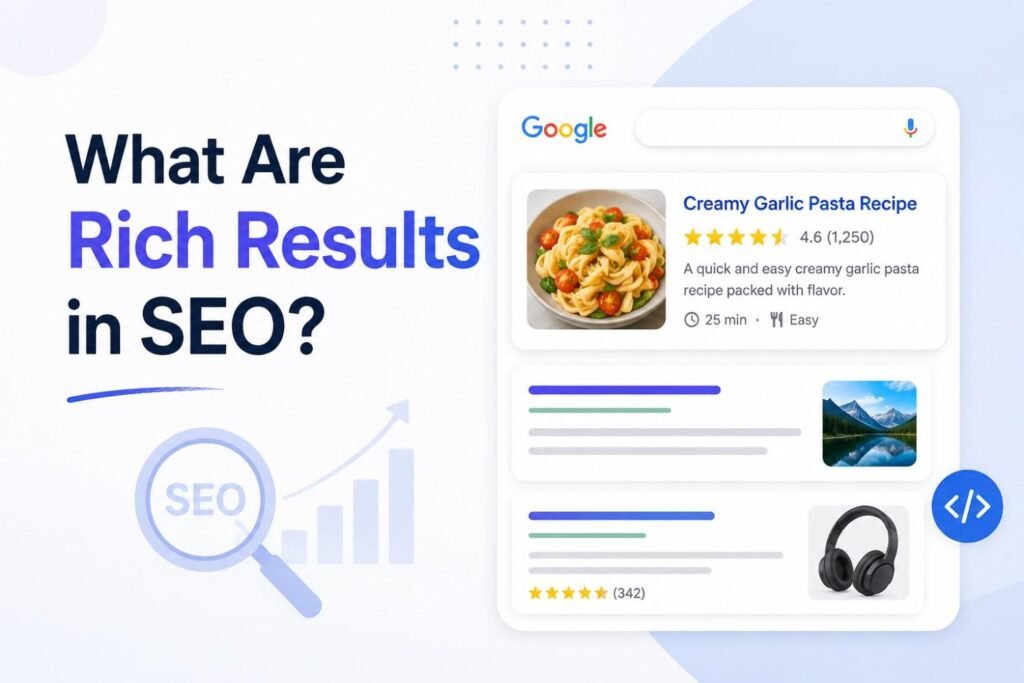
When you search for a product online, you might notice that some results look different from the rest. Instead of just a plain blue link and a short description, certain listings feature star ratings, product images, prices, and even stock availability directly on the search engine results page. These enhanced listings are known as rich results.
Rich results are search listings that pull additional data from a webpage’s HTML to display a more engaging and informative snippet. Search engines like Google use structured data, a standardized format for providing information about a page and classifying the page content, to generate these rich results. By implementing schema markup, you communicate directly with search engines, telling them exactly what your content means. This semantic understanding allows search engines to present your eCommerce products in a way that immediately answers the user’s query, significantly improving visibility and user engagement.
At Eyes On Solution, we consistently see that businesses leveraging rich results gain a substantial competitive advantage. In fact, studies indicate that pages with schema markup often experience a 40% higher click-through rate compared to pages without it. This is because rich results provide immediate value, answering user questions before they even click the link.
Rich Results vs. Featured Snippets: What Is the Difference?
A common misconception in the SEO world is that rich results and featured snippets are the same thing. While both enhance your visibility on the SERP, they serve different purposes and function differently.
Featured snippets are concise answers to user queries displayed at the very top of the search results, often referred to as “Position Zero.” They pull a specific paragraph, list, or table from a webpage to directly answer a question like “How to tie a tie.”
Rich results, on the other hand, enhance standard organic listings anywhere on the page. They add visual and informational flair, such as review stars or product prices, to the existing search result. The purpose of rich results in eCommerce is not necessarily to answer a broad question, but to provide critical purchasing information that encourages a user with high buying intent to click through to your product page.
| Feature | Rich Results | Featured Snippets |
|---|---|---|
| Location on SERP | Anywhere on the page | Position Zero (top) |
| Triggered by | Structured data / schema markup | Page content relevance |
| Primary purpose | Enhance product/service listings | Answer broad informational queries |
| Best for eCommerce | Yes , shows price, stock, ratings | Rarely , better for informational content |
| User intent served | Commercial / transactional | Informational |
| Requires schema markup | Yes | No |
How Do Search Engines Use Structured Data for Rich Results?
To understand how rich results work, you must first understand the role of structured data. Structured data is essentially a language that search engines read to understand the context of your content. The most common and Google-preferred format for structured data is JSON-LD (JavaScript Object Notation for Linked Data).
When you add JSON-LD schema markup to your eCommerce product pages, you are providing search engines with explicit clues about the meaning of the page. You are not just saying, “Here is a page about a leather chair.” You are specifically coding, “This is a Product. The Name is ‘Executive Leather Office Chair’. The Price is $259.99. The Currency is USD. The Availability is InStock.”
The Google Rich Results Process
The process of generating a rich result follows a specific path:
- Crawling: Google’s bots crawl your website, reading the HTML and identifying the structured data scripts embedded in your pages.
- Understanding: The search engine processes the JSON-LD markup, interpreting the exact attributes of your product, organization, or article. This step is crucial because it moves search engines from merely reading text (strings) to understanding concepts (things and entities).
- Displaying: If your structured data is accurate, follows Google’s guidelines, and matches the user’s search intent, Google may choose to display your listing as an enhanced rich result.
This process highlights why technical SEO is a core pillar of the services we provide at Eyes On Solution. Proper implementation of structured data requires precision. A single syntax error can prevent search engines from reading the markup, costing you valuable SERP real estate.
What Are the Most Common Types of Rich Results for eCommerce?
For online retailers, not all schema markup is created equal. Certain types of rich results are specifically designed to drive eCommerce success. Here are the most impactful types you should focus on.
| Rich Result Type | Schema Used | What It Displays | Best For |
|---|---|---|---|
| Product Rich Results | Product Schema | Name, price, image, availability | All product pages |
| Review & Ratings | Review / AggregateRating Schema | Star ratings, review count | Products with customer reviews |
| Merchant Listings | Offer + Product Schema | Price drops, shipping, return policy | Competitive product categories |
| FAQ Rich Results | FAQPage Schema | Q&A pairs below listing | Informational + product pages |
| Breadcrumb | BreadcrumbList Schema | Site navigation path | All pages |
| Video Rich Results | VideoObject Schema | Thumbnail, duration, title | Product demo and tutorial pages |
How Do Product Rich Results Display in Search?
Product rich results are the holy grail of eCommerce SEO. When properly implemented using Product Schema, these results display critical purchasing information directly in the SERP. Users can see the product name, the current price, whether the item is in stock, and often a high-quality product image.
This level of detail is incredibly powerful. Imagine a user searching for a specific running shoe. If your listing shows the exact price and confirms the shoe is in stock, while your competitor’s listing only shows a generic description, the user is far more likely to click your link. The transparency builds immediate trust and sets clear expectations.
Why Do Review and Rating Rich Results Matter?
Social proof is one of the strongest drivers of online sales. Review Schema allows search engines to display star ratings and the total number of customer reviews right beneath your URL.
When a listing features a 4.8-star rating based on 500 reviews, it instantly communicates credibility and quality. This visual enhancement draws the eye and significantly increases click-through rates. In fact, sites with review schema marked up have experienced up to a 25% higher CTR. At Eyes On Solution, we always emphasize the importance of collecting genuine customer reviews, as they directly fuel this powerful SEO feature.
What Are Merchant Listing Experiences?
Google has recently expanded its eCommerce capabilities with Merchant Listing experiences. These are highly visual, shopping-related enhancements that can include price drops, shipping details, return policies, and pros and cons.
By utilizing comprehensive Offer Schema and Product Schema, you can make your listings eligible for these expanded experiences. This is particularly valuable for users with high commercial intent who are comparing options directly on the search results page.
How Can FAQ Rich Results Improve Visibility?
FAQ Schema allows you to display a list of frequently asked questions and their answers directly beneath your search listing. While Google has recently reduced the frequency of FAQ rich results for general queries, they remain highly relevant for authoritative brands and specific informational searches.
For an eCommerce site, FAQ rich results can address common objections or shipping questions before the user even visits the site, taking up more vertical space on the SERP and pushing competitors further down the page.
Why Are Breadcrumb Rich Results Important?
Breadcrumb Schema improves how your site’s navigation is displayed in search results. Instead of showing a messy, complex URL string, search engines display a clean, categorized path (e.g., Home > Men’s Shoes > Running Shoes). This helps users understand the hierarchy of your site and confirms that they are landing on a relevant category page.
How Do Video Rich Results Drive Engagement?
If your eCommerce strategy includes product demonstrations, tutorials, or unboxing content, Video Schema is essential. This markup helps search engines understand the content of your videos, potentially leading to rich snippets that display video thumbnails, duration, and other details. Video rich results capture attention and drive highly engaged traffic to your product pages.

Why Do Rich Results Matter for eCommerce SEO?
Implementing schema markup requires technical expertise and time, but the return on investment is undeniable. Here is why rich results are a critical component of any modern eCommerce SEO strategy.
How Do Rich Results Improve Search Visibility?
The most immediate benefit of rich results is the sheer amount of screen space they occupy. A standard search listing takes up a few lines of text. A rich result featuring a product image, star ratings, price, and FAQs can take up twice as much vertical space. In a mobile-first world where screen real estate is limited, dominating the SERP means your competitors are pushed below the fold.
Why Do Rich Results Generate Higher Click-Through Rates (CTR)?
Humans are highly visual creatures. We are naturally drawn to images, colors (like yellow review stars), and structured data over blocks of plain text. This visual appeal directly translates to higher click-through rates.
When users see additional information like ratings or event dates in search results, they are more likely to click on those results. The data speaks for itself. Look at the chart below illustrating the impact of schema markup on various eCommerce metrics.
How Do Rich Results Create a Better User Experience?
Rich results align perfectly with Google’s ultimate goal: providing the best possible user experience. By displaying important information before the click, you help users make faster, more informed decisions. If a user is looking for a product under $50, and your rich result shows a price of $45, you have immediately satisfied their search intent.
Why Do Rich Results Drive Increased Qualified Traffic?
Not all traffic is good traffic. If a user clicks on your site expecting a budget product but finds premium pricing, they will immediately bounce. Rich results act as a filter. Because the price, availability, and ratings are displayed upfront, the users who do click through already know what to expect. This means you are attracting users with high purchase intent, resulting in better traffic quality and lower bounce rates.
Can Rich Results Lead to a Potential Increase in Conversions?
Absolutely. The combination of qualified traffic and upfront trust-building naturally leads to higher conversion rates. When a visitor arrives at your website already knowing the price, seeing that the item is in stock, and trusting the 5-star reviews they saw on Google, they are primed to buy. Rich results support the buying decision before the user even enters your store.
Which Key Rich Result Types Drive More eCommerce Sales?
To maximize your return on investment, you must focus on the schema types that directly influence purchasing behavior.
| Schema Type | Required Properties | Impact on eCommerce | Priority Level |
|---|---|---|---|
| Product Schema | name, image, description, brand, offers | Displays price, stock, image in SERP | Critical |
| Review / AggregateRating | ratingValue, reviewCount | Builds trust, increases CTR by up to 25% | High |
| Offer Schema | price, priceCurrency, availability | Shows real-time pricing and discounts | Critical |
| Organization Schema | name, url, logo, contactPoint | Builds brand credibility in SERPs | Medium |
| BreadcrumbList Schema | item, name, position | Improves navigation display | Medium |
| FAQPage Schema | mainEntity, question, acceptedAnswer | Occupies more SERP space | Medium |
What Are the Best Use Cases for Product Schema?
Product Schema is non-negotiable for eCommerce. It should be applied to every single individual product page on your site. The essential properties you must include are the product name, image, description, brand, and an aggregate rating. At Eyes On Solution, our Advanced SEO packages ensure that this markup is flawlessly integrated to maximize your sales potential.
How Does Review Schema Impact Trust and Conversions?
Review Schema is critical for building brand credibility. However, it must be used ethically. You should only mark up authentic reviews collected directly from your customers. Faking reviews or marking up third-party reviews incorrectly violates search engine guidelines and can result in manual penalties. When used correctly, the impact on trust and conversion is profound.
Why Is Offer Schema Essential for Pricing and Stock?
Offer Schema is usually nested within Product Schema. It provides the specific transactional details of the product. You must include the price, the currency, and the availability (e.g., InStock or OutOfStock). If you are running a sale, Offer Schema can also highlight discounted pricing, creating a sense of urgency right on the SERP.
How Does Organization Schema Build Brand Credibility?
While not directly tied to a specific product, Organization Schema is vital for your homepage and about pages. It provides search engines with your logo, contact information, social profiles, and corporate structure. This enhances your brand’s overall presence in search results and improves user trust, an important ranking factor.

How to Implement Rich Results on an eCommerce Website
Implementing structured data requires a systematic approach. Here is the framework we use at Eyes On Solution to ensure flawless execution.
How Do You Identify Important Pages for Schema Markup?
You do not need to add every type of schema to every page. Strategy is key.
- Product Pages: Require Product, Offer, and Review Schema.
- Category Pages: Benefit from Breadcrumb and CollectionPage Schema.
- FAQs: Should utilize FAQPage Schema.
- Blog Content: Needs Article or BlogPosting Schema to highlight authorship and publication dates.
What Is the Best Way to Add Structured Data Markup?
As mentioned earlier, JSON-LD is the recommended implementation method. It is a lightweight script that sits in the <head> or <body> of your HTML, keeping your code clean and separate from the visual elements of the page. You can generate this code manually, use Google’s Structured Data Markup Helper, or utilize specialized plugins depending on your CMS (like WordPress or Shopify).
Why Must You Follow Google’s Guidelines?
Search engines are strict about structured data. You must avoid misleading markup at all costs. For example, marking up a category page with Product Schema as if it were a single item is a violation. Ensure data accuracy; if your schema says a product is $20, but the page says $30, Google will lose trust in your site and revoke your rich results.
How Do You Keep Information Updated?
Prices, inventory, and reviews change constantly. Your schema markup must update dynamically to reflect these changes. If an item goes out of stock, the schema must immediately update to OutOfStock. This is why hard-coding schema is dangerous for eCommerce; it must be integrated dynamically with your store’s database.
What Are the Best Practices for Maximizing Rich Result Performance?
Getting the code right is only the first step. To truly dominate the search results, you must optimize the content feeding the schema.
| Best Practice | Why It Matters | Action Required |
|---|---|---|
| Use complete product information | More data = more visually rich listings | Fill all schema properties thoroughly |
| Encourage customer reviews | Review schema drives up to 25% higher CTR | Automate post-purchase review requests |
| Optimize mobile experience | Google uses mobile-first indexing | Ensure fast load speeds and responsive design |
| Monitor Search Console | Identifies errors and tracks performance | Review Enhancement reports weekly |
| Keep data updated dynamically | Stale prices/stock trigger penalties | Integrate schema with live database |
Why Should You Use Complete Product Information?
Search engines reward comprehensiveness. Ensure your product details are accurate and thorough. Use high-quality, high-resolution images, as these are often pulled directly into the rich result. The more data you provide, the more visually appealing your listing will be.
How Can You Encourage Customer Reviews?
Since Review Schema is so powerful, you need a strategy to generate consistent, genuine reviews. Implement automated email sequences asking for feedback post-purchase. Offer small incentives for leaving a review. Improving your review volume directly enhances the social proof displayed in your search listings.
Why Is Mobile Experience Optimization Crucial?
The majority of eCommerce searches happen on mobile devices. Google uses mobile-first indexing, meaning they evaluate the mobile version of your site first. Ensure your pages are mobile-friendly and have fast loading speeds. A beautiful rich result means nothing if the user clicks through to a slow, broken mobile site.
How Should You Monitor Search Performance?
SEO is an ongoing process. Use Google Search Console to track the impressions and CTR of your rich results. The “Enhancements” report will show you exactly how many of your pages are eligible for rich results and highlight any errors that need fixing.
What Are Common Rich Result Mistakes to Avoid?
Even experienced developers can make mistakes when implementing schema. Here are the pitfalls to watch out for.
| Mistake | Consequence | How to Fix It |
|---|---|---|
| Incorrect / incomplete markup | Rich results do not display | Validate with Rich Results Test before publishing |
| Marking up hidden content | Manual action penalty from Google | Only mark up content visible on the page |
| Outdated prices or availability | Google revokes rich results | Dynamically sync schema with product database |
| Ignoring validation tools | Errors go undetected | Run tests after every schema change |
| Mismatched page and schema data | Loss of trust with search engines | Audit schema against live page content regularly |
What Happens If You Have Incorrect Schema Markup?
Missing required fields or syntax errors (like a missing comma in your JSON-LD code) will break the markup. If the code is broken, search engines cannot read it, and you will not get rich results.
Why Is Marking Up Hidden Content a Bad Idea?
A golden rule of structured data is that you should only mark up content that is visible to the user. If you add Review Schema to your code, but those reviews are nowhere to be found on the actual webpage, you are violating search engine guidelines. This can lead to a manual action penalty, removing your site from search results entirely.
How Does Outdated Product Information Hurt SEO?
Displaying incorrect prices and availability in your schema frustrates users and search engines alike. If Google detects a mismatch between your structured data and the visible page content, they will stop displaying your rich results.
Why Should You Never Ignore Validation Tools?
Never deploy schema markup without testing it first. The importance of testing structured data cannot be overstated. Always use validation tools to ensure your code is error-free before pushing it live.
Which Tools Help Test and Monitor Rich Results?
To ensure your eCommerce SEO strategy is functioning correctly, rely on these industry-standard tools.
How Does Google’s Rich Results Test Help?
Google’s Rich Results Test allows you to input a URL or a code snippet to see which rich results can be generated. It highlights errors and provides a visual preview of how your listing will appear in search results. This is an essential step before publishing any new product page.
What Role Does Google Search Console Play?
Google Search Console is your command center for performance monitoring. It provides detailed enhancement reports, alerting you to any issues with your structured data across your entire site. It is the most reliable way to monitor the health of your rich results at scale.
Why Use Schema Markup Validators?
While Google’s tool is great for Google-specific features, the official Schema Markup Validator allows you to validate all Schema.org-based structured data. This helps identify implementation issues and ensures your markup is universally understood by all search engines, including Bing and Yahoo.
What Is the Future of Rich Results in eCommerce SEO?
The search landscape is evolving rapidly, and structured data is at the center of this transformation.
How Are AI-Powered Search Experiences Changing the Game?
With the rise of AI Overviews and generative AI in search, the formats of search results are evolving. However, evidence shows that Google and Bing are still actively utilizing structured data to feed their advanced search features. Schema markup helps LLMs (Large Language Models) understand content accurately, reducing hallucinations and ensuring your products are recommended correctly.
Why Is the Importance of Structured Data Growing?
Search engines are increasingly relying on schema to understand the complex relationships between entities on the web. By implementing semantic structured data, you are future-proofing your website. You are building a reusable semantic data layer that prepares your eCommerce store for the day when AI search engines rely heavily on this data.
How Does Early Adoption Provide a Competitive Advantage?
Despite the clear benefits, a surprising number of businesses still do not use structured data. With only about 6% of first-page results using schema markup, early adopters benefit from increased prominence and SERP real estate. By partnering with an agency like Eyes On Solution to implement advanced schema strategies now, you secure a massive competitive advantage for your online store.
Turn Rich Results Into a Competitive Advantage
Rich results are no longer just a “nice-to-have” feature; they are a fundamental requirement for eCommerce SEO success. By transforming standard search listings into highly visual, informative snippets, rich results drive higher click-through rates, improve user experience, and ultimately increase qualified traffic and conversions.
The key to unlocking this potential lies in the accurate and strategic implementation of structured data, specifically JSON-LD schema markup. From Product and Review Schema to ensuring mobile optimization and continuous monitoring, the process requires technical precision.
At Eyes On Solution, our mission is to help businesses grow with smart, data-driven digital marketing strategies. We specialize in the technical SEO and advanced markup required to make your products stand out in a crowded market. Do not let your competitors dominate the search results. Optimize your product pages for enhanced search visibility today, and turn your website into a powerful growth engine.
FAQs
What Is the Difference Between Rich Results and Rich Snippets?
There is essentially no difference; the terms are often used interchangeably in the SEO industry. Google officially uses the term “rich results” to describe any search result that goes beyond the standard blue link and description, which includes what were previously called rich snippets (like review stars or product prices).
Are Rich Results Guaranteed After Adding Schema Markup?
No, rich results are never guaranteed. Adding accurate schema markup makes your page eligible for rich results, but Google’s algorithm ultimately decides whether displaying the enhanced listing provides the best user experience for that specific search query.
Which Schema Type Is Most Important for eCommerce Websites?
Product Schema is the most critical type for eCommerce. It allows you to display vital purchasing information, such as price, availability, and product images, directly in the search results, which is essential for attracting buyers.
Can Rich Results Improve Product Sales?
Yes. By displaying pricing, availability, and high star ratings upfront, rich results attract highly qualified traffic. Users who click through already have a clear understanding of the product, which builds trust and significantly increases the likelihood of conversion.
How Long Does It Take for Rich Results to Appear in Google Search Results?
Once you implement schema markup, it can take anywhere from a few days to a few weeks for Google to recrawl the page, process the structured data, and begin displaying rich results. You can expedite the crawling process by requesting indexing through Google Search Console.
Do Rich Results Directly Affect SEO Rankings?
Schema markup and rich results are not direct ranking factors. However, the visually appealing nature of rich results often leads to a higher Click-Through Rate and better user engagement. These behavioral signals can indirectly improve your organic rankings over time.
How Can I Check if My Website Is Eligible for Rich Results?
You can test individual pages using Google’s Rich Results Test tool. For a site-wide overview, log into your Google Search Console account and review the “Enhancements” section, which details valid structured data and highlights any errors that need fixing.