Search has fundamentally changed, with 49% of sessions now producing an AI-generated answer before a single organic link appears. This article explores what modern SEO services entail, moving beyond traditional keyword rankings to encompass Generative Engine Optimization (GEO) and Answer Engine Optimization (AEO). Designed for business owners, marketing directors, and decision-makers looking to capture high-intent traffic, this guide breaks down the core components of SEO, how AI is reshaping visibility, and how to position your brand as the trusted citation in AI-generated responses.
The internet is filled with potential customers actively searching for the exact products and services your business offers. But the real question is: are you visible where your customers are actually searching? In the past, answering that question was relatively straightforward. You optimized for Google’s first page, earned a top-three blue link, and watched the traffic roll in. Today, the landscape is far more complex. With the rise of ChatGPT, Perplexity, Gemini, and Google AI Overviews, buyers are increasingly receiving direct answers rather than a list of links to sift through.
If your brand isn’t the one being cited in those AI-generated answers, you have already lost the sale before the customer even clicks a link. Generative Engine Optimization (GEO) and modern Search Engine Optimization are now the disciplines of making your business the brand that AI recommends. This guide will break down exactly what SEO services are, how they have evolved beyond traditional keyword rankings, and what businesses can expect from a modern, AI-integrated search strategy.
What Are SEO Services and How Do They Work?
At its core, Search Engine Optimization is the practice of improving a website’s visibility in organic (non-paid) search engine results. When a potential customer types a query into Google, Bing, or an AI assistant, SEO is the mechanism that determines which websites or brands are presented as the best solution.
However, modern SEO services extend far beyond simply inserting keywords into a blog post. Search engines have evolved into highly sophisticated systems that evaluate hundreds of signals, including technical performance, content relevance, entity authority, and user experience, to determine rankings. Professional SEO services encompass a comprehensive suite of strategies designed to align your website with these complex algorithms.
While paid advertising can provide immediate visibility, it stops delivering traffic the moment you stop paying. Organic search, on the other hand, builds compounding value. Once you establish authority and visibility, it continues to drive qualified leads over time, providing a significantly higher return on investment in the long run.
What Do Professional SEO Services Include?
A comprehensive SEO strategy requires a multi-layered approach. When you partner with a reputable digital marketing company like Eyes on Solution, your SEO campaign will typically include:
- Technical Optimization: Ensuring that search engine crawlers and AI bots can easily read, index, and understand your website’s architecture. This includes improving site speed, mobile responsiveness, and implementing structured data (schema markup).
- Content Optimization: Creating high-quality, relevant content that directly answers user queries. This involves semantic relevance, topical authority, and formatting content to be easily digestible by both humans and machines.
- Authority Building: Earning trust signals from other reputable websites through link building, digital PR, and brand mentions. AI engines heavily weigh these citations when deciding which brands to recommend.
- User Experience Improvements: Search engines prioritize websites that offer a seamless experience. This means optimizing Core Web Vitals, improving navigation, and ensuring visitors stay engaged with your content.
- AI Search Optimization: Adapting content to be cited by Large Language Models (LLMs) like ChatGPT and Google AI Overviews, ensuring your brand is featured in generative responses.
Why Are SEO Services More Important Than Ever?

If you have been following digital marketing trends, you might have heard the recurring myth that “SEO is dead.” The reality is exactly the opposite: SEO is more critical than ever, but it has fundamentally transformed.
How Has Search Behavior Changed?
Consumer search behavior has shifted dramatically. Users no longer want to browse through ten different websites to find an answer; they seek instant, accurate resolutions. According to recent data, approximately 60% of global Google searches now result in no clicks, meaning users get their answers directly from the search results page.
Furthermore, AI-generated summaries are heavily influencing click-through behavior. Studies indicate that when AI summaries are present, users click on traditional search links in only 8% of visits, compared to 15% when no AI summaries appear, representing a massive 54% drop in traditional click-through rates.
The growth of voice search and conversational queries has also changed how people search. Instead of typing fragmented keywords like “best SEO company Dubai,” users are asking full, conversational questions like, “Which digital marketing agency in Dubai specializes in AI search optimization?”
SEO Now Extends Beyond Traditional Rankings
Because of these behavioral shifts, modern SEO services must optimize for an entirely new ecosystem of discovery platforms. Your strategy can no longer focus solely on traditional search engines. It must encompass:
- Traditional Search Engines: Google, Bing, and Yahoo still drive massive volume and remain foundational to online visibility.
- AI Assistants and Chatbots: Platforms like ChatGPT, which now boasts over 900 million weekly active users, are becoming primary research tools for consumers.
- Answer Engines: Tools like Perplexity, which processes hundreds of millions of queries monthly, provide direct, cited answers to complex questions.
- AI-Generated Search Experiences: Features like Google AI Overviews synthesize information from multiple sources to provide a comprehensive answer at the very top of the search results page.
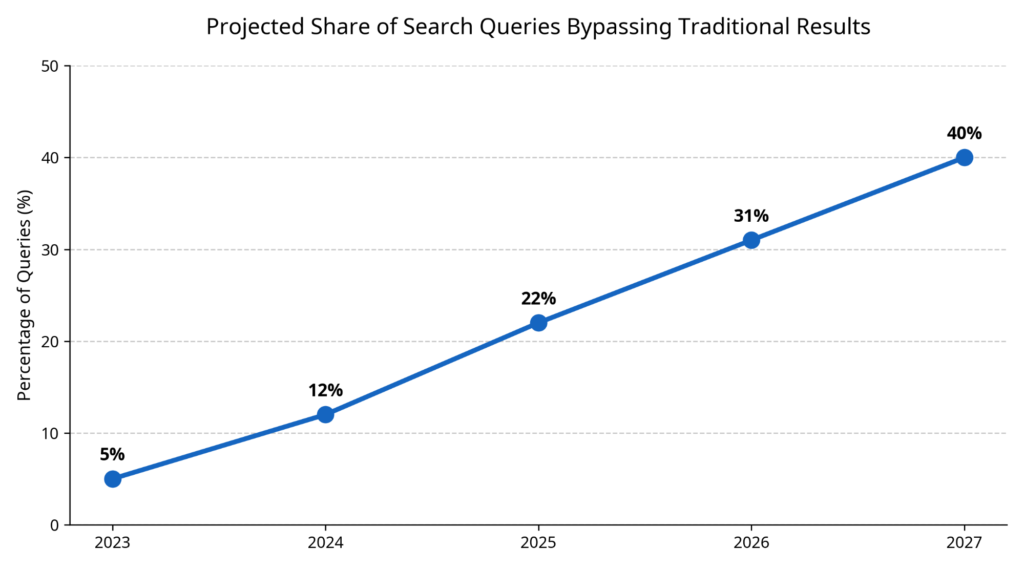
By 2027, an estimated 40% of all search queries are expected to bypass traditional blue-link results entirely. Businesses that invest in modern SEO and GEO services now will own that crucial answer space, locking out competitors who are still relying on outdated tactics.
What Are the Core Types of SEO Services?
To achieve comprehensive visibility, a modern SEO strategy must address four distinct pillars. Each pillar requires specific expertise and tactics.
| SEO Type | Primary Focus | Key Tactics | Best For |
|---|---|---|---|
| On-Page SEO | Content relevance and structure | Keyword targeting, meta tags, internal linking | All businesses |
| Technical SEO | Site infrastructure and crawlability | Site speed, schema markup, Core Web Vitals | All businesses |
| Off-Page SEO | Authority and trust signals | Link building, digital PR, brand mentions | Competitive industries |
| Local SEO | Geographic visibility | Google Business Profile, local citations | Service-area businesses |
| eCommerce SEO | Product and category visibility | Product schema, merchant listings | Online retailers |
What Is On-Page SEO?
On-page SEO refers to the optimizations made directly within your website’s pages to improve their relevance and readability for search engines. This is the foundation of any successful campaign.
- Content Optimization: Crafting high-quality, engaging text that satisfies user intent. This involves answering questions thoroughly and structuring the content logically.
- Keyword Targeting: Identifying the specific terms and phrases your audience uses and integrating them naturally into your content, headings, and URLs.
- Internal Linking: Creating a logical network of links between your own pages to help search engines understand your site’s hierarchy and distribute ranking power.
- Meta Tags: Writing compelling meta titles and descriptions that accurately summarize the page content and encourage users to click through from the search results.
What Is Technical SEO?
Technical SEO focuses on the backend infrastructure of your website. If search engines cannot crawl and index your site properly, no amount of great content will help you rank.
- Site Speed: Optimizing images, leveraging browser caching, and minimizing code to ensure your pages load instantly. Slow sites suffer from high bounce rates and lower rankings.
- Mobile Usability: With the majority of web traffic coming from mobile devices, ensuring your site is fully responsive and provides a flawless mobile experience is non-negotiable.
- Crawlability and Indexation: Managing robots.txt files, XML sitemaps, and fixing broken links to ensure search engine bots can navigate your site without encountering errors.
- Structured Data (Schema Markup): Adding specific code to your site that helps search engines understand the context of your content, enabling rich snippets and better AI comprehension.
- Core Web Vitals: Optimizing for Google’s specific metrics related to loading performance, interactivity, and visual stability.
What Is Off-Page SEO?
Off-page SEO involves actions taken outside of your website to impact your rankings. This pillar is primarily about building authority and trust.
- Link Building: Earning high-quality backlinks from authoritative websites in your industry. Search engines view these links as “votes of confidence” in your content.
- Digital PR: Securing brand placements, mentions, and citations in high-authority publications and industry media.
- Brand Authority Signals: Managing your brand’s reputation across the web, ensuring consistent NAP (Name, Address, Phone Number) data, and fostering positive reviews.
What Is Local SEO?
For businesses that serve specific geographic areas, Local SEO is essential for capturing nearby customers who are ready to buy.
- Google Business Profile Optimization: Claiming, verifying, and fully optimizing your GBP listing to appear in the highly coveted “Local Pack” map results.
- Local Citations: Ensuring your business information is consistent across online directories, local chambers of commerce, and review sites.
- Location-Based Searches: Creating content and optimizing pages for location-specific keywords (e.g., “SEO company Dubai”).
What Is eCommerce SEO?
Online retailers require a specialized approach to SEO to drive traffic directly to products and categories.
- Product Page Optimization: Writing unique, compelling product descriptions, optimizing images, and managing customer reviews.
- Category Page Optimization: Structuring category pages to target broader, high-volume search terms and organizing products logically.
- Product Schema: Implementing structured data to display price, availability, and review ratings directly in the search results.
- Merchant Listings: Optimizing data feeds for inclusion in Google Shopping and other merchant platforms.
Modern SEO Services: Moving Beyond Traditional Search
The most significant evolution in digital marketing today is the convergence of traditional SEO with AI-driven optimization strategies. At Eyes on Solution, we recognize that ranking on page one is no longer enough; your brand must be the cited authority in AI-generated answers.
Comparing SEO, AEO, and GEO: Which Strategy Does What?
Understanding where each strategy operates is essential for allocating your digital marketing budget effectively. The table below outlines the key distinctions:
| Factor | Traditional SEO | AEO (Answer Engine Optimization) | GEO (Generative Engine Optimization) |
|---|---|---|---|
| Primary Goal | Rank on Page 1 of Google | Appear in featured snippets and voice search | Get cited inside AI-generated answers |
| Where It Appears | Blue-link search results | Voice search, Google snippets | ChatGPT, Gemini, Perplexity, AI Overviews |
| Content Approach | Keyword targeting, backlinks | Direct answers, structured data | Entity authority, citation-worthy content |
| Key Metric | Rankings, organic traffic | Snippet appearances | AI mention frequency, citation sentiment |
| Average Conversion Rate | 2.1% | 5–8% | 20–27% |
| Time to Results | 3–6 months | 2–4 months | 6–10 weeks (early wins), compounds long-term |
| Competitive Moat | Moderate | Low | High , early adopters hardest to displace |
What Is AEO?
Answer Engine Optimization focuses on formatting and structuring content so that it can be easily extracted and served as a direct answer by platforms like Google’s featured snippets, voice search assistants (Siri, Alexa), and AI chatbots.
AEO involves creating concise, definitive answers to specific questions. This means heavily utilizing FAQ sections, structuring content with clear hierarchical headings (H2s, H3s), and using bulleted or numbered lists. The goal is to make the content as machine-readable as possible so that an answer engine can confidently pull your text to satisfy a user’s query.
What Is GEO (Generative Engine Optimization)?
Generative Engine Optimization is the discipline of making your business the brand that AI cites in its generative responses. When ChatGPT or Perplexity formulates an answer, it synthesizes information from across the web and cites its sources. GEO ensures your brand is one of those trusted sources.
GEO goes beyond formatting; it is about entity-based optimization. This means building your brand’s authority within Knowledge Graphs (like Wikidata and Google’s Knowledge Graph) so that AI models inherently understand who you are, what you do, and why you are a credible expert in your field. It also requires high-authority citation campaigns, securing placements in the exact tier-1 publications that LLMs rely on for their training data.
What Is AIO?
AI Optimization (AIO) is the overarching strategy of creating content systems that AI can understand, process, and cite. It involves a deep focus on semantic relevance and topical authority. Instead of targeting isolated keywords, AIO requires building comprehensive “topic clusters” that cover an entire subject exhaustively.
AIO demands that content be designed for AI understanding from the ground up. This means using definition-first paragraphs, embedding data-rich comparison tables, and ensuring that every claim is backed by authoritative statistics.
How Do You Optimize for AI Overviews?
Google AI Overviews (formerly SGE) represent a massive shift in how search results are displayed. These generative summaries appear at the top of the SERP, synthesizing answers from multiple sources.
To optimize for AI Overviews, businesses must focus on the content formats that these systems prefer to cite. Data shows that video (particularly YouTube), comparative listicles, and structured FAQs are among the most frequently cited formats.
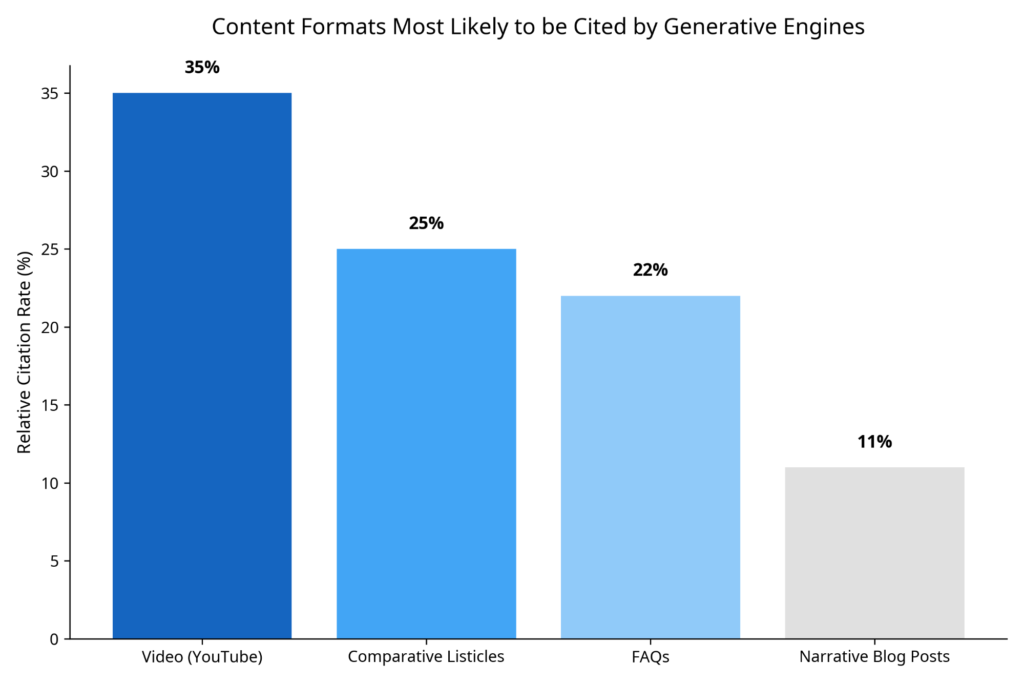
Furthermore, optimizing for AI Overviews requires an intense focus on E-E-A-T (Experience, Expertise, Authoritativeness, and Trustworthiness) signals. AI models are programmed to favor sources that demonstrate real-world experience and verifiable expertise.
What Is Included in Professional SEO Services Today?
When you engage a forward-thinking digital marketing agency like Eyes on Solution, your service package should reflect the realities of the modern search landscape.
SEO and AI Visibility Audit
Before any strategy is implemented, a comprehensive audit is required. This goes beyond a standard technical SEO crawl. A modern audit includes a search visibility assessment across traditional engines, but more importantly, it includes an AI visibility audit. We analyze exactly where your brand appears (or doesn’t appear) across ChatGPT, Gemini, Perplexity, and Google AI Overviews, identifying immediate opportunities for citation.
Keyword and Topic Research
Traditional keyword research, finding terms with high search volume and low competition, is still valuable, but it is no longer sufficient. Modern research focuses heavily on search intent analysis. Why is the user searching for this term? What problem are they trying to solve?
Furthermore, the focus has shifted toward topic clusters and conversational query research. We identify the exact, long-tail questions your buyers are asking AI platforms and build content strategies to answer them definitively.
Content Strategy
A robust content strategy is the engine of both SEO and GEO. This includes:
- Blog Content: In-depth, educational articles that build topical authority.
- Service Pages: Highly optimized pages designed to convert high-intent traffic.
- Pillar Content: Comprehensive, definitive guides that cover a broad topic exhaustively.
- FAQ Development: Creating structured Q&A sections based on the exact prompts users feed into LLMs.
- AI-Answer Focused Content: Structuring paragraphs and sections specifically to be extracted as direct answers.
Structured Data Implementation
Schema markup is the language of AI engines. Professional services must include the implementation of advanced structured data, including:
- FAQ schema
- Product schema
- Local Business schema
- Article schema
- Organization schema
This code allows AI engines to read, interpret, and cite your content without friction.
Authority Building
Building authority today requires a sophisticated approach to Digital PR. It is no longer just about acquiring any backlink; it is about securing brand mentions and citations in the specific high-authority publications that AI engines trust most. This process also involves entity recognition, ensuring your brand is correctly categorized in major knowledge bases.
How SEO Services Help Businesses Appear in AI Search Results

The ultimate goal of modern SEO and GEO services is to position your brand inside the AI-generated answers where buying decisions are increasingly being made. Here is how professional services achieve this:
Improving Content Quality
AI engines are designed to surface the most helpful, accurate, and comprehensive information available. By elevating the quality of your content, ensuring it is well-researched, clearly written, and structurally sound, SEO services make your website a prime candidate for AI citation.
Building Topical Authority
LLMs do not trust websites that dabble in a hundred different subjects. They trust specialists. SEO services help you build deep topical authority by creating interconnected clusters of content that prove your expertise in your specific niche.
Strengthening E-E-A-T Signals
Experience, Expertise, Authoritativeness, and Trustworthiness are the foundational pillars of AI trust. Modern SEO focuses on highlighting author credentials, citing reputable sources, and building a robust off-page reputation to send strong E-E-A-T signals to AI algorithms.
Using Structured Data Correctly
As mentioned, structured data is how you communicate directly with machines. By implementing comprehensive schema markup, SEO services ensure that AI engines can instantly parse your data, understand your business entity, and confidently recommend your services.
Creating Content AI Systems Can Understand and Cite
There is a specific architecture that makes content citation-worthy to an LLM. SEO services restructure your content using direct-answer blocks, definition-first paragraphs, and comparison tables, aligning your website with the exact formats AI models prefer to reference.
Key Benefits of Modern SEO Services
Investing in a comprehensive, AI-integrated SEO strategy delivers transformative benefits for your business.
Higher Organic Traffic
By optimizing for both traditional search and AI platforms, you maximize your visibility across the entire discovery ecosystem, driving a steady stream of high-quality organic traffic to your website.
Better Visibility in AI Overviews
Securing a placement in Google AI Overviews puts your brand at the absolute top of the search results, above traditional organic listings, significantly increasing your brand’s exposure.
Increased Brand Mentions in AI Responses
When platforms like ChatGPT or Perplexity recommend your brand, it acts as a powerful third-party endorsement. The AI is essentially telling the user, “This is the best solution for your problem.”
More Qualified Leads and Higher Conversions
The traffic generated by AI citations is exceptionally valuable. Traditional organic search converts at around 2.1%. However, AI-referred traffic converts at an astonishing 20–27%.
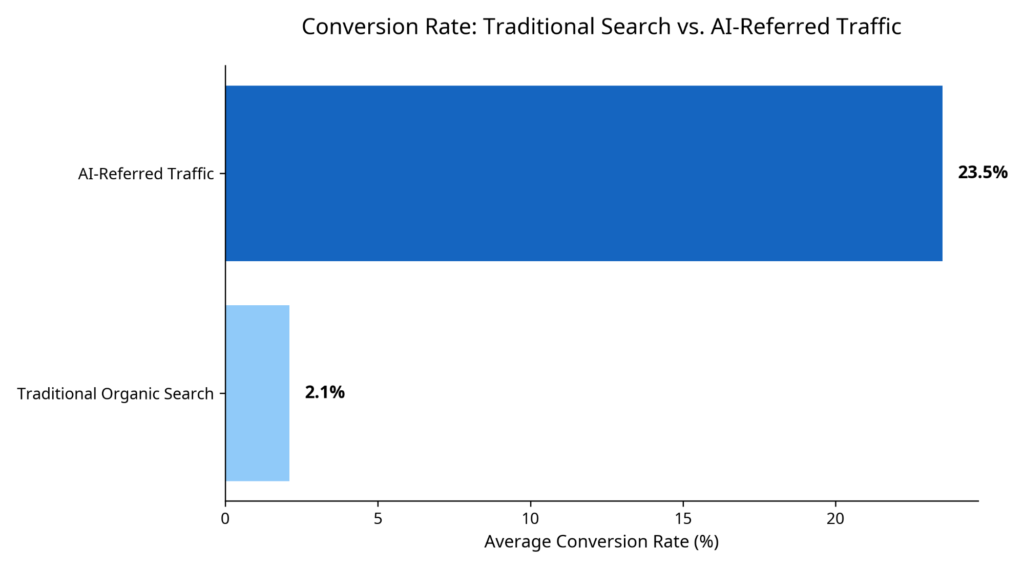
This massive gap exists because visitors arriving from AI citations arrive pre-sold; the AI has already vetted your brand and recommended it as the right choice. Leads arrive pre-qualified, compressing sales cycles and lowering your cost per acquisition.
Long-Term Digital Growth
Unlike paid advertising, which stops the moment your budget runs out, the authority and visibility built through SEO and GEO compound over time. Early movers who establish entity authority and citation frequency now will be incredibly difficult for competitors to displace in the future.
Improved User Experience
Because modern SEO heavily emphasizes site speed, mobile responsiveness, and clear content structure, the optimizations performed to please search engines inherently create a better, more engaging experience for your human visitors.
How to Choose an SEO Service Provider
With the rapid changes in the digital landscape, selecting the right digital marketing company is crucial. Here is what to look for:
Look Beyond Rankings
If an agency only talks about getting you to “Page 1 of Google,” they are operating on an outdated model. Ask prospective providers about their AI visibility strategies. Evaluate their capabilities in AEO and GEO. Do they understand how to optimize for ChatGPT and Perplexity?
Review Case Studies
Ask for proven results. Look for case studies that demonstrate not just traffic increases, but actual revenue growth, lead generation, and improvements in AI citation frequency. At Eyes on Solution, we focus on metrics connected directly to your revenue.
Understand Reporting Metrics
Ensure the agency provides clear, transparent reporting that your leadership team can actually understand. They should be tracking AI mentions, citation sentiment, and AI-referred traffic, not just traditional keyword rankings.
Avoid Outdated SEO Practices
Be wary of agencies that promise immediate results, rely heavily on keyword stuffing, or use manipulative link-building tactics. These outdated practices will not only fail to generate AI visibility but can actively harm your website’s reputation.
Common SEO Service Myths
The SEO industry is rife with misinformation. Let’s clear up some of the most common myths.
Myth: SEO Is Only About Keywords
While keywords are still relevant for understanding user intent, modern SEO is about topical authority, entity recognition, and providing comprehensive answers. Keyword stuffing is actively penalized by modern algorithms.
Myth: Rankings Are the Only Goal
Rankings are a vanity metric if they do not result in conversions. The true goal of SEO is to drive qualified traffic that generates leads and revenue. Being cited in an AI answer may not give you a traditional “ranking,” but it can drive traffic that converts at 12x the rate of a standard search result.
Myth: AI Will Replace SEO
AI is not replacing SEO; it is evolving it. As long as users are searching for information, businesses will need optimization strategies to ensure they are the ones providing the answers. SEO is simply adapting to include GEO and AEO.
Myth: SEO and GEO Are Separate Strategies
GEO is not a replacement for SEO; it is an extension of it. The technical foundation, content quality, and authority signals required for traditional SEO are the exact same prerequisites needed for successful Generative Engine Optimization. They must be executed as a unified strategy.
The Future of SEO Services
The digital marketing landscape is shifting rapidly, and businesses must adapt to stay competitive.
Search Engines Becoming Answer Engines
The transition from search engines (providing links) to answer engines (providing direct resolutions) will only accelerate. Users are demanding faster, more concise information, and AI models are delivering it.
AI Overviews and Generative Search Growth
Features like Google AI Overviews will become more prevalent and more sophisticated, taking up an increasing share of the visual real estate on search result pages. Optimizing for these generative spaces will become mandatory.
Entity-Based Optimization
The focus will continue to shift away from individual keywords toward entities. AI models need to understand the relationships between concepts, brands, and people. Building a strong Knowledge Graph presence will be a critical competitive advantage.
Conversational Search Experiences
As voice search and chatbot usage grow, optimization strategies must focus on natural language processing and answering complex, multi-part questions conversationally.
The Convergence of SEO, AEO, GEO, and AIO
Ultimately, the distinction between these acronyms will blur. The future of SEO services is a holistic approach that combines technical excellence, authoritative content, and structured data to make a brand visible, credible, and citable across every platform where consumers seek information.
The Future of SEO Belongs to Brands That Build Authority Early
SEO is no longer just about traditional search rankings. It is a comprehensive discipline that encompasses technical performance, content authority, AEO, GEO, and AI Overview optimization. As consumer behavior shifts toward AI-generated answers, businesses that adapt to this new reality will gain a massive competitive advantage.
By partnering with a forward-thinking digital marketing company like Eyes on Solution, you can ensure your brand isn’t just a link on a page, but the trusted, recommended authority in your industry. The window to establish AI citation authority is open right now, businesses that act early will compress their sales cycles, secure higher conversion rates, and lock out competitors who are slow to adapt.
Frequently Asked Questions (FAQ)
What exactly do SEO services include for a modern business?
Modern SEO services include technical optimization (site speed, mobile usability, schema markup), content strategy (building topical authority and answering user intent), off-page authority building (digital PR and high-quality link acquisition), and Generative Engine Optimization to ensure your brand is cited by AI platforms like ChatGPT and Google AI Overviews.
How does Generative Engine Optimization differ from traditional SEO?
Traditional SEO focuses on ranking web pages in a list of search engine results using keywords and backlinks. GEO focuses on formatting content, building entity authority, and securing high-tier citations so that Large Language Models inherently trust your brand and cite it directly within AI-generated answers.
Why is my website losing traffic to AI Overviews and how can I fix it?
Websites are losing traffic because AI Overviews are providing users with direct answers, eliminating the need to click through to a webpage. To fix this, you must shift your strategy to AEO and GEO, structuring your content with direct-answer blocks, comparison tables, and FAQ schema so that your brand becomes the source the AI cites in its overview.
How long does it take for SEO and GEO services to show a return on investment?
While traditional SEO can take 3 to 6 months to show significant movement, GEO tactics can sometimes yield faster results. Structural optimizations like schema implementation and formatting for AI readability can impact citations within 30 to 60 days, though building long-term entity authority remains a compounding, multi-month process.
Can an SEO agency guarantee that my business will be cited by ChatGPT?
No reputable agency can guarantee specific citations by AI models, just as they cannot guarantee a #1 ranking on Google. However, a specialized agency like Eyes on Solution uses data-driven GEO frameworks, such as implementing structured data, optimizing for entity recognition, and securing high-authority PR placements, to drastically increase the mathematical probability of your brand being recommended by LLMs.
What makes AI-referred traffic more valuable than traditional organic search traffic?
AI-referred traffic is highly valuable because it arrives pre-qualified. When an AI engine cites your brand in response to a commercial query, it acts as a trusted third-party endorsement. Data shows that this pre-sold traffic can convert at rates between 20% and 27%, compared to the roughly 2.1% average conversion rate of traditional organic search.