
Content optimization tools help improve readability, keyword coverage, topical relevance, internal linking, and structure. They support better rankings in search engines and increase the chances of being cited by AI search systems and answer engines.
You have invested hours researching, writing, and polishing an in-depth article for your target audience. It is informative, well-written, and perfectly aligned with your brand. Yet, weeks later, it remains buried on the third page of search results, invisible to potential customers. The gap between writing a good article and publishing content that actually ranks is substantial, and relying on guesswork is no longer an option in today’s competitive digital landscape.
This is where content optimization tools become indispensable. These platforms act as data-driven editors, analyzing the top-ranking pages for your target keywords and providing precise recommendations to enhance your content’s relevance, comprehensiveness, and structure. They ensure your content satisfies both human readers and search engine algorithms.
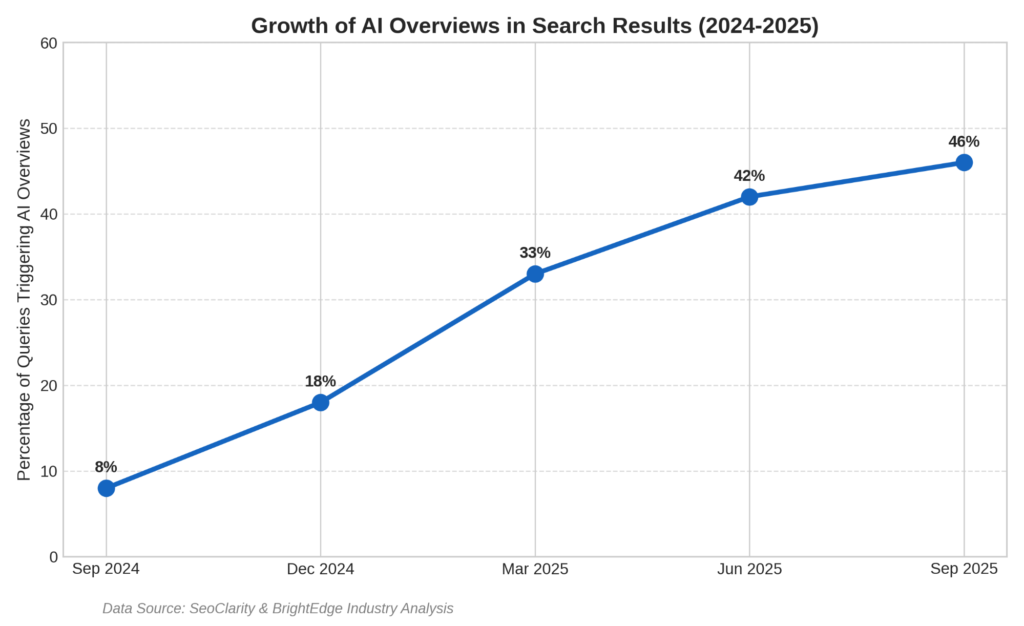
As search behavior evolves with the integration of AI-powered answers, the importance of optimization has multiplied. With Google’s AI Overviews appearing in nearly half of all informational queries, businesses must optimize not just for blue links, but for entity recognition and semantic relevance. In this comprehensive guide, we will break down how content optimization tools work, the essential features to look for, and how to use them effectively to build a powerful growth engine for your business.
How Do Content Optimization Tools Improve Content Quality?
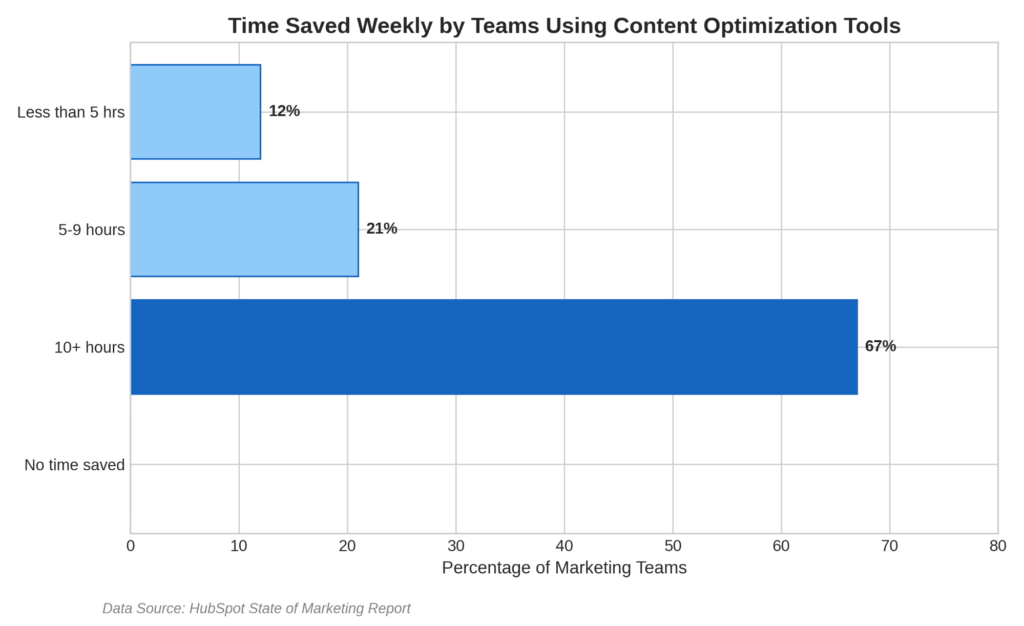
Content optimization tools operate on a straightforward but powerful premise: they reverse-engineer what search engines already reward. When you input a target keyword, the tool analyzes the top 10 to 30 ranking pages. It then extracts the semantic patterns, related entities, heading structures, and readability metrics that these successful pages share.
Instead of arbitrarily stuffing keywords into your text, these tools guide you to create comprehensive content that fully addresses the user’s search intent. They highlight missing subtopics, suggest relevant questions to answer, and provide a target word count based on competitive averages. This process transforms a generic blog post into an authoritative resource.
For businesses aiming to scale their digital presence, this data-driven approach removes the subjectivity from content creation. Writers no longer have to guess which related terms matter or how deeply to cover a subject. The tool provides a clear blueprint, ensuring every piece of content published is engineered to compete effectively in the search engine results pages (SERPs).
What Features Should a Reliable Content Optimization Tool Have?
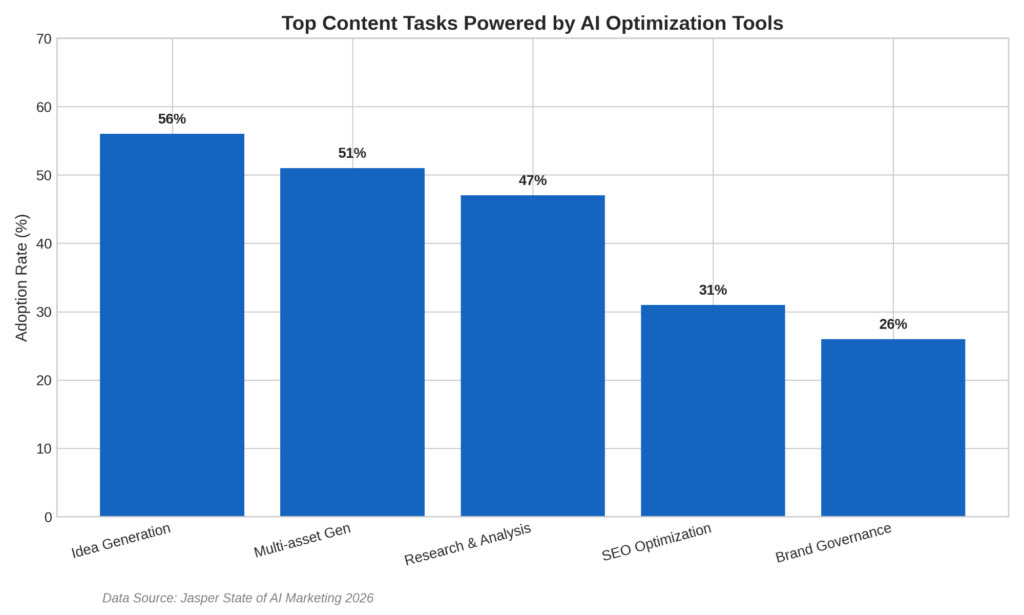
Not all optimization platforms offer the same level of insight. To truly move the needle on your organic traffic, a tool must provide more than basic keyword frequency counts. The most effective tools leverage Natural Language Processing and advanced semantic analysis to guide your content strategy.
Keyword and Topic Suggestions
A robust tool goes beyond suggesting the primary keyword. It identifies related terms, semantic variations, and critical entities that search engines expect to see in authoritative content. By incorporating these NLP-driven suggestions naturally into your writing, you signal to search algorithms that your content covers the topic comprehensively.
Real-Time Content Scoring
Live feedback is crucial for efficient workflows. As you write or edit your content within the tool’s editor, a dynamic score reflects your optimization progress. This score is typically based on your inclusion of recommended terms, content length, and structural elements compared to top-ranking competitors. A real-time scoring system keeps writers focused on relevance without disrupting their creative process.
Readability and Structure Analysis
Search engines prioritize user experience, and readability is a major component of that. Optimization tools analyze sentence length, paragraph formatting, and heading hierarchy. They ensure your content is accessible to your target audience and easily skimmable. Clear structures with logical H2 and H3 tags not only aid human readers but also help search engine crawlers understand the context of your page.
Schema and FAQ Support
To capture featured snippets and appear in AI Overviews, your content must directly answer user questions. Top-tier tools identify the most common questions related to your topic (often pulled from “People Also Ask” data) and suggest adding them as structured FAQs. This feature is vital for enhancing your content’s visibility in modern, answer-driven search environments.
| Feature Category | Basic Tools | Advanced Optimization Platforms |
|---|---|---|
| Keyword Analysis | Exact match keyword density | NLP entities, semantic clustering, TF-IDF |
| Content Scoring | Static grading after publishing | Real-time dynamic scoring during writing |
| Competitor Data | Top 10 word counts | Heading hierarchy, content gap analysis |
| Workflow | Standalone web editor | Google Docs and WordPress integrations |
How Does Content Optimization Support AI Overviews and GEO?
Generative Engine Optimization is the practice of structuring content to be cited by AI search features like Google’s AI Overviews, Perplexity, and ChatGPT. As these AI systems handle an increasing share of informational queries, optimizing for AI visibility is just as critical as traditional SEO.
AI Overviews trigger for approximately 21% of all keywords, and a staggering 99.9% of those are informational queries. When an AI engine constructs an answer, it relies on highly structured, authoritative, and fact-dense content. Content optimization tools help you meet these criteria by identifying the exact entities and factual points you need to include.
To succeed in GEO, your content must prioritize direct answers. By using optimization tools to uncover the specific questions users are asking, you can format your content with clear, concise answers immediately following an H2 or H3 heading. This “Bottom Line Up Front” (BLUF) approach significantly increases your chances of being selected as a cited source when an AI generates an overview.
Furthermore, optimization tools help strengthen your content’s structure with lists, tables, and short paragraphs. AI systems excel at parsing well-organized data. By transforming dense text into structured formats, you make it easier for algorithms to extract and cite your insights, driving highly valuable referral traffic to your site.
What Are the Best Practices for Using Content Optimization Tools Effectively?
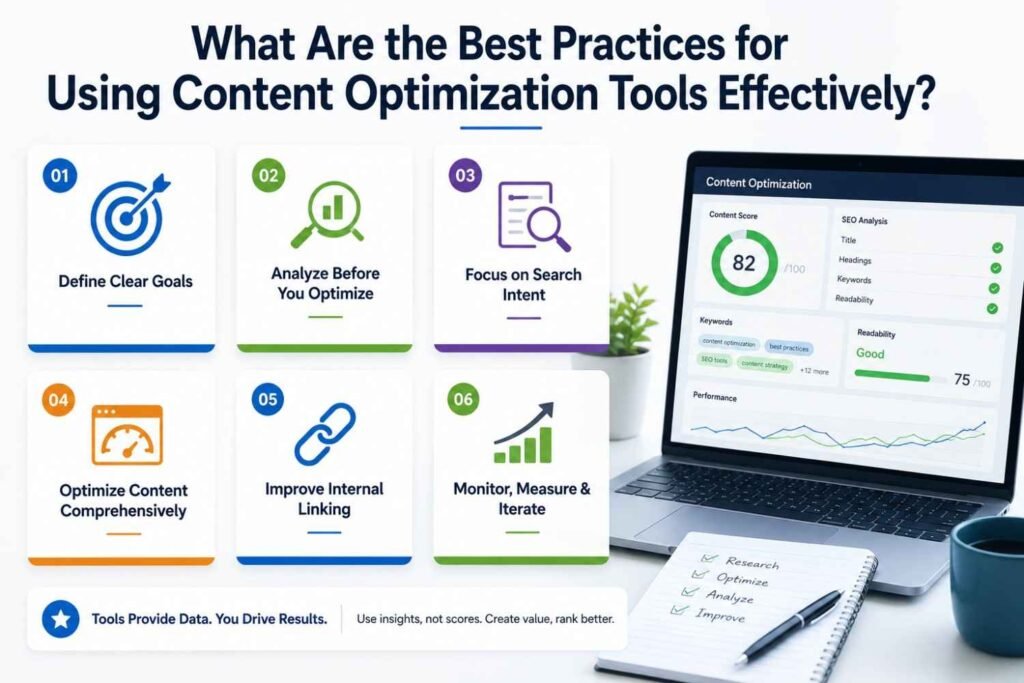
Simply purchasing a subscription to an optimization platform will not guarantee first-page rankings. Success requires a strategic approach that balances data-driven recommendations with high-quality, human-centric writing.
Step 1: Identify Search Intent Before Writing
Before you look at a single keyword suggestion, you must understand why the user is searching for that term. Are they looking for a quick definition (informational), comparing options (commercial), or ready to buy (transactional)? Content optimization tools provide the data, but you must ensure the angle and format of your content match the underlying intent. If the top 10 results are all listicles, your in-depth essay will struggle to rank, regardless of its content score.
Step 2: Optimize Content Structure First
Start by building a comprehensive outline based on the tool’s competitor analysis. Look at the headings used by top-ranking pages and identify missing subtopics. Organize your article with clear H2s and H3s that guide the reader logically through the subject. A strong, well-planned structure makes it much easier to naturally incorporate keyword suggestions later in the writing process.
Step 3: Improve Semantic Relevance Naturally
As you write, integrate the recommended NLP terms and related entities into your paragraphs. The goal is to build semantic relevance, not to artificially stuff keywords. Use the terms in a way that adds actual value and context for the reader. If a suggested term feels forced or irrelevant to your specific angle, it is better to omit it than to compromise the quality of your writing.
Step 4: Update and Refresh Existing Content
Content optimization tools are incredibly powerful for reviving older, underperforming articles. Run your existing pages through the tool’s audit feature to identify content gaps. You can often achieve quick traffic wins by refreshing outdated statistics, adding new sections to cover emerging subtopics, and improving the overall readability score of legacy content.
What Are the Common Mistakes to Avoid When Optimizing Content?
While optimization tools offer clear guidance, they can be misused if marketers prioritize metrics over the actual reader experience. Avoiding these common pitfalls is essential for long-term SEO success.
Chasing Content Scores at the Expense of Quality
The most frequent mistake is treating the content score as the only metric of success. While achieving a high score is generally positive, obsessing over reaching a perfect 100/100 can lead to unnatural, robotic writing. If your content sounds disjointed because you forced every suggested keyword into the text, users will bounce, and search engines will eventually penalize the page. Prioritize user intent and readability over a perfect tool score.
Ignoring Expertise and Accuracy
Optimization tools can tell you what topics to cover, but they cannot provide original insights or industry expertise. Relying solely on the tool’s brief often results in generic, “me-too” content that blends in with the competition. To truly stand out and satisfy Google’s E-E-A-T (Experience, Expertise, Authoritativeness, Trustworthiness) guidelines, you must inject real-world examples, unique data, and expert perspectives that the tool cannot generate.
Publishing Without Human Review
Never publish content directly from an optimization tool or an integrated AI writer without thorough human review. You must verify facts, check the logical flow of arguments, and ensure the tone aligns with your brand. A human editor is essential for catching nuances, correcting awkward phrasing, and ensuring the final piece actually solves the reader’s problem.
| Common Mistake | Negative Impact | Strategic Fix |
|---|---|---|
| Keyword stuffing | Poor readability, high bounce rate | Focus on natural semantic inclusion |
| Ignoring search intent | Content fails to rank despite high score | Analyze SERP formats before writing |
| Generic content | Low engagement, poor E-E-A-T signals | Add unique expert insights and data |
How Can Businesses Choose the Right Content Optimization Strategy?

Selecting the right approach to content optimization depends on your business goals, available resources, and the competitiveness of your industry. For startups and local businesses, focusing on core topical relevance and ensuring basic on-page SEO elements are in place can yield significant improvements.
For growing enterprises targeting highly competitive niches, a more aggressive strategy is required. This involves deep semantic analysis, continuous content gap monitoring, and a rigorous workflow that integrates optimization tools into every stage of content production. Partnering with a reliable digital marketing agency can streamline this process.
At Eyes On Solution, we combine advanced SEO techniques, compelling content writing, and strategic insights to boost website visibility. Our dedicated team leverages industry best practices and powerful tools to ensure your content not only ranks well but also engages the right audience and drives consistent, measurable growth. By focusing on reliable service and tailored strategies, we help businesses turn their websites into powerful growth engines.
Why Do You Need to Integrate Content Optimization with Broader Digital Marketing?
While optimizing individual articles is a critical component of SEO, it is only one piece of the puzzle. A truly effective digital marketing strategy requires a holistic approach where content optimization works in tandem with other channels and tactics. Relying solely on content scores without considering the broader ecosystem is a recipe for stagnation.
Frequently Asked Questions (FAQ)
What exactly do content optimization tools do for a website?
Content optimization tools analyze top-ranking search results to provide data-driven recommendations on keywords, structure, and readability. They help writers create comprehensive, semantically relevant content that aligns with what search engines and users are looking for, ultimately improving organic rankings.
How do I use content optimization tools to rank higher in AI Overviews?
To rank in AI Overviews, use optimization tools to identify common user questions and structure your content to answer them directly. Employ clear headings, short paragraphs, and factual data (the BLUF principle) to make it easy for AI engines to extract and cite your information.
Will achieving a perfect score in an optimization tool guarantee a number one ranking?
No, a perfect score does not guarantee a top ranking. While a high score indicates strong topical relevance, search engines also weigh factors like domain authority, backlink profiles, search intent alignment, and overall user experience metrics when determining rankings.
Are free content optimization tools effective for small businesses?
Free tools like Google Search Console, Grammarly, and basic SEO plugins can be effective for foundational optimization and identifying technical issues. However, they lack the advanced NLP keyword suggestions and competitive content gap analysis provided by premium optimization platforms.
How often should I use tools to update and optimize my existing content?
You should review and update your high-priority content every 6 to 12 months, or whenever you notice a significant drop in organic traffic. Using optimization tools to refresh statistics, answer new user questions, and improve semantic relevance can quickly restore lost rankings.