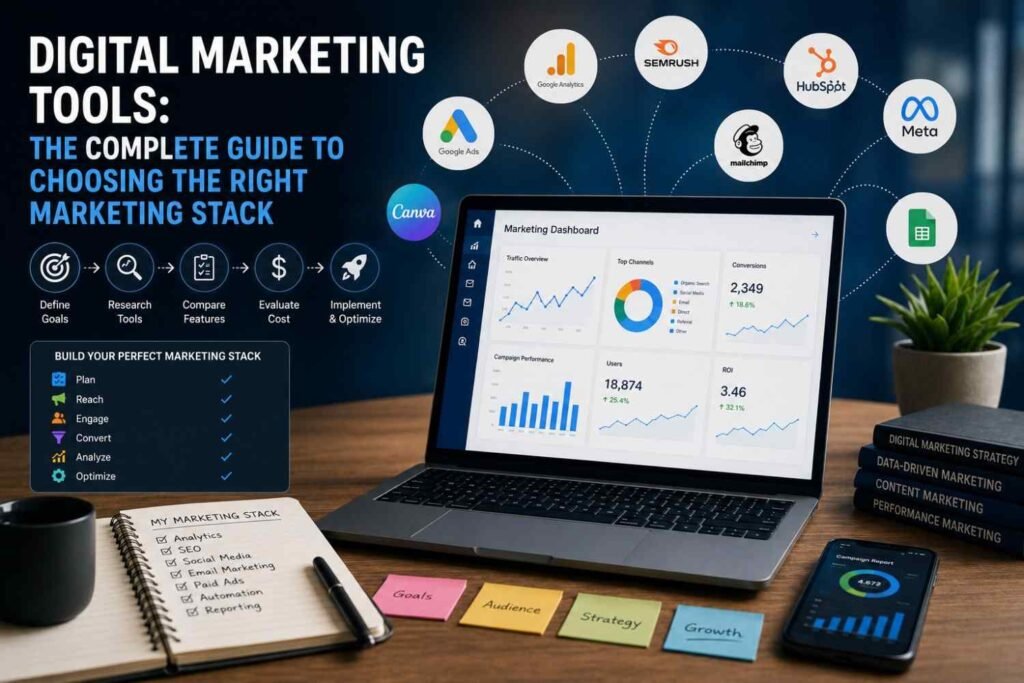
The right digital marketing tools help businesses save time, improve campaign performance, automate repetitive work, and make better decisions using real data. Instead of using dozens of platforms, businesses should choose tools based on their marketing goals, budget, and growth stage. This guide explains the essential categories of digital marketing tools, what they do, and how to build the right marketing toolkit.
Digital Marketing Tools
Digital marketing is impossible without the right tools. Businesses today manage SEO, content, email, advertising, analytics, AI, and social media simultaneously. Managing these channels manually leads to burnout, missed opportunities, and inaccurate data. Digital marketing tools simplify marketing rather than replace strategy. They empower your team to execute campaigns faster and measure results accurately. In this guide, you will learn about the core categories of marketing software, essential features to look for, and how to select the perfect stack for your business size and goals.
What Are Digital Marketing Tools?
Digital marketing tools are software applications and platforms designed to help businesses execute, manage, and measure their online marketing campaigns. Businesses use them to streamline operations, reach target audiences more effectively, and track return on investment (ROI).
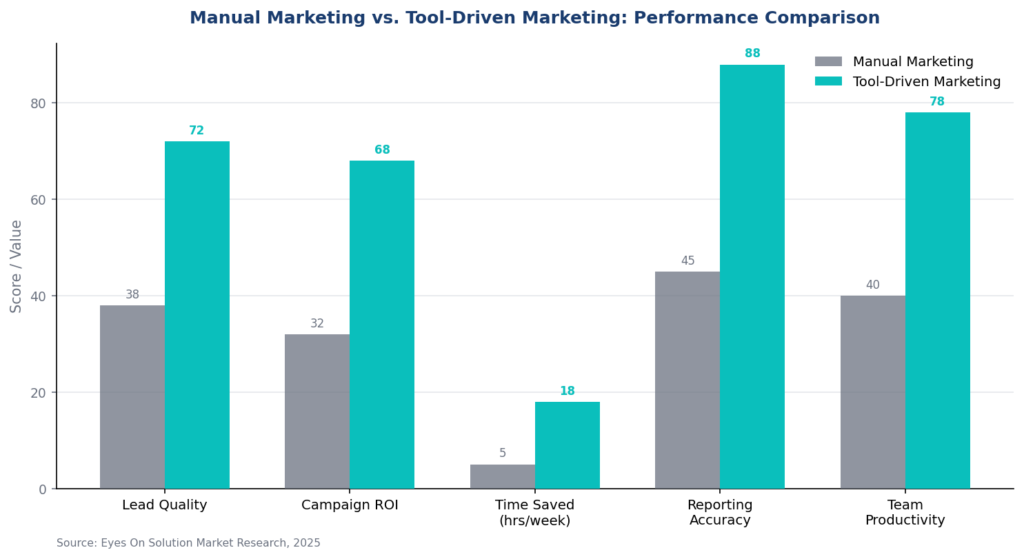
Manual marketing relies on human effort for every task, such as posting on social media one by one or tracking leads in a spreadsheet. Tool-driven marketing automates these processes, allowing software to handle scheduling, data collection, and repetitive workflows.
Startups benefit from these tools by scaling their efforts without hiring large teams. Small and medium enterprises (SMEs) use them to compete with larger brands by optimizing their ad spend and local SEO. Enterprise companies rely on advanced marketing tools to manage massive datasets, align global teams, and execute complex, multi-channel automation.
Why Digital Marketing Tools Matter
Digital marketing tools matter because they directly impact a company’s bottom line and operational efficiency. They transform raw data into actionable insights and replace guesswork with precision.
- Save time through automation: Tools handle repetitive tasks like email follow-ups and social media posting, freeing up your team for strategic planning.
- Improve marketing accuracy: Software reduces human error in data entry, audience targeting, and budget pacing.
- Better reporting: Automated dashboards provide real-time visibility into campaign performance instead of waiting for end-of-month manual reports.
- Stronger customer insights: Analytics platforms reveal exactly how users interact with your website and content.
- Higher ROI: By identifying which channels drive the most conversions, tools help you allocate budget to high-performing campaigns.
- Easier collaboration between teams: Cloud-based platforms keep copywriters, designers, and strategists aligned on the same goals.
- Better campaign tracking: Attribution models show exactly which touchpoints led to a sale.
Types of Digital Marketing Tools
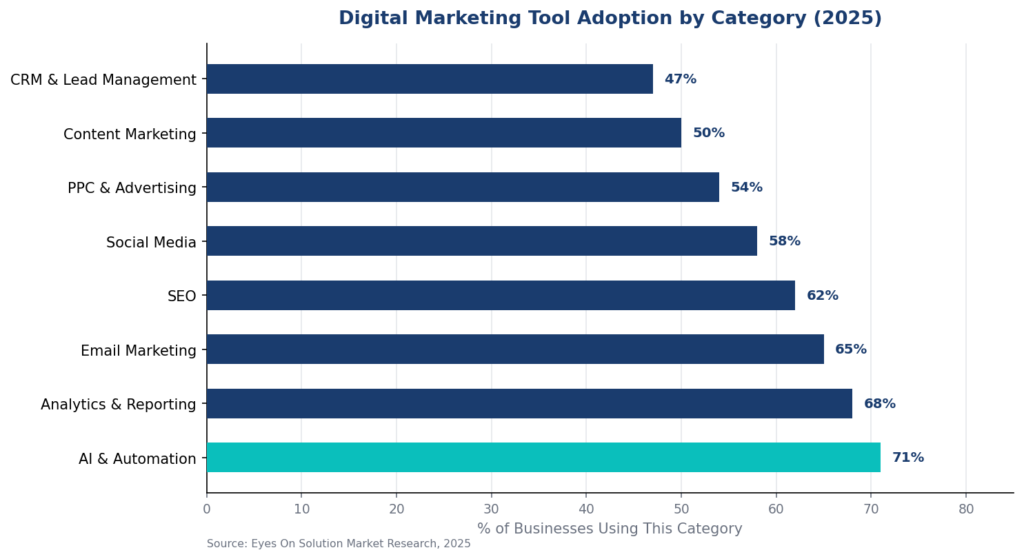
Building a marketing stack requires understanding the different categories of software available. Each category serves a specific function in the customer journey, from initial discovery to final conversion and retention.
SEO Tools
SEO tools help businesses improve their visibility on search engines like Google. They provide the data needed to rank higher and attract organic traffic.
These platforms cover keyword research to identify what your audience is searching for. They offer competitor analysis to reveal the strategies of top-ranking websites. Technical SEO features audit your site for broken links and slow load times. Rank tracking monitors your position for target keywords over time. Backlink monitoring helps you build and protect your site’s authority.
Need help improving your search rankings? Explore our SEO Services and Local SEO Services.
Content Marketing Tools
Content marketing tools streamline the creation, optimization, and distribution of written and visual content.
These tools assist with content planning by organizing editorial calendars. AI-assisted writing features help overcome writer’s block and generate outlines. Grammar checking ensures professional and error-free publishing. Topic research uncovers trending subjects in your industry. Content optimization features guide writers to include the right keywords and semantic terms to rank well.
Looking to scale your content production? Learn about our Content Marketing Services.
Social Media Marketing Tools
Social media marketing tools allow brands to maintain a consistent presence across multiple networks without logging in and out of different apps.
They handle scheduling posts across platforms like LinkedIn, Facebook, and Instagram. Content calendars provide a visual overview of upcoming campaigns. Social listening features track brand mentions and industry trends. Analytics measure engagement rates and follower growth. Community management tools consolidate direct messages and comments into a single inbox for faster replies.
Want to build a stronger community? Check out our Social Media Marketing.
Email Marketing Tools
Email marketing tools are essential for nurturing leads and retaining existing customers through direct communication.
These platforms enable campaign creation with drag-and-drop builders. Automation features trigger emails based on user behavior, such as abandoned cart reminders. Segmentation allows you to send targeted messages to specific audience groups. Lead nurturing sequences guide prospects through the sales funnel. Performance tracking measures open rates, click-through rates, and conversions.
Ready to boost your open rates? See our Email Marketing Services.
PPC & Advertising Tools
PPC (Pay-Per-Click) and advertising tools help marketers manage paid campaigns across search engines and social networks efficiently.
They centralize campaign management to control multiple ad groups. Budget optimization features ensure you do not overspend and get the lowest cost-per-click. Audience targeting allows you to reach specific demographics and interests. Conversion tracking proves the exact ROI of your ad spend. A/B testing helps identify which ad copy and creatives perform best.
Maximize your ad spend with our PPC Management.
Analytics & Reporting Tools
Analytics and reporting tools are the source of truth for your marketing performance. They collect data to inform future strategies.
These platforms track website traffic to show how many people visit your site. User behavior features, like heatmaps, reveal how visitors interact with your pages. Attribution modeling shows which marketing channels contribute to sales. Dashboard reporting visualizes complex data into easy-to-understand charts. Conversion analysis helps identify bottlenecks in your sales funnel.
CRM & Marketing Automation Tools
Customer Relationship Management (CRM) and marketing automation tools align sales and marketing efforts by centralizing customer data.
They handle customer management by storing contact details and interaction history. Lead tracking monitors where prospects are in the buying cycle. Sales funnel visualization helps teams forecast revenue. Automated workflows move leads from marketing to sales seamlessly. Customer retention features identify at-risk accounts for proactive outreach.
AI Powered Marketing Tools
AI-powered marketing tools use machine learning to accelerate production and uncover insights that humans might miss.
They excel at content generation for initial drafts and ideation. Image creation tools produce custom visuals from text prompts. Research assistance features summarize long documents and gather data quickly. Workflow automation connects different apps to trigger actions without human intervention. Customer support chatbots handle common inquiries 24/7. Predictive insights forecast future trends based on historical data.
Discover how artificial intelligence can transform your strategy with our AI SEO / GEO Services.
Must Have Features in a Digital Marketing Tool
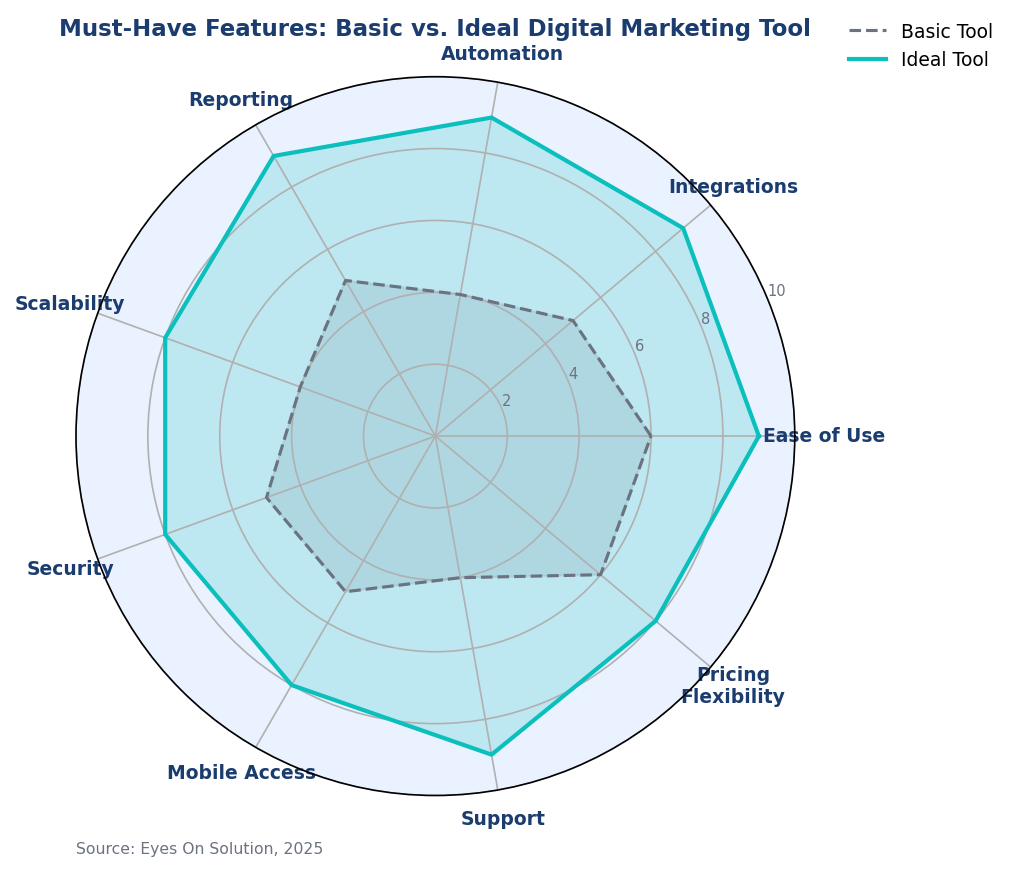
Selecting the right software requires looking beyond the marketing pitch. A tool is only valuable if your team actually uses it.
Ease of use is critical; a steep learning curve reduces adoption rates. Integration capabilities ensure the new software communicates with your existing CRM and analytics platforms. Automation features are necessary to save time on repetitive tasks. Robust reporting and custom dashboards are required to prove ROI to stakeholders. Security protocols must protect sensitive customer data. Scalability ensures the tool grows with your business. Mobile accessibility allows teams to monitor campaigns on the go. Reliable customer support resolves technical issues quickly. Pricing flexibility ensures you only pay for the features you need.
How to Choose the Right Digital Marketing Tools
Choosing the right digital marketing tools prevents wasted budget and team frustration.
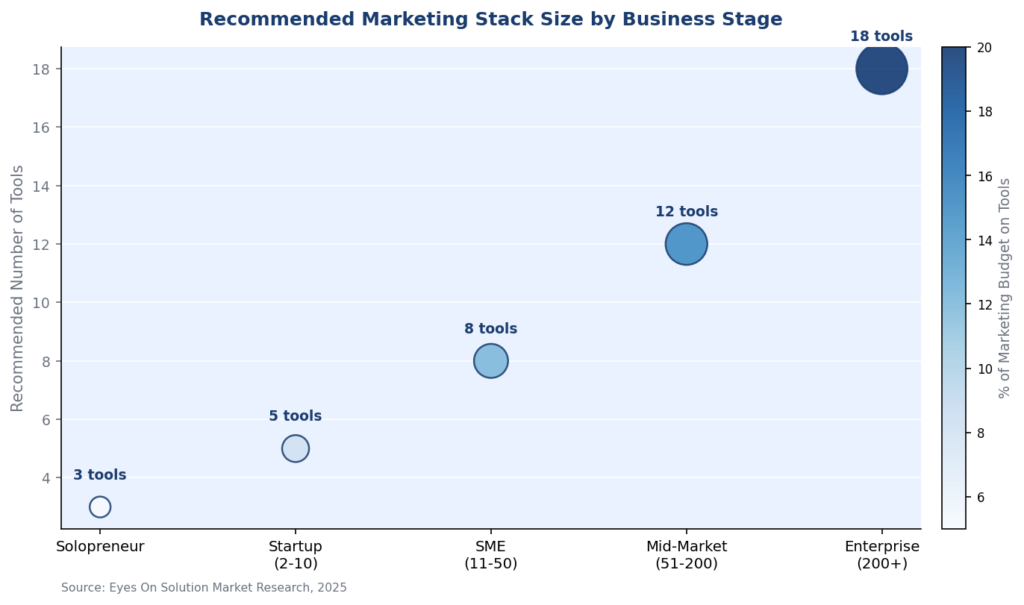
Identify business goals first; know exactly what problem you are trying to solve. Match tools with marketing channels that drive the most revenue for your company. Define your budget clearly, factoring in monthly subscriptions and potential onboarding costs. Consider team size; a solo marketer needs different tools than a fifty-person department. Check integrations to ensure seamless data flow between platforms. Evaluate the learning curve to understand how long training will take. Read reviews from verified users in your specific industry. Use free trials before purchasing to test the software in a real-world scenario.
Common Mistakes Businesses Make When Choosing Marketing Tools
Many businesses struggle with their marketing technology because of poor procurement decisions.
Buying too many tools creates data silos and wastes money. Ignoring integrations leads to manual data entry between platforms. Choosing features over business needs results in paying for complex software that your team does not use. Not training the team causes low adoption and frustration. Not measuring ROI makes it impossible to justify the software expense. Switching tools too frequently disrupts workflows and destroys historical data continuity.
Best Practices for Building an Effective Marketing Stack
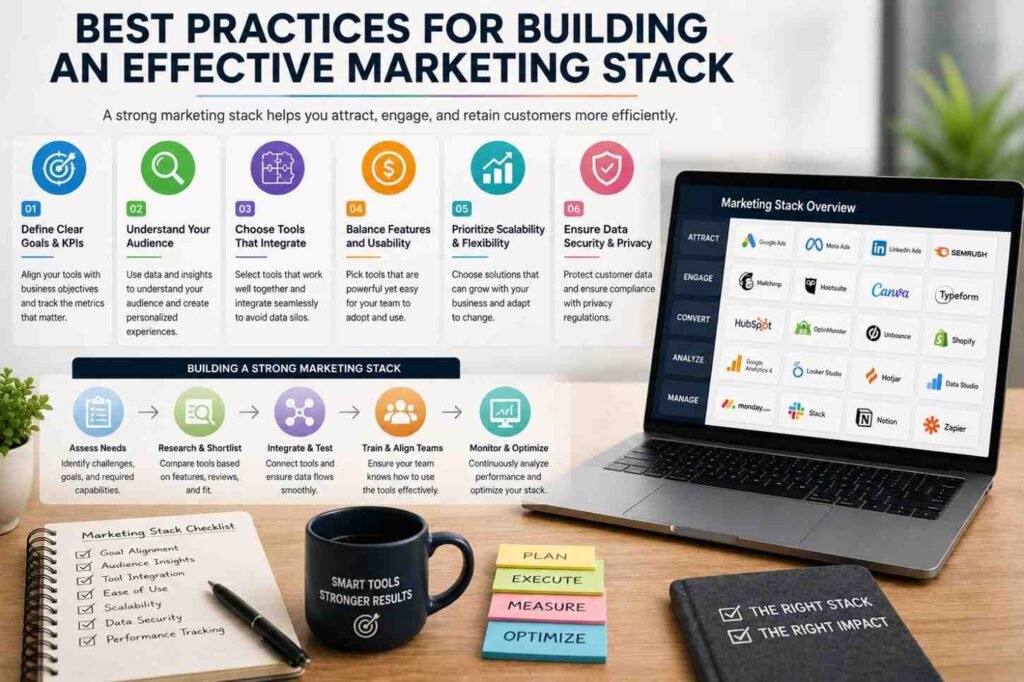
An effective marketing stack is streamlined, integrated, and aligned with revenue goals.
Keep the stack simple; fewer, more powerful tools are better than dozens of single-use apps. Use tools that work together natively to ensure clean data tracking. Regularly review subscriptions to cancel software that is no longer utilized. Automate repetitive tasks to maximize team efficiency. Standardize reporting across all departments so everyone looks at the same metrics. Train your marketing team continuously to leverage new platform features. Scale tools as the business grows, upgrading tiers only when necessary.
Need expert guidance on your technology stack? Consider our Marketing Strategy Consulting.
Future Trends in Digital Marketing Tools
The landscape of marketing technology is evolving rapidly. Staying ahead of these trends ensures your business remains competitive.
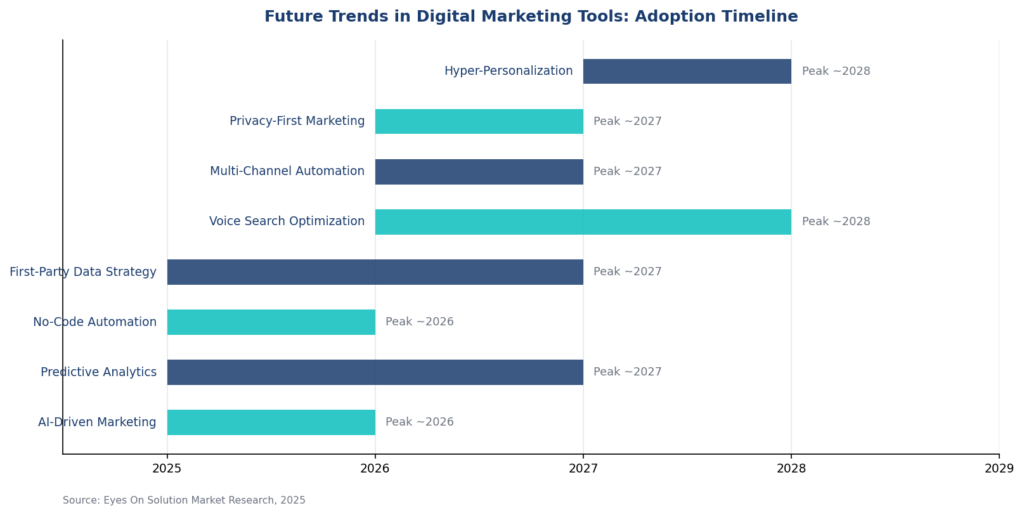
AI-driven marketing will move from content generation to autonomous campaign management. Predictive analytics will forecast customer behavior with pinpoint accuracy. Personalization will become hyper-targeted, delivering unique experiences to individual users. First-party data strategies will become mandatory as third-party cookies disappear. Privacy-focused marketing tools will help brands comply with strict global regulations. Voice search optimization tools will track how users query smart speakers. Multi-channel automation will orchestrate complex journeys across email, SMS, and social media seamlessly. No-code marketing automation will empower marketers to build complex workflows without developer assistance.
Digital marketing success depends on selecting the right tools rather than using the most tools. A well-chosen marketing stack saves time, provides accurate data, and directly improves campaign ROI. Businesses should build their toolkit around clear objectives, available budget, and team capabilities. Review your current software regularly and adopt new technologies only when they add measurable value to your operations.
Looking for the right digital marketing tools to grow your business? Contact our team for a tailored marketing technology strategy that helps you streamline operations, improve campaign performance, and achieve measurable results.
Need a custom website to integrate your new marketing tools? Explore our Web Design & Development services today.
Frequently Asked Questions
What are digital marketing tools?
Digital marketing tools are software platforms and applications that help businesses manage, execute, automate, and measure their online marketing strategies. They include software for SEO, social media, email marketing, and data analytics.
Which digital marketing tools are essential for small businesses?
Small businesses should prioritize a website analytics tool (like Google Analytics), a CRM to manage customer data, an email marketing platform for direct communication, and a social media scheduler to maintain a consistent online presence.
Are free digital marketing tools good enough?
Free digital marketing tools are excellent for startups and small businesses learning the basics. However, as a business scales, it will typically need paid tools to access advanced automation, deeper analytics, and larger contact limits.
How many digital marketing tools does a business need?
The number of tools depends on the business size. A solopreneur might need 3 to 5 core tools, while an enterprise might use 15 to 20 integrated platforms. The goal is efficiency, not quantity.
Can AI replace digital marketing tools?
AI does not replace digital marketing tools; it enhances them. AI is becoming a core feature within existing SEO, content, and analytics tools to speed up research, automate writing, and predict trends.
Which digital marketing tool is best for SEO?
The best SEO tool depends on your specific needs. Comprehensive platforms offer keyword research, backlink analysis, and site audits, but businesses must choose the one that aligns with their budget and technical expertise.