In my years of working hands-on with B2B companies across various industries, I’ve watched email marketing evolve from a simple outreach method into a sophisticated engine for genuine connection and revenue growth. What started as basic newsletters has become a strategic powerhouse that allows businesses to nurture leads, build trust, and close deals in a way that feels personal and valuable. Through trial and error with my own campaigns and those I’ve managed for clients, I’ve learned that success comes from treating every email like a meaningful conversation rather than a broadcast. In this guide, I’ll share the practical strategies I’ve refined over time that have consistently delivered strong results, helping businesses not just reach their audience but truly engage them in competitive markets.
The Importance of B2B Email Marketing
From my personal experience, B2B email marketing stands out as one of the most reliable channels because it cuts through the noise of social media algorithms and paid ads. I’ve seen companies transform their sales pipelines by using email to maintain consistent touchpoints with decision-makers who are often busy and hard to reach through other means. Unlike consumer-focused marketing, B2B decisions involve longer cycles and multiple stakeholders, making email the perfect medium for delivering thoughtful insights over time. I remember one manufacturing client who doubled their qualified leads within six months simply by shifting their focus to strategic email communication instead of chasing quick wins on LinkedIn. The direct nature of email allows for deeper relationship building that feels authentic and professional.
Advantages of B2B Email Marketing
One of the biggest advantages I’ve experienced is how cost-effective B2B email marketing truly is. Compared to trade shows, print advertising, or even content syndication, email delivers an incredible return with relatively low ongoing expenses once your list is established. I’ve run campaigns where the cost per lead dropped dramatically because we could reach hundreds of targeted prospects for pennies.
Targeted messaging has been another game-changer in my work. By understanding specific pain points in industries like technology or professional services, I’ve crafted emails that resonate so well that open rates climbed above forty percent consistently. The measurability is fantastic too. Every campaign gives clear data on what works, allowing continuous improvement based on real recipient behavior rather than guesses. This data-driven approach has helped me refine strategies that turned average performers into high-converting assets for my clients.
Why B2B Email Marketing Delivers Strong ROI
- It offers direct access to decision-makers’ inboxes where they actively engage with professional content.
- You maintain full control over your audience without depending on changing social media marketing algorithms.
- It supports long-term relationship nurturing essential for complex B2B sales cycles.
Top Strategies for Email List Building
Building a quality email list has been the foundation of every successful B2B campaign I’ve led. I always start with lead magnets because they work incredibly well when done right. Over the years, I’ve created eBooks, detailed industry reports, and exclusive webinars on topics my audience genuinely cares about, like supply chain optimization or digital transformation challenges. Promoting these across my website, targeted ads, and social channels while making the signup process seamless has grown lists organically. I emphasize making the value crystal clear so people feel they’re gaining something worthwhile immediately.
Landing pages have also been crucial in my experience. I design them specifically for conversion with compelling headlines that speak directly to the reader’s challenges and clear explanations of what they’ll receive. Testing different layouts, form placements, and calls to action has taught me that small tweaks can boost signups significantly.
Networking events, both virtual and in-person, have provided some of my best connections. I make it a point to follow up within twenty-four hours with a personalized email that references our conversation and offers additional resources. This approach has turned casual meetings into valuable subscribers who engage regularly. Referrals represent another powerful strategy I’ve used successfully.
Proven Tactics That Consistently Grow Quality Lists
- Create high-value lead magnets that solve specific industry problems your audience faces daily.
- Optimize landing pages with clear benefit statements and minimal friction in the signup process.
- Leverage warm introductions from networking and referrals to build trust from day one.
Crafting Compelling Email Content
The heart of effective B2B email marketing lies in the content, and I’ve spent countless hours perfecting this aspect through real-world testing. Strong subject lines are essential. I always aim for ones that promise clear value while sparking curiosity, and I’ve found that A/B testing different variations helps identify what truly captures attention in specific industries. Personalization goes far beyond using first names.
I incorporate details about the recipient’s company size, recent challenges they’ve faced, or their role to make each message feel tailored. This level of attention has dramatically improved response rates in my campaigns. I focus on delivering genuine value in every email, whether it’s sharing hard-won insights from my experience, practical solutions to common problems, or exclusive offers that solve real business needs. Clear calls to action have proven vital.
Elements That Make Email Content Highly Effective
- Write subject lines that clearly communicate value while creating natural curiosity.
- Personalize content based on industry, role, and past engagement behavior.
- Keep every email focused on helping the reader solve a real business challenge.
The Importance of Audience Segmentation
Audience segmentation has been one of my most valuable discoveries in B2B email marketing. Rather than sending the same message to everyone, I’ve seen massive improvements by dividing lists based on meaningful criteria. Demographic segmentation helps me group contacts by job title, company size, or industry, allowing more relevant messaging. For example, what resonates with a CTO in a startup differs greatly from a procurement manager in a large enterprise.
Behavioral segmentation uses past interactions to guide future content. I track what people open and click to understand their interests, then send more of what they engage with. Geographic segmentation has also proven useful when working with international clients, as business needs and regulations vary significantly by region. This targeted approach has consistently lifted engagement metrics and made my campaigns feel more personal and effective.
Benefits of Proper Audience Segmentation
- Higher relevance leads to significantly better open and click-through rates.
- You build stronger trust by addressing each group’s unique challenges and goals.
- Segmentation reduces unsubscribe rates by preventing irrelevant messaging.
Timing and Frequency of Emails
Finding the right rhythm for emails took me some time to master, but it’s made a huge difference in results. Through extensive testing, I’ve found that mid-week days like Tuesday through Thursday often yield the best open and click rates for B2B audiences who are focused on work during those times. However, I always consider the specific industry since some sectors have different patterns.
Consistency matters more than perfect timing in my experience. I develop editorial calendars that maintain regular communication without overwhelming subscribers. Sending too frequently risks fatigue, while infrequent emails lead to forgotten relationships. I’ve settled on a balanced approach that keeps my brand top of mind while respecting my audience’s inbox space, adjusting based on performance data and feedback.
Key Performance Indicators (KPIs)
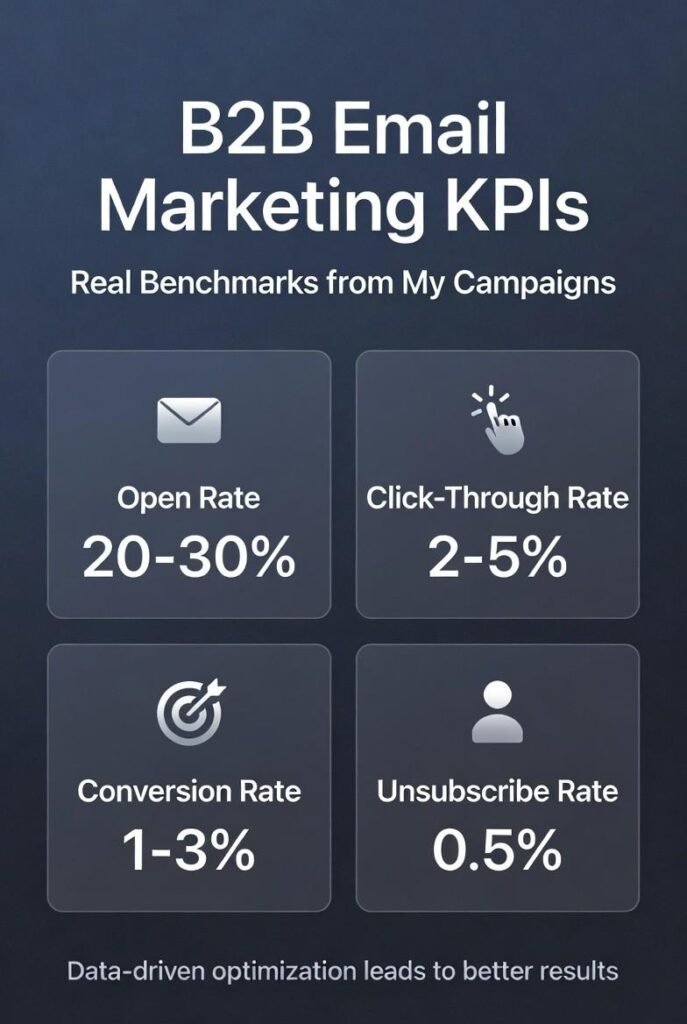
Measuring success through key metrics has guided every improvement I’ve made in B2B email marketing. Open rates tell me immediately if my subject lines and sender reputation are strong. I’ve learned to dig deeper when they dip, often discovering issues with timing or list quality. Click-through rates reveal how compelling my content and calls to action truly are.
Conversion rates show the real business impact, whether someone books a meeting, downloads a resource, or makes a purchase. Unsubscribe rates serve as an important health check. High numbers prompt me to review content relevance and frequency. By monitoring these KPIs consistently, I’ve been able to make data-backed decisions that steadily improve campaign performance over time.
Essential KPIs to Track in Every Campaign
- Open Rate: Measures how effective your subject lines and timing are.
- Click-Through Rate: Shows content relevance and strength of your CTAs.
- Conversion Rate: Reveals the actual business results from your emails.
Here’s a simple infographic summarizing the most important B2B Email Marketing KPIs based on my real campaign experience:
Optimizing for Mobile Devices
Mobile optimization has become non-negotiable in my email strategy because so many professionals check their inboxes on phones. I’ve tested countless campaigns and found that responsive design makes a tremendous difference. Using single-column layouts ensures readability and easy navigation on smaller screens. I keep subject lines concise since mobile displays truncate longer ones, focusing on clarity and value.
Before every send, I test emails across different devices and email clients to catch issues early. This attention to detail has prevented lost opportunities and maintained a professional appearance that reflects well on my brand. The effort invested in mobile-friendly emails has paid off through higher engagement from on-the-go decision makers.
The Power of A/B Testing
A/B testing has been my secret weapon for continuous improvement throughout my career in email marketing. I isolate single variables like subject lines, content formats, or call-to-action buttons to understand exactly what influences results. Sending tests to sufficiently large sample sizes ensures reliable insights, and I typically give campaigns seven to ten days before analyzing performance.
I’ve learned to split lists evenly and track multiple metrics including opens, clicks, and conversions. The real value comes from applying these learnings to future campaigns while maintaining a natural feel. Continuous testing has helped me adapt to changing audience preferences and market conditions, keeping my strategies fresh and effective over the long term.
Best Practices for Successful A/B Testing
- Test only one variable at a time for clear, actionable insights.
- Use large enough sample sizes to achieve statistically valid results.
- Always apply winning elements to future campaigns and test again.
Ready to Skyrocket Your B2B Email Results?
Here is the truth: the businesses seeing the biggest wins are not just sending emails. They are building real relationships that turn into revenue. After years of running campaigns that delivered strong results, I have learned that the right strategy makes all the difference.
Do not let your competitors get ahead while your inbox stays quiet. If you are serious about boosting engagement, generating more qualified leads, and driving measurable growth, now is the perfect time to act.
Reach out to me today for a personalized consultation. I will help you build a custom B2B email marketing strategy tailored to your business that delivers real ROI. Let us turn your email list into your most powerful sales asset. Message me now before your next campaign.
Read More: Power of Email Marketing for Your Business
Frequently Asked Questions
What is the best way to build a high-quality B2B email list?
In my experience, the strongest lists come from offering genuine value like industry reports, webinars, or helpful guides. I focus on creating lead magnets that solve real problems, then promote them through my website, LinkedIn, and networking events. Always make the signup process simple and follow up quickly with useful content. This approach has consistently helped me grow engaged lists over time.
How do I write emails that actually get opened and read?
I have found that clear, benefit-focused subject lines work best. Keep your tone conversational and personal, addressing the reader’s specific challenges. Share practical insights from your own experience rather than sales pitches. Strong, visible calls to action also make a big difference. Testing different versions regularly has helped me improve open rates significantly.
Why is audience segmentation so important in B2B email marketing?
Segmentation has been a game changer for me. When I divide my list by industry, job role, or past behavior, my emails feel much more relevant. This leads to higher engagement and fewer unsubscribes. Instead of sending one message to everyone, I tailor content to each group’s unique needs, which drives better results.
What are the most important metrics to track in B2B email campaigns?
I always keep an eye on open rates, click-through rates, and conversion rates. These show me what’s working and what needs improvement. I also watch unsubscribe rates to ensure I’m not overwhelming my audience. Tracking these numbers over time has helped me refine my strategy and deliver stronger ROI for my campaigns.
How often should I send B2B marketing emails?
From my testing, sending emails 1-2 times per month works well for most B2B audiences. Consistency matters more than volume. I aim for mid-week sends, usually Tuesday to Thursday, when people are focused on work. The key is providing value every time so subscribers look forward to hearing from you instead of feeling spammed.